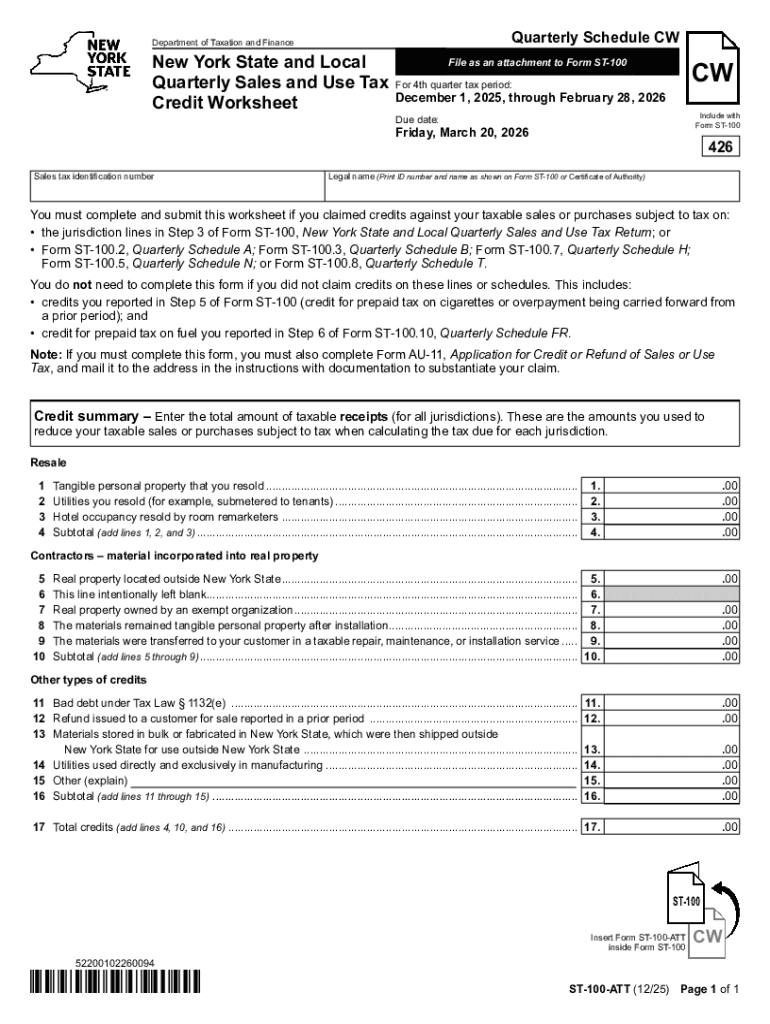







Definition & Purpose of Form ST-100-ATT
The Form ST-100-ATT, revised on December 25, is a New York State and Local Quarterly Sales and Use Tax Credit Worksheet. It assists taxpayers in calculating appropriate tax credits applicable to their quarterly sales and use taxes. This form is crucial for ensuring accurate reporting and compliance with state and local tax laws, particularly for businesses that are eligible to claim credits against their sales tax liabilities.
Key Elements of the Form
- Identification Information: Includes the taxpayer's legal name, address, and tax identification number to ensure the form is filed for the correct entity.
- Credit Calculations: Sections for detailed calculations of any credits applicable, based on applicable state and local codes.
- Certification: A required declaration stating that the provided information is true and correct to the best of the taxpayer's knowledge.
Who Typically Uses the Form ST-100-ATT
This form is predominantly used by businesses operating within New York State that are subject to quarterly sales and use tax filings. Typically, these businesses seek to claim credits that may arise from various transactions or incentives available under state tax laws.


Business Entity Types
- Corporations and LLCs: These entities often utilize this form to manage substantial sales transactions that may involve applicable credits.
- Small Businesses and Sole Proprietors: Even smaller entities can benefit from understanding the available credits to maximize their tax efficiency.
Steps to Complete the Form
- Gather Required Information: Compile all relevant sales data for the quarter and any documentation related to potential tax credits.
- Calculate Credits: Enter the applicable credits based on transactions and adhere to the guidelines provided in the form's instructions.
- Review and Certify: Ensure all entries are accurate, and sign the certification section to verify the accuracy of the information provided.
Required Documents
- Sales Receipts: Documentation supporting the transactions for which credit is claimed.
- Credit Certificates or Supporting Documentation: Evidence of compliance with credit eligibility criteria.
State-Specific Rules for Form ST-100-ATT
New York State enforces specific regulations regarding qualifying transactions and eligible credits, which can vary by year based on legislative changes. Businesses should stay informed about updates from the New York State Department of Taxation and Finance.
Important Terms
- Use Tax: A tax on goods purchased outside of the state but used within New York, potentially eligible for credits.
- Sales Tax Credits: Deductions offered to reduce taxable amounts under stipulated conditions such as overpayments or returned goods.
Examples of Using the Form
Scenario 1: Small Retail Store
A small New York-based retail store might use Form ST-100-ATT to claim a sales tax credit for unsold returned merchandise. Documentation of the transactions and returns is necessary for filing.
Scenario 2: Large Corporation
A corporation conducting interstate business may use the form to account for tax credits accrued from purchases made outside New York but utilized within the state. Proper records and only eligible transactions should be included.
Filing Methods and Deadlines
Form ST-100-ATT can be filed electronically through the New York State Department of Taxation and Finance's online services, which is often the preferred method due to its convenience. Alternatively, businesses can file a paper version if necessary.
Important Dates
- Quarterly Submission Deadlines: The form must be submitted quarterly in alignment with standard tax filing dates to avoid penalties.
Penalties for Non-Compliance
Failure to accurately complete or timely file the form can result in penalties, including fines and revocation of credits. Compliance ensures a taxpayer's standing with the Department remains favorable.
Why Accurate Completion Matters
Completing Form ST-100-ATT accurately is critical for maintaining compliance obligations and securing rightful tax credits. Inaccuracies or omissions can lead to audits or financial penalties, impacting business operations.
Legal Obligations
Accurate reporting as required ensures businesses remain in good standing and avoid legal challenges or penalties associated with evasion or misreporting of taxes owed to state authorities.