






Understanding Form ST-810: Definition and Purpose
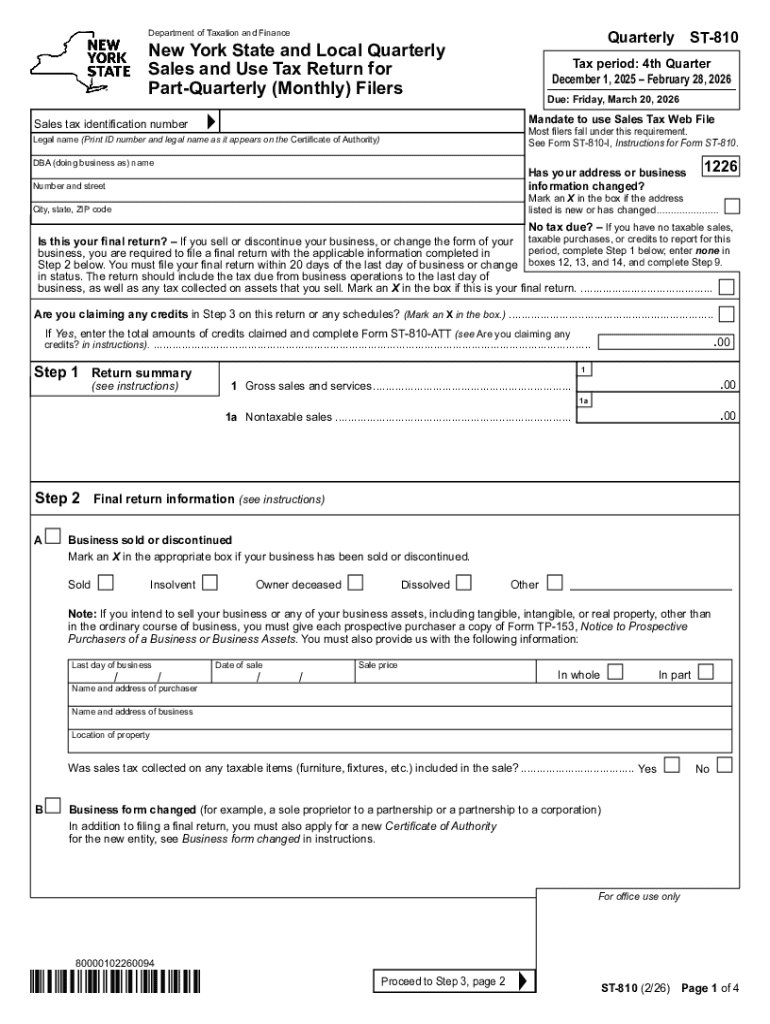
Form ST-810, known officially as the "Form ST-810 New York State and Local Quarterly Sales and Use Tax Return for Part-Quarterly Filers," is essential for businesses in New York State that are classified as part-quarterly filers. This form is used to report and remit sales and use taxes collected during a specified tax period. The information captured on Form ST-810 helps the New York State Department of Taxation and Finance ensure that sales taxes have been collected in accordance with state and local laws. Part-quarterly filers typically include businesses with a specific volume of sales tax transactions or amounts due that do not require monthly filing.
How to Use Form ST-810 Effectively
Using Form ST-810 involves accurately reporting sales and use taxes for the reporting period. To maximize effectiveness:
- Gather Required Information: Prepare all sales records, invoices, and receipts prior to filling out the form.
- Calculate Total Sales: Deduce taxable sales and compute the corresponding taxes based on New York State rates.
- Detail Local Taxes: Apply additional rates for local jurisdictions where sales occur, as these may vary.
- Adjustments and Credits: Account for any modifications, such as sales tax overpayments in previous periods.
- Review and Verify: Before submission, ensure that calculations are precise, and all sections are completed accurately.
Obtaining Form ST-810
Form ST-810 can be obtained from the New York State Department of Taxation and Finance’s official website. Here are the steps:
- Visit the New York State Department of Taxation and Finance website.
- Navigate to the forms section under sales tax.
- Search for "ST-810" to locate and download the form.
- Alternatively, request a hard copy via mail if preferred.
Step-by-Step Completion of Form ST-810
Completion of Form ST-810 prescribes a structured method:
- Identify Business Information: Enter business information, including legal name, tax identification number, and address.
- Complete Sales Tax Details:
- Record gross sales, exempt sales, and taxable sales.
- Compute taxes based on the applicable state and local rates.
- Formulate Credits and Penalties:
- Input any eligible tax credits.
- Calculate penalties for late filing if applicable.
- Finalize Totals and Sign: Sum totals, review the form for accuracy, and sign and date.
Users of Form ST-810: Who Benefits?
Form ST-810 is primarily used by New York-based businesses classified as part-quarterly filers. Typical users include:
- Retail Businesses: With taxable in-state sales below a specified threshold requiring part-quarterly filing.
- Service Providers: That charge sales tax on taxable services provided within New York State.
- E-commerce Firms: Making sales to customers in New York requiring tax collection.
Important Terms Related to Form ST-810
Several critical terms apply to the use of Form ST-810:
- Gross Sales: Total revenue from all business sales excluding tax.
- Taxable Sales: Portion of gross sales subject to sales tax.
- Exempt Sales: Sales not subject to sales tax due to classifications like resale or interstate commerce.
- Use Tax: Tax on goods purchased out-of-state for use in New York.
Filing Deadlines and Important Dates
For Form ST-810, adhering to deadlines is critical:
- Quarterly Filing Dates: Specific to each quarter’s end, typically within one month post-quarter.
- Tax Period for Filing: Covering transactions from December 1 through February 28 for the 4th quarter.
- Late Filing Penalties: Avoidable by timely submission, as penalties accrue based on lateness duration and unpaid tax amounts.
Penalties for Non-Compliance
Failure to comply with filing requirements of Form ST-810 results in penalties ranging from:
- Late Payment Charges: Percentage of the overdue tax, compounding monthly.
- Interest on Unpaid Taxes: Accumulated from the due date.
- Formal Notices and Audits: Possible assessment and collection actions by the Department of Taxation and Finance.
These sections collectively offer comprehensive coverage and understanding of the Form ST-810, ensuring businesses handle their sales tax obligations proficiently.