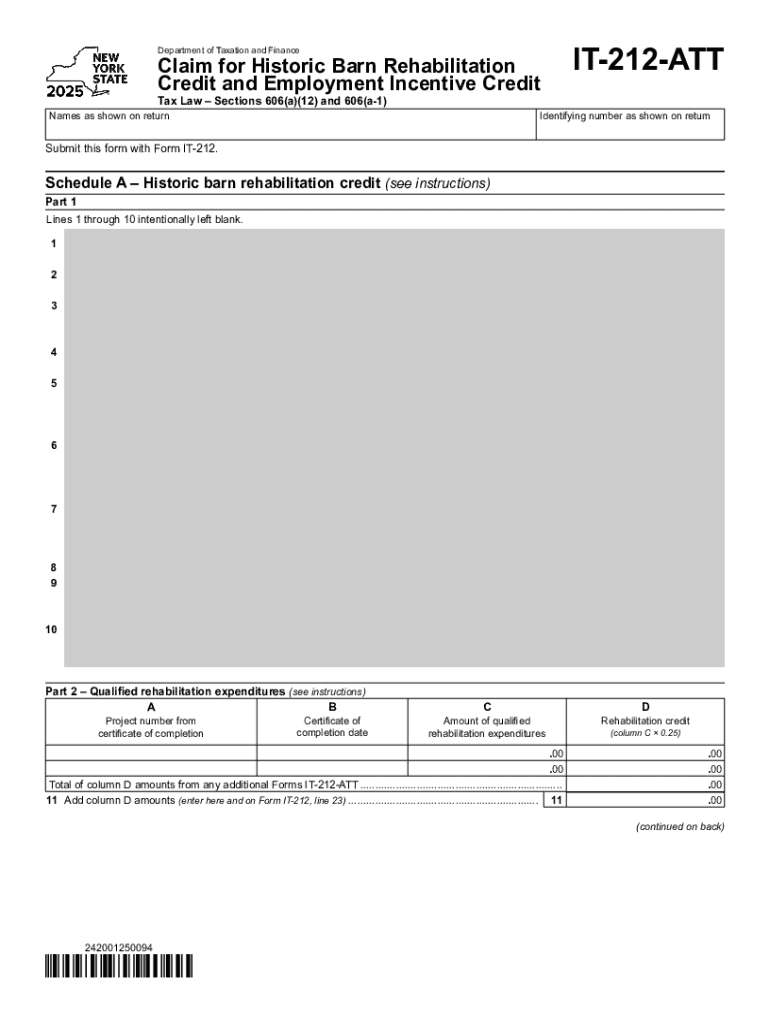







Understanding the Form IT-212-ATT
The Form IT-212-ATT, also known as the Claim for Historic Barn Rehabilitation Credit And Employment Incentive Credit, is a vital tax document utilized in the United States. Specifically, it serves to help individuals and businesses claim tax credits related to the rehabilitation of historic barns and employment incentives. This form is part of the tax compliance process overseen by the Department of Taxation and Finance and is crucial for those seeking to reduce their state tax liability through these specialized credits.
How to Use the Form IT-212-ATT
Using the Form IT-212-ATT involves several critical steps. Taxpayers must accurately fill out the sections of the form dedicated to claiming the Historic Barn Rehabilitation Credit and Employment Incentive Credit. Each section requires precise documentation of expenditures and eligibility criteria. Taxpayers should ensure that all entries on the form correlate to actual financial data and meet the qualification requirements specified by the relevant tax laws.
Step-by-Step Instructions
- Gather necessary documents: Ensure all financial records and rehabilitation project details are at hand.
- Fill out personal details: Include information such as name, identifying number, and filing status.
- Complete credit sections: Document the eligible rehabilitation expenses and employment incentive-related data.
- Review and verify entries: Double-check all entries to ensure accuracy and completeness.
Filing Deadlines and Important Dates
Timely filing is essential when dealing with the IT-212-ATT. Taxpayers must align their form submission with both state and federal tax deadlines. Missing these deadlines can result in penalties or the forfeiture of applicable credits. Typically, this form is due with the annual tax return, which usually aligns with the April 15 federal tax filing deadline, unless an extension has been granted.
Who Typically Uses the Form IT-212-ATT
This form is primarily used by property owners who have undertaken the restoration of historic barns eligible for the credit, as well as businesses qualifying for employment incentives. These entities or individuals often include those in agricultural sectors, preservation groups, or businesses looking to expand their workforce through state-recognized incentive programs.


Eligibility Criteria for Credits
There are specific eligibility criteria to claim credits on the IT-212-ATT. For the Historic Barn Rehabilitation Credit, the barn must be certified as historic, and the work done must meet prescribed standards. The Employment Incentive Credit requires businesses to meet specific employee hiring or training benchmarks. Understanding these requirements is crucial to accurately file the form and claim the benefits.

Key Components of the Form IT-212-ATT
The form is structured to capture detailed financial information and project descriptions.
- Part 1: Captures basic taxpayer information.
- Part 2: Details expenditures and calculations related to the Historic Barn Rehabilitation Credit.
- Part 3: Outlines employment data for the Employment Incentive Credit.
State-Specific Regulations
The usage of Form IT-212-ATT can vary based on state-specific tax regulations. While the federal guidelines provide a broad framework, individual states may have unique provisions that influence the eligibility and calculation of credits. For example, states may set additional criteria related to the age of a barn or specific employment thresholds for businesses.
Legal Implications of Using the Form
Accurate completion and submission of the IT-212-ATT carry significant legal weight. Misrepresentation or errors can lead to audits or penalties. It is advisable to consult with a tax professional to ensure compliance with all legal requirements and prevent potential legal repercussions associated with incorrect filings.
Obtaining the Form IT-212-ATT
The form can be obtained directly from the state's Department of Taxation and Finance website or through professional tax software that supports state tax forms. Ensuring access to the correct and most recent version of the form is essential for compliance and accuracy in reporting.