






Definition and Purpose of Form IT-205-T Allocation of Estimated Tax - Tax NY
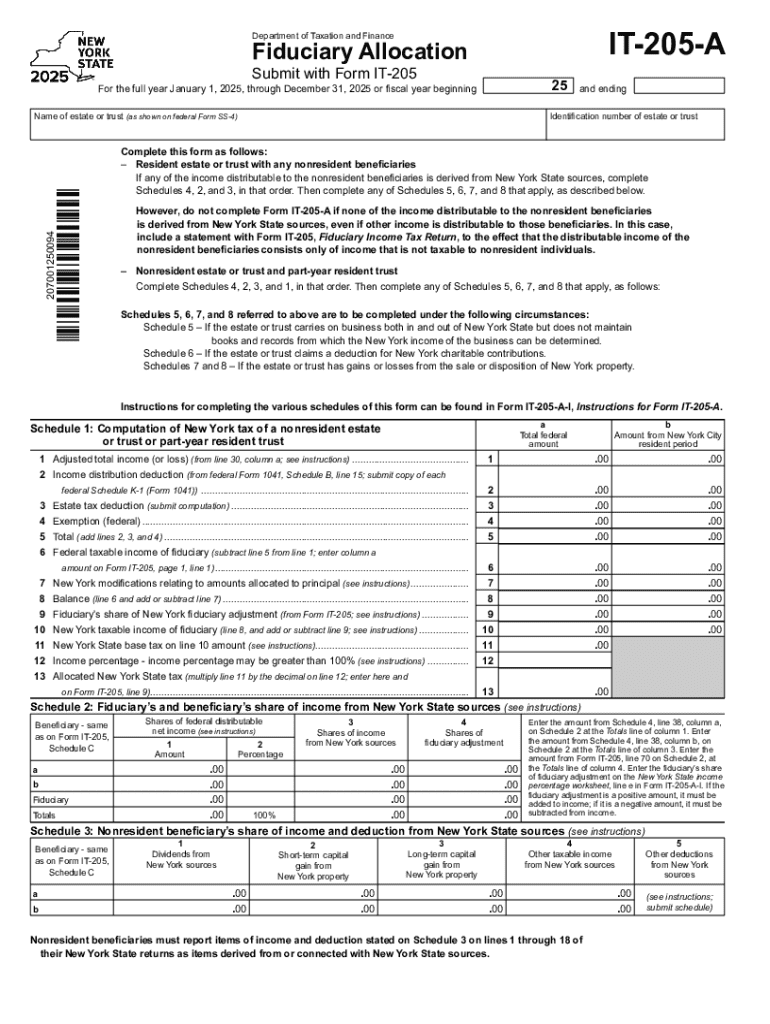
Form IT-205-T, Allocation of Estimated Tax, is designed for fiduciaries, such as executors or trustees, managing estates or trusts. Its primary purpose is to allocate estimated tax payments made by the estate or trust to beneficiaries. This allocation allows beneficiaries to include their share of the estimated tax in their personal tax returns, aligning with their income reporting requirements.
Specific scenarios often necessitate the use of this form. For example, when a trust anticipates taxable income for beneficiaries, submitting this form enables a more accurate distribution of tax obligations, ultimately reducing discrepancies in tax assessments.
How to Use Form IT-205-T
Using Form IT-205-T involves several critical steps to ensure proper allocation and compliance. First, fiduciaries must determine the total estimated tax payments made by the estate or trust during the tax year. These payments must then be proportionally allocated to each beneficiary based on their share of the income or other specific arrangements outlined in the trust or estate plan.
- Identify the total estimated tax payments.
- Calculate each beneficiary’s share based on the proportional income distribution or other designated method.
- Complete the form with detailed allocations for each beneficiary, including their name, social security number, and allocated tax amount.
For example, if an estate made $10,000 in estimated tax payments and two beneficiaries are entitled to equal shares, each beneficiary should be allocated $5,000 on the form.
Steps to Complete the Form IT-205-T
Completing this form requires careful attention to detail and thorough documentation. Follow these steps to accurately fill out Form IT-205-T:
- Collect Information: Gather necessary details, including the total estimated tax payments and beneficiary information.
- Calculate Allocations: Calculate the amount of tax to be allocated to each beneficiary.
- Complete the Form: Fill in sections for the fiduciary and surviving spouse, if applicable, followed by detailed allocations for each beneficiary.
- Review and Submit: Double-check all calculations and entries for accuracy before submission.
- Record Keeping: Retain copies of the completed form for future reference and compliance audits.
In a scenario where the trust has a diverse group of beneficiaries, careful calculation and documentation become essential to ensure equitable tax allocation and fulfillment of fiduciary responsibilities.
Who Typically Uses Form IT-205-T
This form is primarily utilized by fiduciaries, such as executors or trustees, managing estates or trusts within New York State. Beneficiaries of an estate or trust, such as individual family members or charitable organizations, are also indirect users, as they will receive their share of estimated tax allocations.
In particular, estates or trusts that generate significant income requiring estimated tax payments will frequently use Form IT-205-T. Fiduciaries managing these entities should be well-versed in the form's requirements to ensure compliance and equitable distribution of tax liabilities.
Key Elements of Form IT-205-T
Understanding the key elements of Form IT-205-T is crucial for accurate completion:
- Fiduciary Information: Details about the trust or estate, including name, address, and federal ID number.
- Allocation Details: Sections detailing allocations for each beneficiary, which include their names, addresses, and social security numbers.
- Payment Details: Total estimated tax payments made by the trust or estate that require distribution.
Each element plays a vital role in ensuring all parties involved are correctly documented, and the allocated taxes align with lawful distribution practices.
IRS Guidelines and Filing Deadlines
While Form IT-205-T is a New York State form, it is subject to federal guidelines on tax reporting and compliance. Fiduciaries must adhere to specific filing deadlines, typically aligning with the estate or trust's annual tax return due dates. Delays or errors in filing can result in penalties or misallocated taxes, leading to potential legal complications.
To prevent issues, fiduciaries should be mindful of:
- Filing Dates: Aligning form submission with estate or trust tax deadlines.
- Compliance with IRS Regulations: Following IRS guidelines on fiduciary responsibilities and tax allocations.
- Accurate Reporting: Ensuring all figures and beneficiary information are correct and verified.
Legal Use and Compliance for Form IT-205-T
Legal compliance is a cornerstone of using Form IT-205-T effectively:
- Fiduciary Duty: Fiduciaries must exercise due diligence in managing and reporting trust or estate tax responsibilities, including precise beneficiary allocations.
- Documentation: Accurate record-keeping and documentation are essential for audit trails and future references.
- Penalty Avoidance: Meeting all legal obligations, including correct form completion and timely filing, protects against possible penalties or legal disputes.
These measures ensure fiduciaries uphold their legal roles while protecting beneficiaries’ interests in tax reporting scenarios.
State-Specific Rules for the Form IT-205-T
New York State has specific regulations that govern the use of Form IT-205-T:
- State Tax Codes: Compliance with state tax codes is necessary to ensure accurate reporting of fiduciary and beneficiary tax obligations.
- Allocation Requirements: New York State dictates certain methodologies for allocating estimated taxes among beneficiaries, requiring precise adherence.
- Updates and Amendments: Fiduciaries must remain abreast of any legislative changes that could impact the form’s applicability or compliance requirements.
By following state-specific rules, fiduciaries can ensure smooth operation and compliance of trusts or estates under their management.