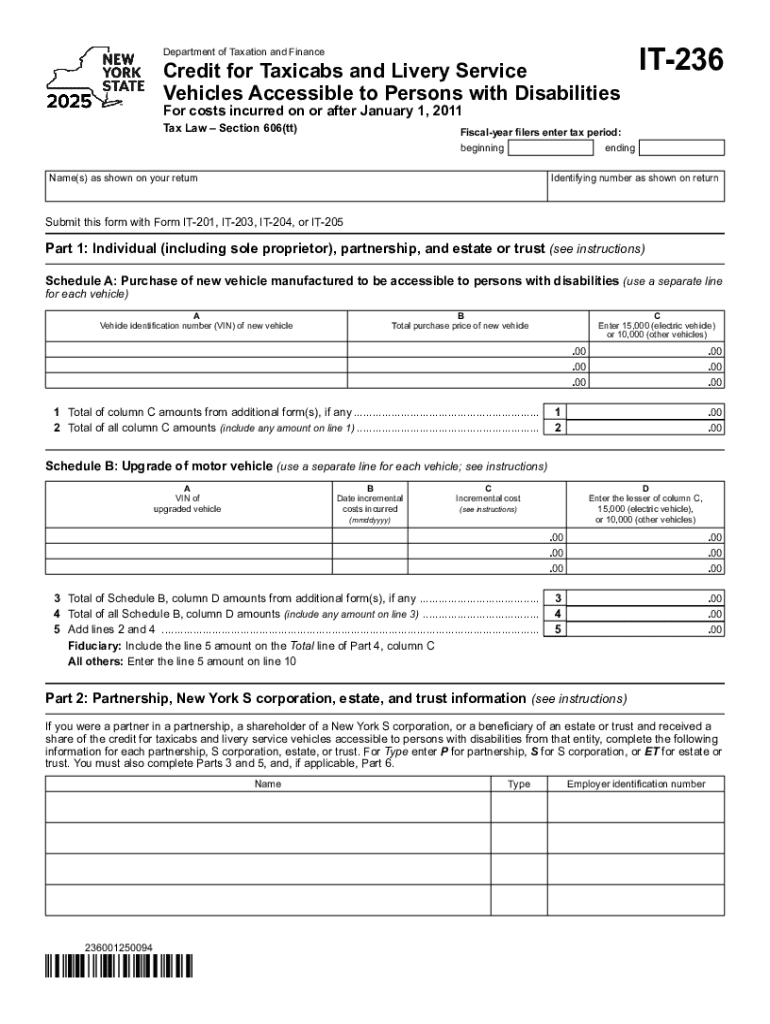







Definition and Meaning of Form IT-236
Form IT-236 Credit for Taxicabs and Livery Service Vehicles Accessible to Persons with Disabilities is a tax form used in the United States to help offset the costs associated with making taxicabs and livery service vehicles accessible to individuals with disabilities. This credit is part of an effort to improve accessibility and ensure equal service opportunities for all individuals, enhancing mobility for persons with disabilities and supporting transportation service providers in achieving compliance with accessibility standards. By understanding the specifics of this form, taxpayers can properly claim the credit during applicable tax years.
Detailed Explanation
- Purpose: To provide tax credits to individuals or businesses that incur expenses for making vehicles accessible. This supports compliance with accessibility regulations and promotes inclusivity in transportation services.
- Scope: Primarily targets costs related to modifications or purchases that enhance vehicle access for disabled individuals.
- Applicable Costs: Includes expenditures for ramps, lifts, and other modification services necessary for ensuring vehicle accessibility.
How to Use the Form IT-236
Form IT-236 is designed to be integrated into your regular tax filing process. It allows individuals and businesses to apply for a tax credit against their state income tax liability based on the costs they have incurred to make their transport services accessible.
Step-by-Step Process
- Identification of Eligible Expenses: Before using the form, identify all expenses related to making vehicles accessible. This can include the purchase of new accessible vehicles or retrofitting existing vehicles.
- Gather Necessary Documentation: Ensure you have all receipts, invoices, and any other relevant documents that substantiate the amount spent during the tax year.
- Complete the Form: Fill out Form IT-236 by entering the total qualifying costs. Ensure that you follow the instructions provided with the form to calculate the credit accurately.
- File with Annual Taxes: Submit the completed Form IT-236 along with your state income tax return to claim the credit.
How to Obtain the Form IT-236
Obtaining Form IT-236 can be done through various methods as it is a standard state-level tax document. Taxpayers should be familiar with their state’s procedures for tax form distribution.
Methods to Access the Form
- State Department of Taxation and Finance Website: Taxpayers can download the form directly from the official website or request a physical copy through mail.
- Tax Preparation Software: Some certified tax preparation software programs provide access to commonly used forms, including Form IT-236.
- Professional Tax Advisors: You can also obtain the form through a certified tax advisor who might provide printed copies or guide you on where to get it online.
Steps to Complete the Form IT-236
Filling out Form IT-236 requires attention to detail and an understanding of the qualifying expenses for the tax credit. Here are the generalized steps for completion.
Completing the Form
- Enter Personal/Business Information: Fill in your personal or business details, including name, address, and taxpayer ID.
- Document Eligible Expenses: Accurately list all expenses incurred for accessibility modifications or purchases.
- Calculate the Credit: Use the form's instructions to determine the total allowable credit. This involves applying formulas or thresholds outlined in the form for the calculation.
- Review and Attach: Double-check all entries for accuracy and attach any required supporting documents before submission.
Eligibility Criteria for Form IT-236
Not every taxpayer is eligible for the IT-236 credit. It's crucial to ensure that you meet the eligibility requirements before planning to claim this form.


Requirements to Consider
- Type of Expenses: Only specific expenses related to making vehicles accessible qualify for the credit. This includes installations and modifications made explicitly for improving accessibility for individuals with disabilities.
- Date of Expenditure: Some expenditures must occur within a particular time frame to be eligible, typically within the tax year for which you're filing.
- Recipient of Services: The applicant must be the party that incurred the costs, and the expenses must be related to vehicles used for public transportation services.
Key Elements of Form IT-236
Understanding what constitutes the key elements of Form IT-236 is essential for correctly claiming the credit. These elements guide applicants in compiling and verifying the information needed for submission.
Important Components
- Verification of Expenses: Accurate documentation serves as proof of incurred costs. Receipts and invoices should be itemized to reflect the nature and purpose of each expense.
- Credit Limitations: There may be a cap on the maximum credit allowable per year. Understanding these limits helps prevent overestimating the credit.
- Filing Requirements: Specific instructions for attaching Form IT-236 to your state return must be followed diligently to avoid processing delays or denials.
Legal Use of Form IT-236
The legal context of Form IT-236 involves understanding how it's used under current tax laws and regulations. Proper adherence ensures compliance and maximizes the benefit obtained from the credit.
Compliance Guidelines
- Regulatory Standards: Ensure that all modifications or purchased equipment meet state-defined accessibility standards.
- Recordkeeping: Maintain all relevant records for a minimum period as required by state law, in case of audits or inquiries.
- Claim Limitations: Be aware of any statutory caps on the amount of credit that can be claimed annually to remain within legal bounds.
State-Specific Rules for Form IT-236
The availability and specifics of Form IT-236 may vary based on state laws, requiring applicants to be attentive to local regulations.
Considerations by State
- State Legislation: Some states might have variations in terms of eligibility criteria or how the credit is calculated, influenced by local laws.
- Filing Deadlines: Adhere to state-specific deadlines to ensure the application is processed within the tax year.
Business Types That Benefit Most from Form IT-236
Different business entities, such as LLCs, corporations, and partnerships, may find varying advantages from claiming this credit based on their operation scale and accessibility commitments.
Business Considerations
- Transportation Companies: Those offering taxi and livery services are primary beneficiaries, as the credit offsets significant costs in maintaining an accessible fleet.
- Public Service Operators: Establishments that provide community transport or shuttle services may similarly benefit, supporting their mission of inclusivity and equal service access.
Important Terms Related to Form IT-236
Familiarizing oneself with key terms and definitions related to the IT-236 form can enhance understanding and facilitate accurate completion.
Terminology
- Accessibility: Modifications ensuring that services can be used by individuals with disabilities, including wheelchairs and mobility aids.
- Qualifying Vehicle: Specific vehicles designated for public use that require modification to meet accessibility standards.
- Expenditure Verification: Process of validating the expenses claimed on tax forms to ensure they meet state guidelines.
By covering these critical aspects, individuals and businesses will be better prepared to utilize Form IT-236 to optimize their tax situation while contributing to greater accessibility in transportation services.