






Definition and Meaning of Massachusetts Form 1-ES 2025
Massachusetts Form 1-ES 2025 is an essential tool for taxpayers who need to make estimated tax payments to the Massachusetts Department of Revenue. This form is particularly relevant for individuals who do not meet the requirements to have taxes withheld, such as self-employed individuals, retirees with income not subject to withholding, or those receiving significant income from non-wage sources. The form facilitates the calculation and payment of quarterly taxes, ensuring compliance with state tax obligations.
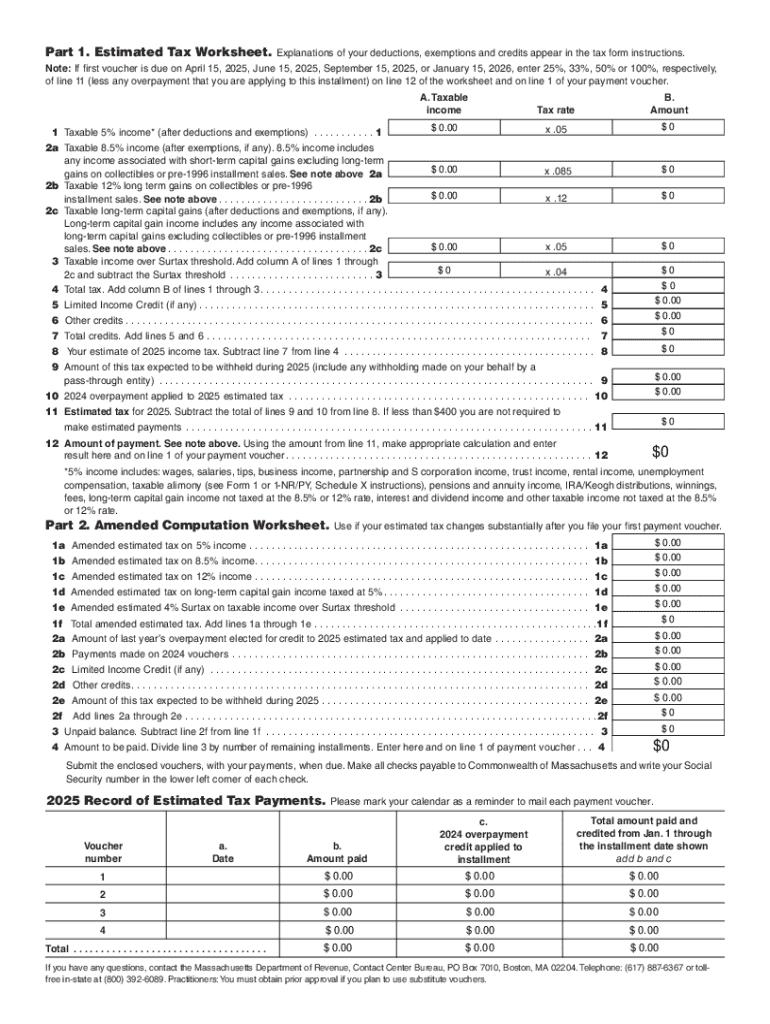
Key Elements of the Form
- Estimated Tax Worksheet: This section helps taxpayers calculate the total estimated tax amount for the year.
- Payment Coupons: These are used to remit each quarterly payment by the due date.
- Taxpayer Information: Includes fields for personal identification, Social Security number, and contact information.
How to Use Massachusetts Form 1-ES 2025
Using Massachusetts Form 1-ES 2025 effectively involves understanding each component and allocating time for careful calculations. The primary steps include:
- Calculate Annual Income: Estimate your total income for the tax year, including wages, investment income, and any other sources.
- Determine Deductions and Credits: Identify any deductions or credits applicable to your situation to reduce the taxable amount.
- Compute the Payment Amount: Use the worksheet to calculate the estimated tax liability, dividing it into four quarterly payments.
- Submit Payments: Accompany each payment with the corresponding coupon.
How to Obtain Massachusetts Form 1-ES 2025
This form can be accessed easily through several channels:
- Online: Download directly from the Massachusetts Department of Revenue website.
- Tax Software: Programs like TurboTax often provide links to necessary forms.
- Professional Tax Preparers: Many CPAs and tax advisors supply clients with the needed documents.
Steps to Complete the Massachusetts Form 1-ES 2025
Completing the form accurately is crucial to avoid underpayment penalties. Follow these detailed steps:
- Download or Access Form: Ensure you have the latest version available for 2025.
- Personal Information: Fill in your name, Social Security number, and address.
- Carry Out Calculations: Utilize the provided worksheet to estimate tax liability.
- Fill Payment Coupons: Insert calculated payment amounts into each quarterly coupon.
- Mail or Submit Online: Depending on your chosen submission method, send the form via mail or electronically.
Important Notes
- Ensure all calculations are precise.
- Retain a copy of each submitted form and payment receipt for your records.
Who Typically Uses the Massachusetts Form 1-ES 2025
This form is primarily used by:
- Self-Employed Individuals: Those without tax withheld through employer payroll.
- Retirees with Non-wage Income: Such as pensions or investment returns.
- Investors: Individuals with significant capital gains or dividends.
- Independent Contractors: Those deriving income directly from clients.


Filing Deadlines and Important Dates
Meeting filing deadlines is crucial to avoid penalties. Important dates include:
- April 15: First-quarter payment.
- June 15: Second-quarter payment.
- September 15: Third-quarter payment.
- January 15 of the following year: Fourth-quarter payment and any reconciliation.
Legal Use of Massachusetts Form 1-ES 2025
Proper filing of Form 1-ES 2025 aligns with state tax laws, ensuring:
- Compliance: With Massachusetts estimated tax payment regulations.
- Avoidance of Penalties: Accurate calculation and timely payment prevent costly underpayment penalties.
- Eligibility: To reduce potential audits or additional inquiries from the Department of Revenue.
Required Documents for Completing Massachusetts Form 1-ES 2025
Having the following documents ready will streamline the process:
- Income Statements: 1099s, investment reports, or other earning documents.
- Prior Year’s Tax Return: Helpful for calculating current-year projections.
- Personal Identification: Social Security number and contact details for verification.
Practical Example
A self-employed graphic designer in Massachusetts estimates her annual income using this form, calculates necessary deductions for materials and supplies, and submits payments each quarter. By following the outlined steps and keeping precise records, she remains compliant with state tax obligations and avoids financial penalties.