Definition & Meaning
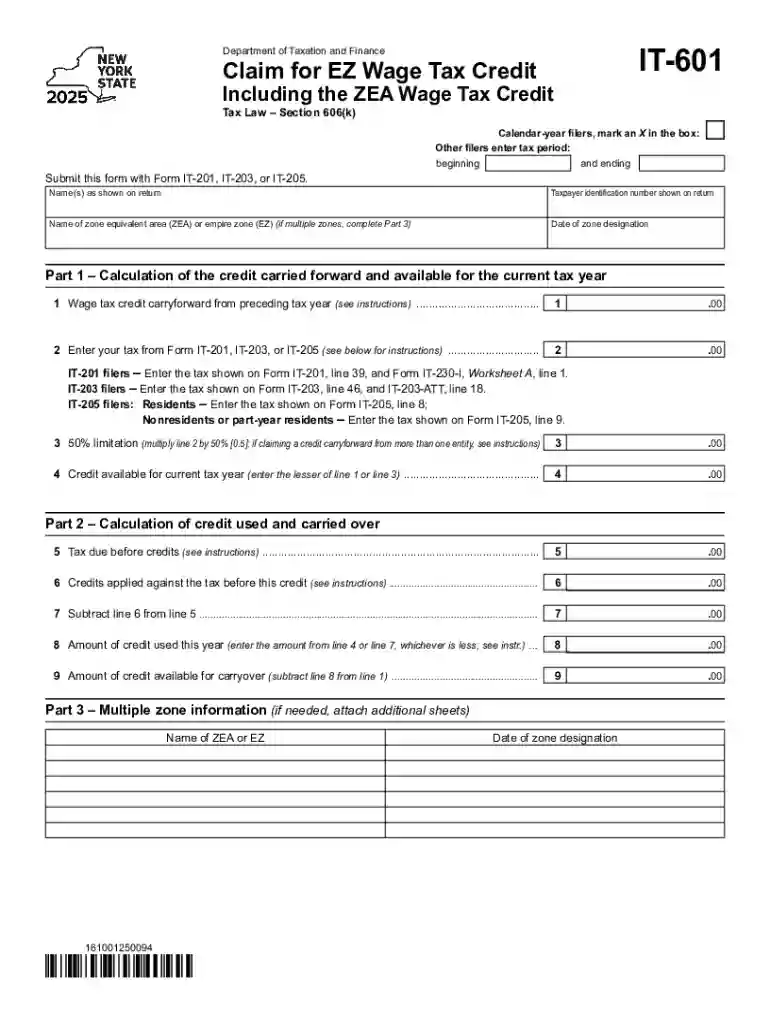
The Form IT-601, officially titled "Claim for EZ Wage Tax Credit Tax Year," is a vital document used by businesses in the United States seeking to claim tax credits associated with the Empire Zone (EZ) Wage Tax Credit. This credit is part of broader efforts to encourage economic development and job creation in designated areas. The form allows qualifying businesses to report wage payments made to eligible employees in these zones and claim corresponding tax credits. These credits aim to reduce the overall tax liability of businesses operating within these economically challenged regions, incentivizing investment and employment within the zones.
Key Elements
- Zone Establishment Area (ZEA) Wage Tax Credit: This component includes incentives related to wage payments for jobs created in specifically designated ZEA areas, providing a focused benefit for job creation within economically challenged localities.
- Eligible Employees and Wages: The form requires detailed documentation regarding the employees eligible for the EZ Wage Tax Credit, focusing on the wages paid that qualify for the credit. This involves compliance with specific criteria set by the state.
- Tax Law Section 606(k): The form operates under this legal structure, detailing the specific rules and operations for claiming the credit, including mandated adherence to all related tax regulations.
How to Obtain the Form IT-601 Claim For EZ Wage Tax Credit Tax Year
To acquire the Form IT-601, businesses can access it via the Department of Taxation and Finance's official website. The form is readily available for download, ensuring accessibility for all eligible entities. Businesses may also obtain physical copies from regional tax offices, or by requesting print editions through official state communication channels.
Form Access Points
- Online Platforms: Websites maintained by the state tax department are the primary sources for downloading the form. Digitally accessing it ensures users receive the most up-to-date version.
- Tax Advisor Assistance: Engaging with a professional tax advisor can also facilitate obtaining the form, as advisors typically maintain copies of relevant documents for client purposes.
- Regional Tax Offices: In cases where digital access is limited, visiting or contacting a local tax office can secure a physical form copy.
Steps to Complete the Form IT-601
Completing the Form IT-601 requires careful attention to detail, ensuring accurate data entry and compliance with relevant guidelines.
- Gather Required Information: Collect all necessary employee information, such as employment dates, wage amounts, and their eligibility based on the ZEA guidelines.
- Enter Employer Information: Fill in the business's name, employer identification number (EIN), and contact details as required on the form.
- Document Employee Wages: Input total wages paid to each qualifying employee during the tax year to accurately compute the credit.
- Calculate the Credit: Use the form’s instructions to calculate the credit amount, ensuring all computations align with the provided guidelines.
- Review and Sign: Double-check all entered information for accuracy before adding authorized signatures.
- Submit the Form: Submit the completed and signed form, adhering to the specified method (online, mail, or in-person), along with any other required documents.
Who Typically Uses the Form IT-601
Businesses that employ individuals within designated Empire Zones are the primary users of this form. These entities are typically those seeking to leverage tax incentives for economic development and job creation.

Target Entities
- Small Businesses: Local enterprises operating within specific zones can significantly benefit from the credits to reduce their financial burdens.
- Corporations and Large Enterprises: Larger businesses with extensive operations in designated areas can utilize these credits to enhance their bottom lines.
- Partnerships and Joint Ventures: Collaborative business structures operating within qualified regions are eligible to apply and benefit collectively.
Eligibility Criteria
The Form IT-601 claims process is contingent on specific eligibility rules, defining who can apply and the parameters for claiming credits.

- Zone Area Requirements: Businesses must operate within predefined Empire Zones or ZEA areas to qualify for the credit.
- Employee and Wage Criteria: Employees must meet particular criteria, such as employment duration within a zone and earning qualifying wages.
- Business Registration: Entities must maintain proper registration with state authorities to be eligible for claiming the credit.
IRS Guidelines
Adhering to IRS guidelines when filing Form IT-601 is crucial for compliance and securing tax credits. Businesses must align their filings with federal and state regulations to ensure the proper application and return processing.
Compliance Tips
- Keep Detailed Records: Maintaining comprehensive records of all employee wages and corresponding requirements ensures that the information is readily available for IRS inspections or audits.
- Regular Updates: Be attentive to federal and state updates regarding tax credits and zone designations to protect against misinformed filings.
Filing Deadlines / Important Dates
Adhering to filing deadlines is critical to claiming the EZ Wage Tax Credit successfully. Missing these deadlines can lead to forfeiture of potential tax benefits.
Calendar Year Filers
- Regular Filing Timeline: Usually within the yearly tax cycle, aligning with standard business return deadlines.
- State Specific Deadlines: Some states may offer different deadline extensions. Checking state-specific requirements is essential for compliance.
Required Documents
Document Checklist
- Employee Earnings Records: Detailed reports of employee wages paid within the relevant tax year.
- ZEA Certification: A proof of eligibility or certification confirming the business’s operations within designated zones.
- Business Identification Details: Ensures completeness for registration and verification purposes.
Legal Use of the Form IT-601
Employing this form serves both a legal obligation and a financial strategy for eligible businesses within tax zones, safeguarding compliance and facilitating economic benefits through appropriate use.
Strategic Benefits
- Tax Liability Reduction: The main advantage is the decrease in payable tax, potentially enhancing fiscal sustainability.
- Zone Development Support: Through use of this form, businesses contribute to and benefit from regional economic development, reinforcing reciprocal growth.
State-by-State Differences
While the federal framework is consistent, state-specific regulations and zone designations can vary, affecting how businesses qualify and file within different jurisdictions.
Key Variations
- Different Zone Criteria: Each state may have unique parameters for what qualifies as an Empire Zone, affecting eligibility.
- Specific Filing Guidelines: States may impose additional requirements or forms specific to their regulatory environment.
Taxpayer Scenarios
Taxpayer scenarios influencing the application process can vary widely depending on business structure, operational zone, and employee demographics.

Common Scenarios
- Self-Employed Entrepreneurs: Those operating solo ventures can apply if they meet zone hiring and wage requirements.
- Corporate Entities: Larger organizations working in synchronization across multiple zones may have alliance options for streamlined processing.