






Definition and Purpose of Form M-8736
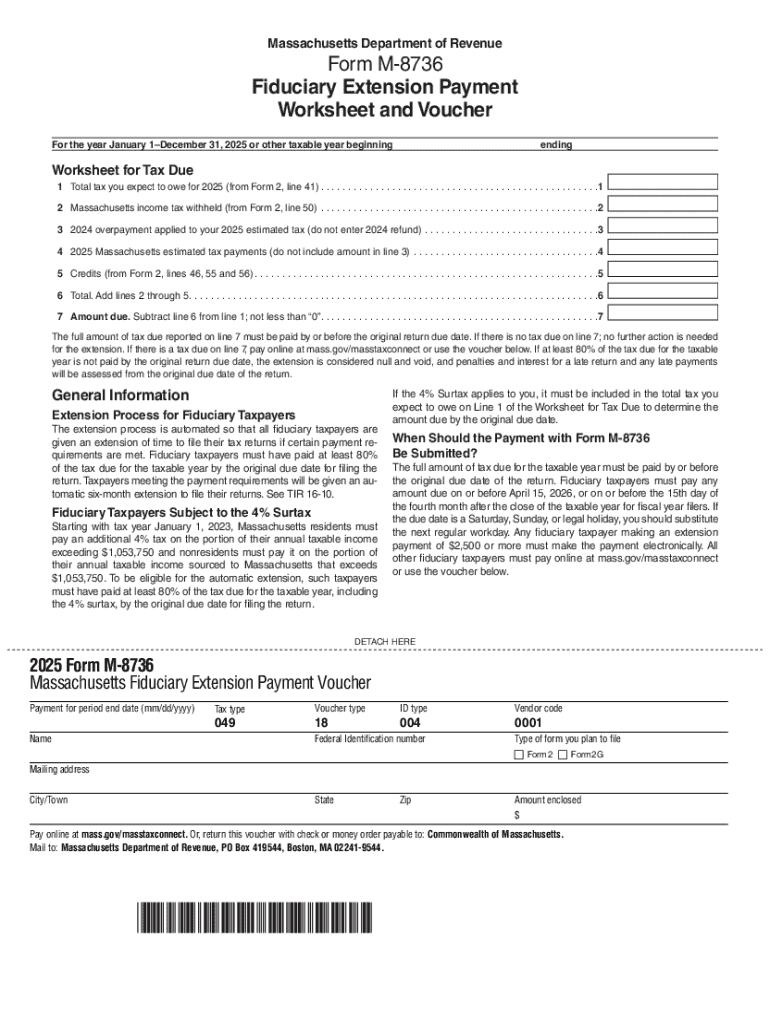
Form M-8736, known as the Application for Extension of Time to File, is primarily used by taxpayers seeking additional time to submit their fiduciary tax returns. This form is crucial for those unable to file their taxes by the original due date, helping them avoid potential late-filing penalties. It aligns with both federal and Massachusetts state tax regulations by providing an option to extend the filing deadline. The extension, however, does not extend the time to pay any taxes due, which must still be paid by the original filing deadline to avoid interest and penalties.
Key Features and Benefits
- Allows taxpayers to request an extension for filing fiduciary tax returns.
- Must be submitted before the original tax deadline to be valid.
- Does not extend the deadline for payment of taxes; only for submitting the paperwork.
- Helps avoid penalties for late filing, although interest on unpaid taxes will still accrue.
Importance
Understanding the function of Form M-8736 ensures taxpayers can effectively manage their tax obligations, avoiding unnecessary fines. It is particularly significant for those with complex tax situations that require additional time to prepare accurate and complete returns.
How to Use Form M-8736
To effectively utilize Form M-8736, taxpayers should follow a structured process. This form is primarily applicable for the extension of filing fiduciary income tax returns in Massachusetts.
Steps to Use Form M-8736
- Determine Filing Need: Assess if there is a need for extra time to complete fiduciary tax filings.
- Gather Information: Collect all necessary documents that may impact the filing, such as income statements and previous tax returns.
- Complete the Form: Fill out Form M-8736, including the taxpayer’s information and the amount being paid with the extension request.
- Review for Accuracy: Double-check all entered details to ensure the form’s accuracy to avoid rejection or future tax issues.
- Submit the Form: File the form before the original tax return due date, ideally via mail or as allowed by relevant tax authorities.
Practical Examples
Using the form appropriately might involve a small business where the bookkeeping records are not yet ready. Alternatively, individuals dealing with multiple estate accounts might need more time to compile accurate records.
Obtaining Form M-8736
Form M-8736 is accessible through various channels for Massachusetts taxpayers who require an extension to file their fiduciary income tax returns.
Methods to Obtain the Form
- Download Online: Visit the official Massachusetts Department of Revenue website to download a PDF version of Form M-8736.
- Request by Phone: Contact the Massachusetts Department of Revenue directly to request a mailed copy of the form.
- Visit Local Offices: Available at select Massachusetts Department of Revenue branch offices.
Considerations
Ensure downloading the most current version of the form to avoid processing issues. Keep in mind that older versions might be incompatible with updated filing procedures and requirements.
Steps to Complete Form M-8736
Completing Form M-8736 involves several specific steps to ensure that taxpayer information is accurately represented, facilitating a valid extension request.
Detailed Steps
- Fill the Header Section: Enter taxpayer identification, including name, Social Security Number, or Tax Identification Number.
- Specify the Tax Year: Clearly note the tax year for which the extension is being requested.
- Payment Calculation: Calculate and include any payment being remitted with this form if there's a balance due with the extension request.
- Contact Information: Provide contact details for future correspondence regarding the extension request.
- Sign and Date: Ensure the form is signed and dated; unsigned forms are not considered valid.
- Mail or Submit Electronically: Adhere strictly to submission instructions, utilizing secure methods to avoid delays or misrouting.
Example Scenarios
- An estate administrator needing more time to sort complex financial matters would follow these steps to ensure compliance.
- An individual needing more time due to unexpected financial adviser turnover might utilize the form in a similar manner.
Legal Use and Compliance
Legal compliance with Form M-8736 ensures that the taxpayer is adhering to all fiduciary tax obligations while requesting additional time for filing.
Regulations and Guidelines
- Timeliness is Crucial: Must be submitted before the original tax deadline to be valid.
- Compliance with IRS Requirements: Aligns with federal regulations and necessitates the payment of taxes by the original deadline, even if more time is granted for filing.
Consequences of Non-Compliance
Failing to submit Form M-8736 properly can lead to penalties. Incorrect usage, such as late submission or improper form filling, results in denial of the extension request and potential fines.
IRS Guidelines for Form M-8736
Using Form M-8736 requires compliance with IRS guidelines, especially concerning federal tax law and filing procedures.
Integral IRS Rules
- Alignment with Federal Extensions: Though state-specific, it should be complemented with relevant federal extension forms to ensure dual compliance if required.
- Federal Penalties: Interest accrues on unpaid taxes regardless of an approved extension, necessitating federal as well as state compliance for those with overlapping tax obligations.
Application Process
Following IRS guidelines ensures seamless state-federal tax handling, particularly relevant for cross-jurisdictional fiduciary obligations.
Filing Deadlines and Required Documents
Meeting filing deadlines is a fundamental requirement when applying for an extension using Form M-8736, alongside gathering all necessary documents.
Important Dates
- Original Deadline: Typically April 15, but subject to variation based on state-specific announcements.
- Extension Deadline: Six-month extension generally provided, hence new deadline typically October 15.
Document Checklist
- Previous year tax returns
- Supporting tax computation documents
- Payment proof for any amount due
Deadlines Significance
Failing to adhere to these deadlines can lead to a denial of extension requests, emphasizing the importance of meticulous planning.
Form Submission Methods
Submitting Form M-8736 can be done through several methods, each offering different levels of convenience and confirmation for the taxpayer.
Available Methods
- Mail Submission: Traditional method involving postal services; requires ensuring timely dispatch.
- Online Submission: If offered, a modern method providing instant acknowledgment of receipt.
- In-Person Submission: Visiting a local Department of Revenue office; ideal for personalized assistance and immediate confirmation.
Variability Based on Location
The method chosen may depend on the individual's location, access to internet services, or preference for confirmation of receipt.
Penalties for Non-Compliance with Form M-8736
Using Form M-8736 carries potential penalties for any forms of non-compliance, making it vital for applicants to adhere strictly to the rules and timelines.
Types of Penalties
- Late Filing Penalty: Imposed on those who file after the deadline without an approved extension.
- Interest on Unpaid Taxes: Accrued interest on any outstanding tax from the original deadline until paid in full.
- Additional State Penalties: Particular states may impose further penalties for other compliance breaches.
Mitigation Strategies
Filing accurate and timely applications and thorough understanding of payment responsibilities ensures taxpayers avoid these penalties while improving the likelihood of extension approval.
This structured guide offers a comprehensive understanding of the Form M-8736 Application for Extension of Time to File, ensuring that taxpayers can navigate their fiduciary obligations smoothly and with confidence.