






Definition & Meaning of Georgia Taxable Income and Tax Computation
Georgia taxable income refers to the portion of income that is subject to taxation by the state of Georgia. The computation of this income involves assessing your total income and making adjustments or deductions as determined by Georgia tax laws. This process is crucial for both individuals and businesses as it dictates the amount of state income tax owed. Accurately computing Georgia taxable income ensures compliance with state tax obligations and can help in planning for potential tax liabilities.
Key Elements of Georgia Tax Calculation
- Gross Income: Includes all income sources, such as wages, business income, and interest.
- Adjustments: Certain expenses and contributions may be subtracted from gross income.
- Deductions: Standard deductions or itemized deductions reduce taxable income further.
- Tax Credits: Credits directly reduce the amount of tax owed.
How to Use the Computation Form
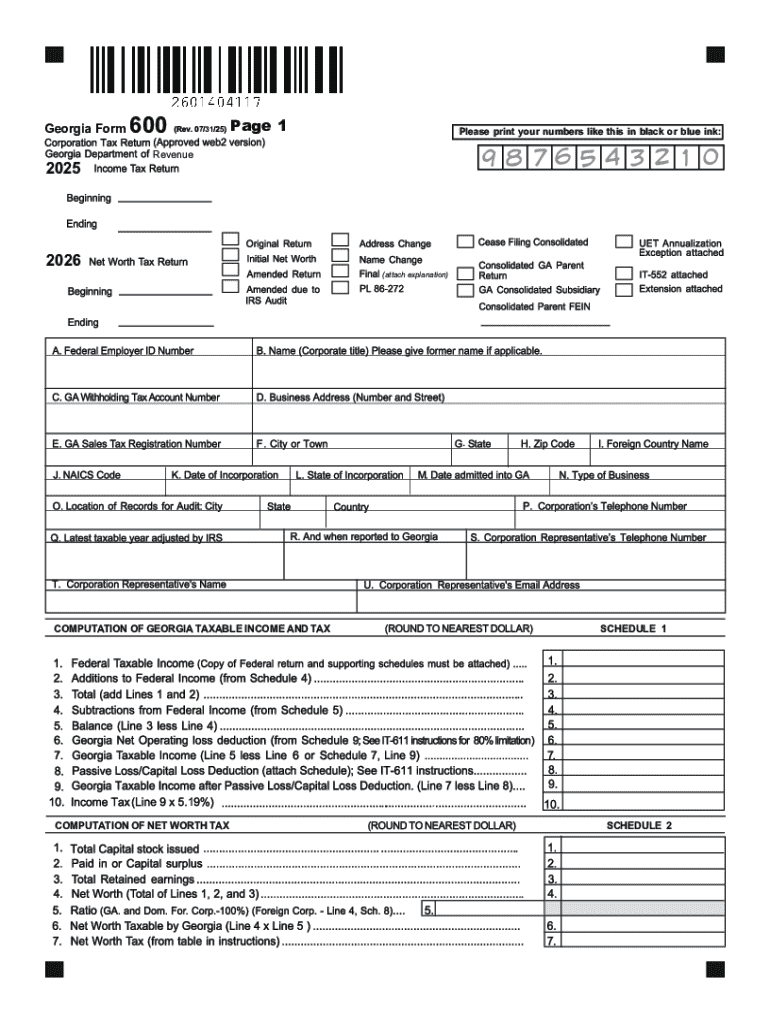
The form for calculating Georgia taxable income serves as a guide for taxpayers to accurately determine their tax obligations. It's designed to capture all necessary financial data, leading to a precise calculation of taxes owed. Utilizing the form requires a clear understanding of each section to ensure all relevant income and deductible expenses are reported.
Steps to Complete the Form
- Gather Financial Documents: Collect all income statements, receipts, and records of deductible expenses.
- Fill in Personal Information: Include details such as name, address, and Social Security number.
- Report All Income: Enter your total income from varied sources.
- Deduct Eligible Expenses: Include deductions for expenses like mortgage interest and charitable donations.
- Calculate Tax Owed: Use the provided schedules and tables to determine your taxable income and corresponding tax.
Obtaining the Georgia Tax Computation Form
The computation form for Georgia taxable income and tax is accessible through various state tax offices and their official websites. It's essential to ensure you're using the most current version of the form to reflect any recent changes in tax legislation.
Access Points
- State Tax Office Websites: Download the form online from the official Georgia Department of Revenue site.
- Physical Locations: Pick up a form at local tax offices or public libraries.
- Tax Preparation Software: Most programs include a digital version of the form for ease of use.
Importance of Accurate Tax Computation
Calculating Georgia taxable income correctly is critical for fulfilling tax responsibilities and avoiding potential penalties. Proper computation ensures you're paying the correct amount, which can protect against audits and fines.
Benefits of Accurate Computation
- Compliance: Aligns with state tax laws, preventing non-compliance issues.
- Financial Planning: Helps anticipate tax liabilities, aiding in better budget planning.
- Potential Savings: Identifies all possible deductions and credits, reducing overall tax burden.
Common Users of the Computation Form
The computation of Georgia taxable income and tax is relevant to a diverse group of taxpayers. While primarily used by residents of Georgia, non-residents earning income in the state must also complete the form.


Typical Users
- Individuals and Families: Responsible for reporting and paying state income taxes.
- Businesses: Entities within Georgia required to calculate taxes on earned income.
- Non-Residents: Those earning Georgia-sourced income need to file accordingly.
State-Specific Rules for Georgia
Georgia imposes its specific tax regulations that differ from federal and other state guidelines. Understanding these rules helps avoid miscalculations and ensures accurate tax reporting.
Notable Rules
- State Deductions: Georgia allows specific adjustments that may not align with federal deductions.
- Tax Rates: Knowing Georgia's income brackets and tax rates is vital for accurate computation.
- Residency Requirements: Rules vary for residents and non-residents concerning income reporting.
Required Documents for Tax Computation
Preparing for the computation of Georgia taxable income involves gathering a comprehensive set of financial documents. These documents provide the basis for calculating taxable income accurately.
Essential Documents
- W-2 and 1099 Forms: Details all wages and independent contractor payments.
- Expense Receipts: For deductible expenses such as business costs and medical expenses.
- Investment Statements: Reflects income from dividends and interest.
Filing Methods for the Computation Form
Various submission methods are available for filing the Georgia taxable income and tax computation form. Choosing the right method depends on convenience, technical capabilities, and timeframe.
Filing Options
- Online Submission: Fast and secure method through the Georgia Department of Revenue's website.
- Mail Submission: Traditional option, requiring physical copies sent to the state's tax office.
- In-Person Filing: Available at designated state facilities for personalized assistance.
This content aims to provide comprehensive guidance on Georgia's taxable income and tax computation, ensuring taxpayers have the information needed for compliance and efficiency in filing.