
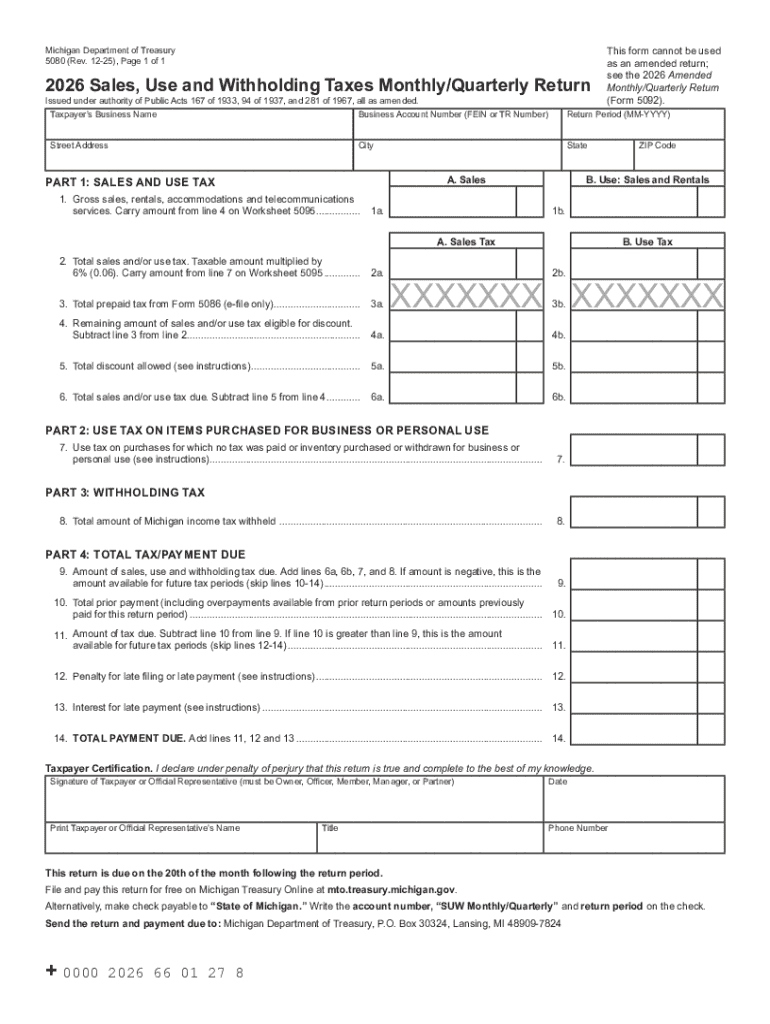







Definition and Meaning of 2026 Sales and Use Tax Forms
The 2026 Sales and Use Tax Forms are crucial documents used by businesses and individuals in the United States to report sales tax collected and use tax owed to state governments. Sales tax is typically collected by sellers from consumers as a percentage of the sale price of goods and services, while use tax is paid directly by consumers when they purchase taxable items from out-of-state sellers who do not charge sales tax. These forms ensure compliance with state tax laws, facilitate the accurate reporting of tax liabilities, and help maintain the integrity of state revenue systems.
Steps to Complete the 2026 Sales and Use Tax Forms
Successfully filling out the 2026 Sales and Use Tax Forms requires careful attention to detail. The process involves several crucial steps:
-
Gather Required Information: Collect all necessary details about your sales transactions, including total sales, taxable sales, exempt sales, and any use tax owed.
-
Calculate Tax Obligations: Use the applicable state tax rates to determine the sales tax collected and the use tax due.
-
Complete the Form: Accurately fill in all sections of the form, ensuring that both sales and use tax figures are entered correctly.
-
Review for Accuracy: Double-check all entries to prevent calculation errors or misreporting, which could lead to penalties.
-
Submit the Form: Choose the appropriate method of submission—either online, by mail, or in person—and ensure it is done before the deadline to avoid late fees or penalties.
How to Obtain the 2026 Sales and Use Tax Forms
Accessing the 2026 Sales and Use Tax Forms can be achieved through several methods:
-
State Tax Authority Websites: Visit the official website of your state’s tax department to download the forms. Each state's site typically has a dedicated section for tax forms.
-
Physical Copies: Request paper copies from local tax offices if you prefer or require physical forms.
-
Professional Tax Software: Utilize software like TurboTax or QuickBooks, which often include the capability to access and fill out tax forms electronically.
Important Terms Related to 2026 Sales and Use Tax Forms
Understanding specific terminology can aid in the accurate completion of the forms:
-
Gross Sales: The total revenue from goods or services sold before deductions.
-
Exempt Sales: Transactions that are not subject to sales tax under state law, often involving resales or sales to tax-exempt organizations.
-
Nexus: The connection or presence a business must have in a state before it is required to collect sales tax.
Filing Deadlines and Important Dates
Timeliness is vital when dealing with sales and use tax forms. Generally, these forms need to be filed monthly or quarterly, depending on the business’s volume of taxable sales:
-
Monthly Filing: Typically due by the 20th or last day of the month following the sales period.
-
Quarterly Filing: Often due by the last day of the month following the quarter’s end—March, June, September, and December.
Check your specific state’s requirements for precise deadlines.
Form Submission Methods
Submitting your forms accurately and on time involves understanding the available methods:
-
Online: Many states offer e-filing services through their tax authority websites, providing immediate submission confirmation.
-
Mail: Paper forms can be mailed, but ensure they are postmarked by the due date to avoid late penalties.
-
In-Person: Some states allow in-person submissions at designated tax offices, although this option is less common.
State-specific Rules for the 2026 Sales and Use Tax Forms
Tax requirements and compliance can vary significantly between states:
-
Rate Differences: Each state sets its own sales and use tax rates, which can fluctuate annually.
-
Exemption Rules: The types of sales and purchases that qualify as tax-exempt also differ by state.
-
Filing Requirements: Some states may have additional documentation or electronic filing mandates.
Penalties for Non-Compliance
Failing to file or pay taxes appropriately can result in various penalties:
-
Late Filing Penalty: Charged as a percentage of the unpaid tax, often accruing monthly.
-
Interest Charges: Applied to taxes owed from the original due date until paid.
-
Potential Audits: Non-compliance can trigger audits, which may result in additional fines and penalties.
Keeping informed of your state’s specific tax requirements and regularly reviewing your obligations can safeguard against these risks.


