




01. Edit your form online
Type text, add images, blackout confidential details, add comments, highlights and more.

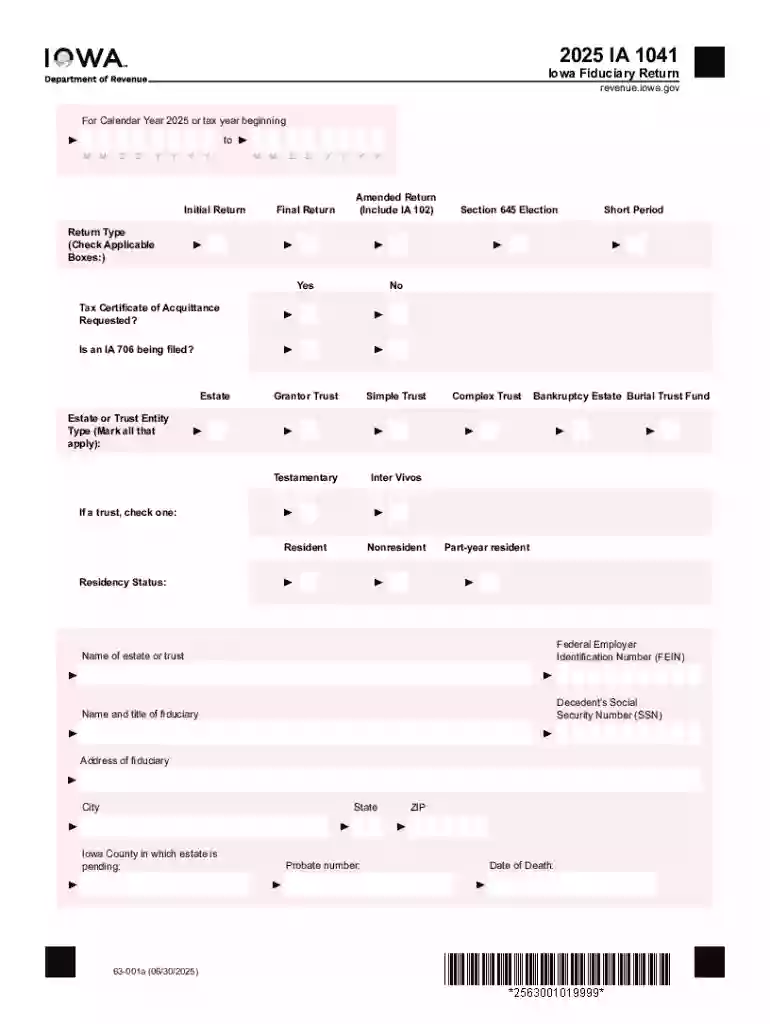
Type text, add images, blackout confidential details, add comments, highlights and more.

Draw your signature, type it, upload its image, or use your mobile device as a signature pad.

Send it via email, link, or fax. You can also download it, export it or print it out.
Forms related to fiduciary tax are essential documents used to report income, deductions, and distributions for entities such as trusts and estates. These forms help executors, administrators, or personal representatives fulfill their tax obligations by providing detailed information regarding the financial activities of fiduciary accounts. Fiduciary tax forms are crucial for transparency and compliance with the IRS, ensuring that fiduciaries manage the tax responsibilities of the estate or trust effectively.
Fiduciaries act as stewards of the estate's financial matters, making fiduciary tax forms a vital component in maintaining legal and ethical management. By providing detailed instructions for income and distribution reporting, these forms play an essential role in the accurate calculation and documentation of taxes owed by trusts and estates.
Using fiduciary tax forms involves several key steps that ensure accurate completion and timely submission. Understanding the purpose of each section within these forms is crucial to fulfilling all requirements. Here is a general sequence of actions to successfully use these forms:
Gather financial information – Collect all necessary financial records, including income receipts, deduction documentation, and records of distributions made during the tax year.
Understand the form's layout – Familiarize yourself with each section of the form, noting specific instructions related to income entries and available deductions.
Complete relevant sections – Fill out parts of the form that apply specifically to the trust or estate, ensuring you report all income accurately and thoroughly list all deductions.
Verify entries for accuracy – Double-check all entries to ensure accurate figures and details, which will help prevent future amendments or errors.
Completing fiduciary tax forms requires diligence and attention to detail. Follow this step-by-step guide to ensure the process is systematic and comprehensive:
Identify the correct form version – Confirm that you are using the appropriate tax year version of the fiduciary form to avoid discrepancies.
Input entity and fiduciary information – Start by providing essential details such as the entity's legal name, fiduciary name, address, and taxpayer identification numbers.
Report all income – List all incoming funds such as dividends, interests, capital gains, and any other taxable income the trust or estate received over the tax year.
Itemize deductions – Carefully document allowable deductions, which may include admin expenses, charitable contributions, taxes paid, and other qualifying costs.
Calculate total income and deductions – Determine the total taxable income by subtracting allowable deductions from total income, ensuring all arithmetic is checked for accuracy.
Fill in distribution information – Detail any distributions made to beneficiaries, proving amounts and the nature of these distributions for clear reporting.
Sign and date the form – Have the fiduciary authenticate the information with an official signature and date the form before submission.
Proper filing of fiduciary tax forms adheres to specific deadlines to avoid penalties:
Any missed dates can result in fines or interest charges, stressing the importance of noting these deadlines well in advance.
Preparation for fiduciary tax filing involves organizing several critical documents:
This documentation supports the figures reported in the forms, providing evidence in case of audits or inquiries by tax authorities.
The fiduciary tax form serves as a legal requirement under federal and most state tax laws. Fiduciaries must ensure accurate reporting of all financial transactions related to estates and trusts. Failure to do so can lead to legal consequences, underscoring the importance of precision and compliance.
IRS guidelines mandate that fiduciaries manage the tax-related responsibilities of an estate or trust. Thus, the correct use of these forms promotes transparency, accountability, and adherence to legal standards.
Fiduciary tax forms consist of several critical components:
These elements work together to construct a complete tax profile for the entity in question, ensuring a holistic representation of its tax obligations.
Failure to accurately file fiduciary tax forms can lead to significant penalties:
These penalties underscore the importance of thorough and precise handling of all fiduciary tax documentation and highlight the necessity of compliance with IRS and state tax laws.
We've got more versions of the Forms - Fiduciary Tax form. Select the right Forms - Fiduciary Tax version from the list and start editing it straight away!
| Versions | Form popularity | Fillable & printable |
|---|---|---|
| 2025 | 4.9 Satisfied (41 Votes) | |
| 2025 | 4.4 Satisfied (30 Votes) | |
| 2024 | 4.6 Satisfied (59 Votes) | |
| 2024 | 4.3 Satisfied (55 Votes) | |
| 2023 | 4.4 Satisfied (36 Votes) | |
| 2023 | 4.1 Satisfied (51 Votes) | |
| 2023 | 4.4 Satisfied (41 Votes) | |
| 2023 | 4.7 Satisfied (28 Votes) | |
| 2022 | 4.4 Satisfied (37 Votes) | |
| 2022 | 4.9 Satisfied (20 Votes) | |
| 2022 | 4.6 Satisfied (54 Votes) | |
| 2021 | 4.8 Satisfied (208 Votes) | |
| 2021 | 4.8 Satisfied (71 Votes) | |
| 2021 | 4.9 Satisfied (58 Votes) | |
| 2021 | 4.8 Satisfied (193 Votes) |
At DocHub, your data security is our priority. We follow HIPAA, SOC2, GDPR, and other standards, so you can work on your documents with confidence.


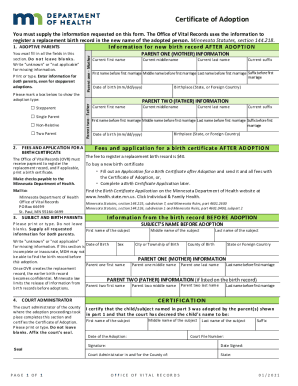
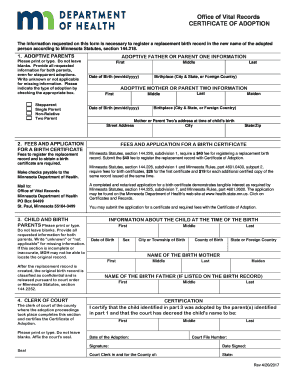


Dec 6, 2017 Individuals use Form 6251 to figure this tax. Estates and trusts use Schedule I (Form 1041). See the AMT instructions for the carry-back year.
-Every fiduciary, or at least one of joint fiduciaries, must make a return on Form 1041 for the estate or trust for which he acts if any income ofRead more
Feb 2, 2026 The fiduciary of a domestic decedents estate, trust, or bankruptcy estate files Form 1041 to report: The income, deductions, gains, losses,Read more


