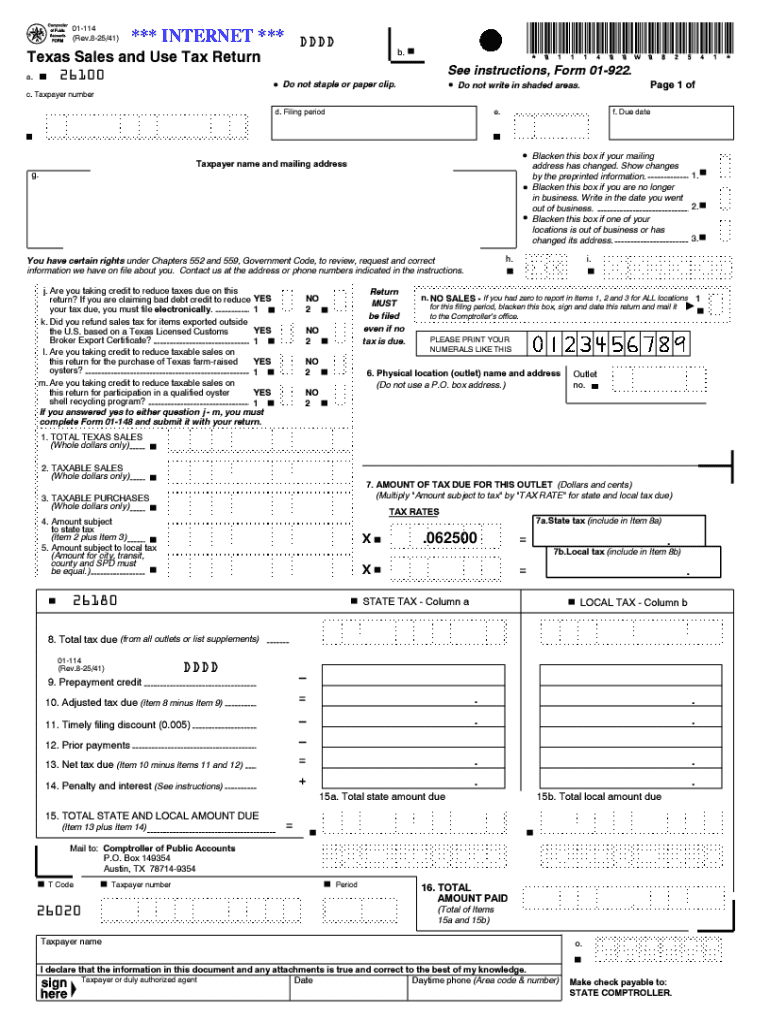







Overview of Form 01-114, Sales and Use Tax Return - Long Form
Form 01-114, commonly used in Texas, facilitates the reporting and submission of sales and use tax. It's essential for businesses engaged in selling taxable goods or services within the state. Utilizing this form ensures compliance with state tax regulations and aids in accurately calculating the amount of tax owed.
How to Use Form 01-114
The Form 01-114 is primarily used by businesses to report calculated sales and use taxes. Here's a step-by-step guide on its utilization:
- Determine Taxable Sales: Identify all sales of taxable goods and/or services.
- Calculate Tax Owed: Multiply taxable sales by the state's sales tax rate.
- Complete Sections Accurately: Fill in all required sections, including gross sales, taxable sales, and any deductions.
- Review for Accuracy: Double-check all calculations and reported figures to avoid errors.
- Submit Form Timely: Ensure submission within the specified deadline to avoid penalties.
Steps to Complete Form 01-114
Completing the Form 01-114 involves several important steps:
- Gather Documentation: Collect all necessary records, including sales ledgers and exemption certificates.
- Fill Out Identification Information: Enter your business name, taxpayer number, and applicable filing period dates.
- Report Total Sales: Identify and input total taxable sales during the reporting period.
- Deductions and Exemptions: Carefully subtract any allowable deductions or list exempt sales.
- Calculate Tax Liability: Compute the total tax due or any credits that might be applied.
- Finalize the Form: Sign and date the completed form before submission.
Important Terms Related to Form 01-114
Understanding key terms will aid in accurately completing the form:
- Taxable Sales: Sales subject to state tax, excluding exemptions.
- Tax Rate: The percentage applied to taxable sales to determine tax due.
- Exempt Sales: Transactions exempt from state tax, typically requiring documentation.
- Deductions: Allowable reductions from gross sales, such as sales tax refund claims.
Legal Use of Form 01-114
Form 01-114 ensures adherence to state tax laws, acting as:
- A formal method to declare sales and use taxes.
- A tool for claims of exemptions or deductions.
- A documented account of the taxpayer’s reported tax activity.
Key Elements of Form 01-114
Significant components of Form 01-114 include:
- Identification Section: Includes taxpayer number and contact information.
- Taxable Transactions: A precise record of all taxable activities within the filing period.
- Deduction and Exemption Entries: Captures deductions and required supporting documentation.
- Net Tax Due or Credit: Final calculation of taxes due or credits owed.
Form Submission Methods: Online, Mail, and In-Person
Different submission options cater to user preferences:
- Online: Access through official state portals for faster processing.
- Mail: Physical form sent to the designated state tax office.
- In-Person: Direct submission provides an immediate confirmation receipt.
Filing Deadlines and Important Dates
Ensure compliance by observing key dates:
- Quarterly Filers: Typically due on the 20th day of the month following each quarter's end.
- Extensions: Occasionally granted under extraordinary circumstances but must be formally requested.
Penalties for Non-Compliance
Non-compliance with tax obligations can lead to:
- Late Fees: Accrued from missed deadlines which increase over time.
- Interest Charges: On unpaid tax liabilities as per state regulations.
- Legal Action: In severe cases, state authorities may initiate legal proceedings.
Digital vs. Paper Versions of Form 01-114
The form is available in both digital and paper formats:
- Digital Version: Offers convenience and efficiency with instant submission.
- Paper Version: Preferred by those who favor traditional filing methods or lack internet access.
State-Specific Rules for Form 01-114
Texas-specific considerations include:
- Local Tax Rates: Varying local jurisdictions impose additional taxes.
- Reports on Exemptions: Must be filed in conjunction with the form to validate claims.