






Definition & Meaning
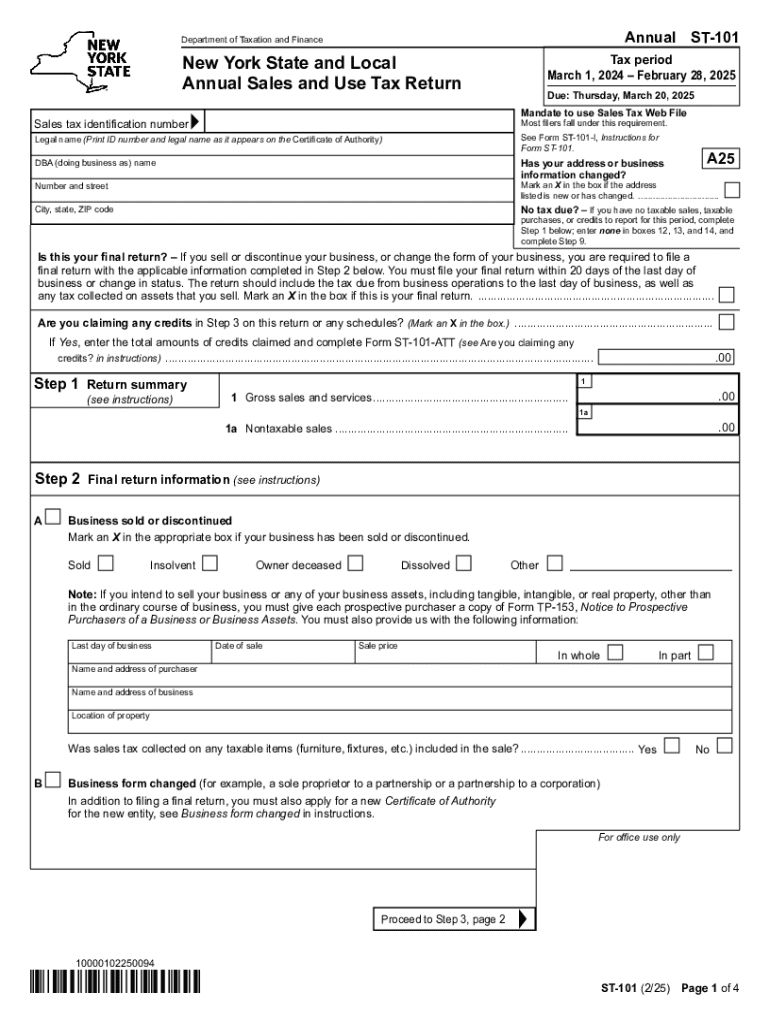
The Form ST-101 New York State and Local Annual Sales and Use Tax Return is a comprehensive document used by businesses to report and remit sales and use taxes to the New York State Department of Taxation and Finance. The revised version as of 2 25 indicates updates have been made to the documentation requirements or form structure, reflecting the state's effort to streamline tax reporting processes. This form is essential for businesses operating in New York as it ensures compliance with state tax laws, facilitating organized and accurate tax reporting to avoid penalties.
How to Use the Form ST-101 New York State and Local Annual Sales and Use Tax Return Revised 2 25
-
Gather Required Documentation: Collect records of all sales transactions subject to New York sales tax, including invoices, receipts, and any other pertinent sales documentation.
-
Calculate Tax Obligations: Use the form to calculate the total amount of sales tax collected throughout the tax period. Factor in any exemptions or deductions specific to New York tax law.
-
Complete the Form: Accurately fill out each section of the form, ensuring that all calculations are precise. This includes both state and local sales tax components.
-
Review for Accuracy: Double-check all entries to prevent filing errors that could lead to incorrect tax liabilities or penalties.
-
Submission: Submit the completed form as per guidance, using the preferred method outlined by the state—whether it be online submission, mail, or in-person delivery.
Steps to Complete the Form ST-101 New York State and Local Annual Sales and Use Tax Return Revised 2 25
-
Identify the Applicable Tax Period: Locate the tax period mentioned on the form, generally spanning March 1, 2024, to February 28, 2025, for this iteration. Ensure your records correspond to this timeframe.
-
Enter Business Information: Include your business name, address, unique tax identification number, and any related business registration details as required.
-
Report Gross Sales: Fill in the total gross sales figure, including all taxable and non-taxable sales for the period.
-
Deduct Exempt Sales: Calculate and deduct any exempt sales that are not subject to sales tax under New York State law.
-
Compute Total Tax Due: Utilize the provided tax rates to calculate the total sales tax due, including both state and local amounts.
-
Finalize and Sign: Complete any remaining sections regarding credits or adjustments and sign the form to certify its accuracy.
Important Terms Related to Form ST-101
- Gross Sales: Total sales revenue before any deductions or exemptions.
- Exempt Sales: Transactions not subject to tax under specific provisions of New York State tax law.
- Local Sales Tax: Additional tax levied by individual localities within New York State, which may vary by region.
Legal Use of the Form ST-101
Businesses are mandated to use Form ST-101 to record and remit any sales taxes due from transactions made within New York State. Legal compliance requires timely submission to avoid penalties, and the accuracy of data reported is essential to meet state-mandated tax obligations. The form's adherence to specific legal standards align with the state tax code, ensuring business practices meet all regulatory requirements.
Filing Deadlines / Important Dates
The form for the year ending February 28, 2025, is due by March 20, 2025. Businesses must adhere strictly to this timeline to avoid late filing penalties. The deadline is particularly pertinent for businesses with significant sales volumes, as delays can result in substantial financial penalties.
Required Documents
Preparation for filing requires:
- Sales Records: All sales invoices and receipts.
- Exemption Certificates: Documentation supporting tax-exempt sales.
- Prior Filings: Copies of previously filed sales tax returns to ensure continuity and accuracy.
Who Issues the Form
The New York State Department of Taxation and Finance is responsible for issuing Form ST-101. This department oversees state tax compliance, providing the form and related instructions.
Penalties for Non-Compliance
Failure to file by the due date or inaccuracies in reporting can result in:
- Fines: Monetary penalties calculated based on the amount of unpaid tax.
- Interest Charges: Additional costs levied on overdue tax payments.
- Legal Action: In severe cases, legal consequences and potential business audits.
Software Compatibility
The form is compatible with major accounting and tax preparation software such as TurboTax and QuickBooks. These platforms can assist businesses in accurately calculating and filing their sales tax returns, helping users reduce human error and streamline compliance operations.