






Definition and Purpose of "Law of Agency Ch 2 - Information About Brokerage Services"
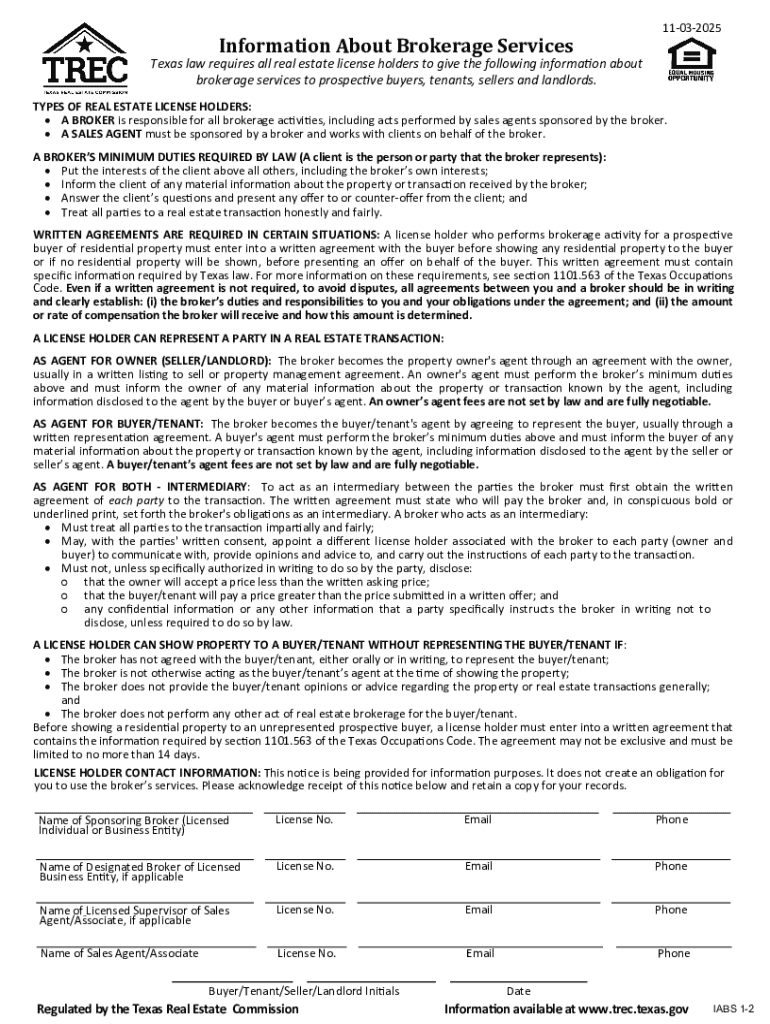
The "Law of Agency Ch 2 - Information About Brokerage Services" is a mandatory disclosure form required under Texas real estate law. It serves to inform prospective buyers, tenants, sellers, and landlords about the roles, responsibilities, and available services of real estate agents and brokers. This form ensures transparency in real estate transactions, setting clear expectations about brokerage services provided. Its primary purpose is to educate parties about client-agent relationships and the duties an agent owes, including loyalty, confidentiality, and full disclosure.
How to Use the Form
When engaging in real estate transactions in Texas, it's essential to use the "Law of Agency Ch 2 - Information About Brokerage Services" form correctly. Here's a step-by-step guide on using it:
-
Review the Form: Before engaging with any clients, real estate agents must thoroughly understand the form's contents to communicate it effectively.
-
Presentation Timing: Present the form at the first substantive communication with potential clients. This ensures that they are informed about brokerage services before making significant decisions.
-
Explain the Terms: Break down the terms and conditions for the client, ensuring they understand the roles and responsibilities of each party involved.
-
Obtain Signatures: Acknowledge that the form has been presented by requesting the client's signature. This signature indicates the client's receipt and understanding.
-
Keep Records: Retain a copy of the signed form for your records, as it demonstrates compliance with Texas regulations.
Steps to Complete the Form
Filling out the "Law of Agency Ch 2 - Information About Brokerage Services" requires attention to detail:
-
Agency Information: Input the broker's information, including name, license number, and contact details.
-
Client Details: Enter the client's name and contact information in the designated sections.
-
Types of Representation: Clarify the type of representation - whether seller, buyer, or intermediary - to ensure mutual understanding.
-
Signatures: Make sure both the agent and client sign and date the document to confirm acknowledgment.
-
Optional Customization: While the form has standard content, there’s room for customization if specific explanations or additional agency terms are necessary.
Key Elements of the Form
Several critical components are central to the "Law of Agency Ch 2 - Information About Brokerage Services" form:
-
Agency Roles: Defines the difference between an agent representing a seller, a buyer, or acting as an intermediary.
-
Rights and Responsibilities: Articulates the fiduciary duties owed by agents, such as loyalty and full disclosure.
-
Contact Information Section: Allows for documenting the broker and agent's contact details for transparency and traceability.
-
Acknowledgment of Receipt: A place for client signatures, signifying that they have received and comprehended the document's contents.
Legal Use of the Form
The form is legally mandated for all real estate transactions under Texas law to foster transparency:
-
Disclosure Compliance: Non-compliance with the requirement to provide this form can result in legal penalties or even the revocation of real estate licenses.
-
Protection in Transactions: Offers protection to both clients and agents by ensuring all parties are informed about agency relationships and expectations.
State-Specific Rules for Texas
Texas laws uniquely shape the use of this form:
-
Mandatory Disclosure: Unlike other states, Texas requires this form be given to clients at the initial meeting.
-
Consumer Protection Laws: Texas has strict regulations on real estate disclosures to protect both agents and consumers, aligning with broader consumer protection statutes.
Important Terms Related to the Form
Understanding specific terminology is vital when dealing with the "Law of Agency Ch 2 - Information About Brokerage Services":
-
Fiduciary Duty: The ethical obligation real estate agents owe to act in the best interests of their clients.
-
Seller’s Agent: Represents the seller in real estate transactions, prioritizing the seller’s interests.
-
Intermediary Status: When an agent has a previous relationship with both parties and acts impartially between them.
Software Compatibility for Digital Transactions
For those who prefer digital transactions, using DocHub offers seamless workflow integration:
-
Document Editing: Enhances user experience by allowing form edits directly on the platform.
-
E-signature Capability: Users can electronically sign, maintaining the document's legal binding status.
-
Google Workspace Integration: Convenient for individuals using Google Drive or Gmail, enabling easy import and export of forms without file conversion hassles.
Business Types That Benefit Most from the Form
While the form is meant for real estate transactions, specific business types might benefit more:
-
Real Estate Firms: Need to provide clarity on brokerage services, enhancing client trust and regulatory compliance.
-
Property Management Companies: For landlords or property managers leasing properties, using the form ensures all parties are aware of brokerage roles and duties.
-
Relocation Services: Help relocating individuals navigate the complex real estate market by understanding agent roles.
By including this comprehensive perspective on the "Law of Agency Ch 2 - Information About Brokerage Services," individuals can navigate real estate transactions confidently, avoiding legal pitfalls and ensuring transparent communication between all parties involved.