






Definition & Meaning
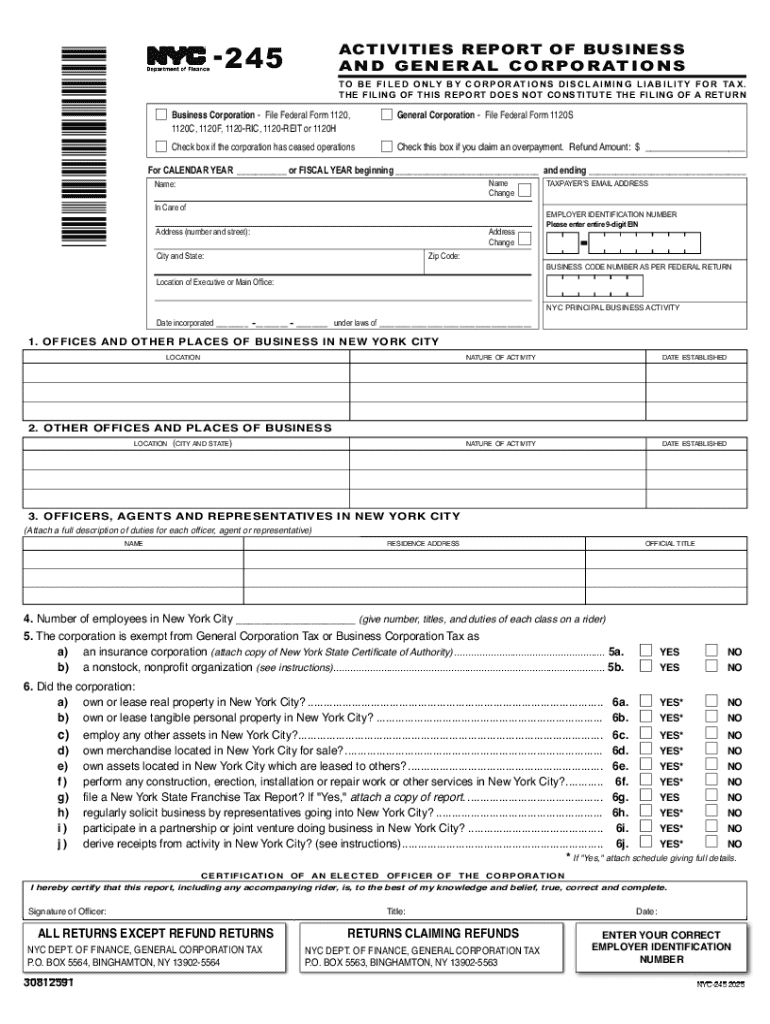
The "2025 Business Tax Filers (Taxpayer)" form is a crucial document required by businesses to report their financial activity and taxation liabilities for the fiscal year 2025. It is designed to capture detailed information about income, expenses, deductions, and credits, which are essential for calculating the correct tax obligations. This form helps ensure compliance with federal tax laws and provides a comprehensive view of a business's financial health.
Key Elements of the Form
- Income Reporting: Details income from various sources, including sales, investments, and other business activities.
- Expense Documentation: Itemizes deductible expenses, such as operational costs, salaries, and interest payments.
- Tax Credits: Lists available tax credits that can reduce the overall tax liability.
Steps to Complete the 2025 Business Tax Filers (Taxpayer)
Completing the 2025 Business Tax Filers form involves several critical steps, each of which requires precise attention to detail to ensure accuracy and compliance.
- Gather Required Documents:
- Income statements, balance sheets, and receipts.
- Previous year's tax returns for reference.
- Calculate Income and Deductions:
- Summarize total income from all sources.
- Calculate allowable deductions, including business expenses and losses.
- Identify Applicable Tax Credits:
- Review available credits and apply them accordingly.
- Review & Submit:
- Double-check all entries for accuracy.
- Submit the form via the chosen method: online, mail, or in-person.
Common Mistakes to Avoid
- Incorrect calculation of deductions or credits.
- Late submission leading to penalties.
Required Documents
To complete the 2025 Business Tax Filers form, businesses must prepare and organize several critical documents that serve as the basis for accurate reporting.
- Financial Statements: Profit and loss statements, balance sheets.
- Receipts and Invoices: For all deductible expenses.
- Previous Tax Returns: To compare and verify data consistency.
Additional Documents for Specific Situations
- 1099 Forms: For self-employed individuals or contractors.
- W-2 Forms: For businesses with employees.
Filing Deadlines / Important Dates
Understanding and adhering to the filing deadlines for the 2025 Business Tax Filers form is crucial to avoid penalties and maintain compliance.
- Standard Filing Deadline: April 15, 2026.
- Extension Filing Deadline: October 15, 2026, if an extension is requested.
- Quarterly Payment Deadlines: Applicable to businesses required to make estimated tax payments throughout the year.
Impact of Missing Deadlines
- Late fees and interest charges on unpaid taxes.
- Increased scrutiny from the IRS, potentially leading to audits.
Taxpayer Scenarios
Various taxpayer scenarios involve distinct considerations when completing the 2025 Business Tax Filers form. Understanding these scenarios can help businesses tailor their filing approach for optimal compliance.
- Self-Employed Individuals: Need to report self-employment income and deductions.
- Corporations and LLCs: Must document corporate income, dividends, and shareholder activities.
- Non-Profit Organizations: Required to report income even if tax-exempt, focusing on activities that generate unrelated business income.


Real-World Examples
- An LLC reporting primarily freelance income versus a corporation dealing with complex international transactions.
Business Entity Types
The type of business entity significantly impacts the reporting requirements and structure of the 2025 Business Tax Filers form.
- Sole Proprietorships: Simplified reporting but must ensure accurate income reflection.
- Corporations: Detailed reporting requirements, including dividends and shareholder distributions.
- Partnerships: Must account for individual partner earnings and liabilities.
Comparison of Reporting Requirements
- Corporations versus Partnerships: Different levels of financial complexity and tax obligations.
Penalties for Non-Compliance
Failure to correctly file the 2025 Business Tax Filers form can result in severe penalties, which can be both financial and reputational.
- Financial Penalties: Fines for late filing, inaccuracies, or underreporting.
- Legal Consequences: Risk of audits and legal actions for significant discrepancies or fraud.
- Operational Impact: Disruptions in business operations due to potential audits or investigations.
Strategies for Avoidance
- Regularly updating bookkeeping and accounting records.
- Seeking professional tax advice to ensure compliance.
Software Compatibility
Compatibility with tax software is essential for efficiently preparing and filing the 2025 Business Tax Filers form, offering significant benefits for businesses.
- Popular Tax Software: TurboTax, QuickBooks, and other IRS-compliant programs streamline calculations and submissions.
- Integration with Business Systems: Allows seamless data transfer from business records to the tax filing system.
Benefits of Using Software
- Reduces human error in calculations.
- Offers real-time updates on tax law changes affecting the form.
This thorough guide offers detailed coverage of critical aspects required for understanding and properly utilizing the 2025 Business Tax Filers form, focusing on enhancing compliance and ensuring businesses meet their tax obligations efficiently.