






Understanding Form 1041ME - Income Tax Return
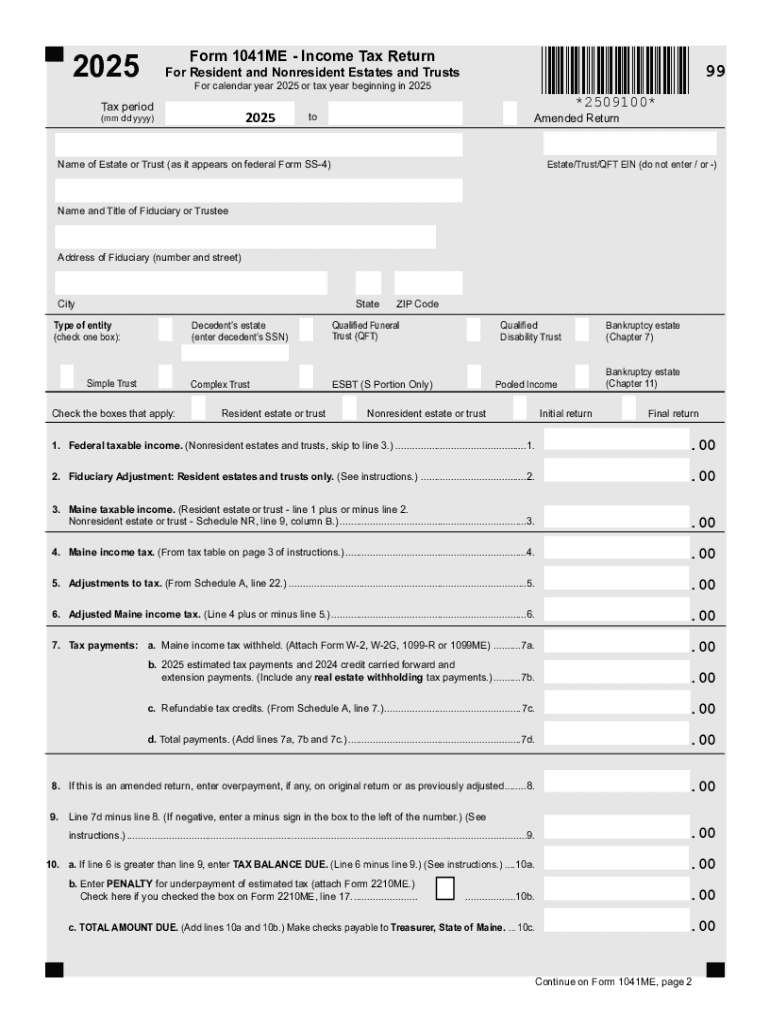
Form 1041ME, officially known as the "Income Tax Return for Resident and Nonresident Estates and Trusts", is used primarily to report income, gains, losses, deductions, and credits of an estate or trust. It plays a critical role in ensuring proper tax management, helping to determine the amount of tax that the estate or trust needs to pay or the refund it may receive.
Mandatory Filing Scenarios
- Threshold Income: Estates or trusts that generate a certain amount of income are required to file. This threshold varies, but significant income from dividends, interest, or other taxable sources necessitate submission.
- Distributions to Beneficiaries: If a trust or estate distributes funds to beneficiaries, Form 1041ME must be filed to report these distributions, which may also be taxable income for the beneficiaries.
Key Elements of Form 1041ME
Completing Form 1041ME involves several key sections that ensure thorough reporting:
Essential Sections
- Income Reporting: Includes dividends, interest, and other receipts. Accurate reporting is necessary to avoid penalties.
- Deductions Claimed: Involve administrative expenses or income distribution deductions.
- Credits: Any tax credits applicable to the estate or trust can be claimed here to reduce the overall tax liability.
Complex Aspects
- Capital Gains and Losses: Correctly reporting net gains or losses from the sale or exchange of property is crucial.
- Alternative Minimum Tax (AMT): Estates and trusts must consider AMT, which can affect the total tax computation.
Steps to Complete Form 1041ME
Filing the form involves precise steps to ensure compliance and accuracy:
Step-by-Step Completion Guide
- Collect Financial Records: Gather all relevant documents, such as bank statements and reports showing income distributions.
- Calculate Income: Segregate taxable and non-taxable income to ensure clear reporting.
- Deductible Expenses: List eligible expenses such as administrative costs.
- File Electronically or by Mail: Submission method depends on preference and requirements by the IRS or state tax authority.
Filing Deadlines and Important Dates
Accurate scheduling prevents penalties:
- Usual Deadline: April 15 following the end of the tax year.
- Extensions: Estates or trusts can request an extension, typically up to six months, under certain circumstances.
Legal Use and Compliance
Compliance with tax regulations ensures a smooth filing process:
Compliance Measures
- IRS Guidelines: Follow official IRS publications and guides specific to estates and trusts.
- State-Specific Regulations: Some states may have additional requirements or rules to follow.
Required Documents for Filing
Several documents are necessary to complete the form accurately:
Critical Documentation
- Financial Statements: Bank records, investment statements, and receipts.
- Previous Tax Returns: Help ensure consistency in reporting.
Penalties for Non-Compliance
Failing to submit the form correctly or on time can lead to various penalties:
- Failure-to-File Penalty: Imposed if the return is not filed by the due date.
- Accuracy-Related Penalties: Assessed if the IRS identifies inconsistencies or errors.
Eligibility Criteria for Form 1041ME
Estates and trusts must meet specific criteria to file:


Eligibility Guidelines
- Type of Entity: Must be an estate or trust recognized under IRS rules.
- Income Level: Income thresholds dictate the necessity to file, depending on the state and federal guidelines.
Business Entity Types and the Use of Form 1041ME
Various entity types may need to file Form 1041ME:
Entity Applicability
- Trusts: Such as family trusts that hold income-generating assets.
- Estates: Particularly when managing the affairs of a deceased individual and distributing their assets.
By following these structured guidelines and steps, handling Form 1041ME becomes less cumbersome, enabling accurate tax reporting and compliance with regulatory requirements.