
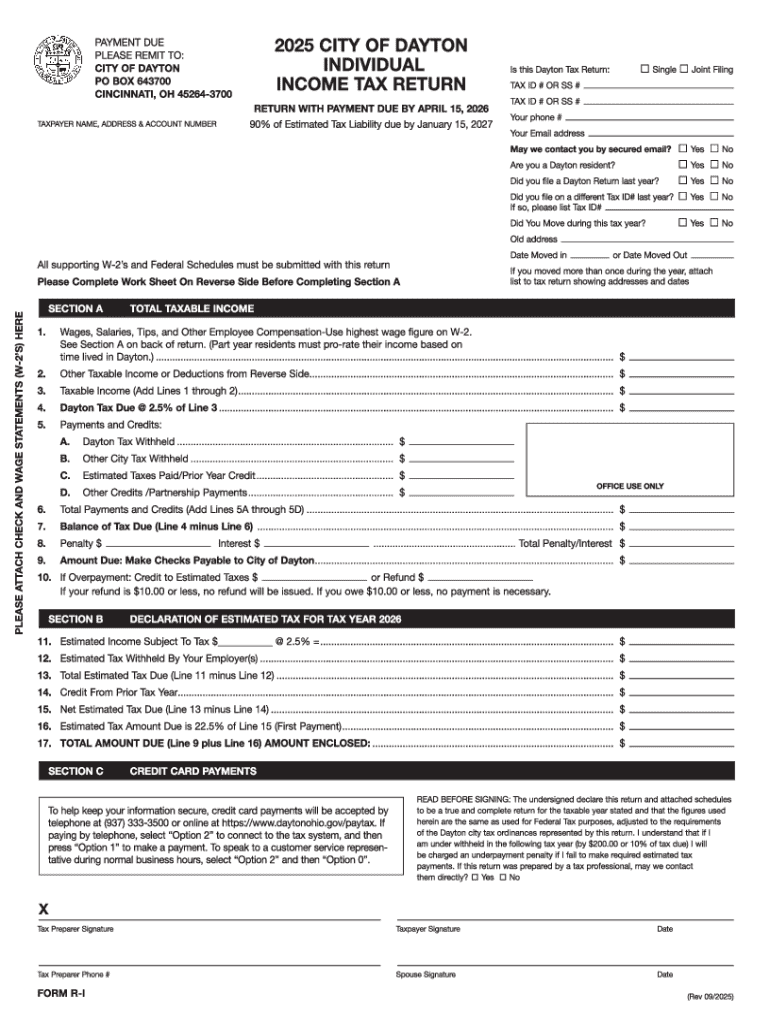







Definition and Purpose of Dayton Individual Return 25
The Dayton Individual Return 25 is a crucial tax form used primarily by residents of Dayton, Ohio, to report their individual income tax details. This form allows taxpayers to declare their income, calculate the amount of tax owed or refundable, and ensure compliance with local tax regulations. By filing the Dayton Individual Return 25, residents provide the Dayton government with necessary information regarding their earnings, deductions, and any applicable credits. Understanding the structure and requirements of this form is essential for accurate and timely tax filing.
How to Use the Dayton Individual Return 25
Filing the Dayton Individual Return 25 involves several key steps that taxpayers must follow to ensure their submissions are complete and accurate.
-
Gathering Required Information:
- Ensure you have your personal information, including Social Security Number.
- Collect all tax documents such as W-2s, 1099s, and proof of deductible expenses.
-
Calculating Income and Deductions:
- Account for all sources of income including wages, investments, and business earnings.
- Identify and apply eligible deductions and tax credits.
-
Filling Out the Form:
- Carefully enter all required information into the respective fields.
- Double-check for any errors or omissions to prevent complications.
-
Submission and Payment:
- Submit the form either online or through mail.
- Ensure any payments due are settled by the deadline to avoid penalties.
Steps to Complete the Dayton Individual Return 25
Completing the Dayton Individual Return 25 includes a series of detailed steps to ensure that all necessary information is accurately reported:
-
Begin with Basic Information:
- Fill in your name, address, and Social Security Number.
-
Report Income:
- Enter details from your W-2 forms accurately.
- Include any additional income from self-employment or side jobs.
-
Claim Deductions and Credits:
- List any deductions you are eligible for, such as student loan interest or healthcare costs.
- Apply applicable tax credits, including education credits or energy-saving credits.
-
Calculate Tax Due:
- Use the calculations section to determine total tax owed or refundable.
- Cross-check all entries to ensure correctness.
-
Sign and Date the Form:
- Confirm the accuracy of your details by signing and dating the form.
-
Submit to Appropriate Authorities:
- Follow guidelines for submitting the form through physical mail or online portals.
Key Elements of the Dayton Individual Return 25
Several critical components define the Dayton Individual Return 25, each requiring careful attention:
-
Income Reporting: Accurate income reporting is vital as it forms the basis of tax calculations. Include information from all sources such as employment, rental properties, or investments.
-
Deductions and Credits: Familiarize yourself with applicable deductions and credits which can lower tax liability. Common examples include education expenses and charitable contributions.
-
Tax Computation: Understand how to compute the tax liability or refund by applying the appropriate local tax rates and taking into consideration any available credits.
Important Terms Related to Dayton Individual Return 25
Navigating the Dayton Individual Return 25 effectively requires an understanding of pertinent terms:
-
Adjusted Gross Income (AGI): This is your total income minus certain deductions, serving as the basis for calculating taxable income.
-
Taxable Income: The portion of income subject to tax after deductions and exemptions are applied.
-
Withholding: The income tax withheld from wages throughout the year; this is applied against total tax liability.
-
Tax Credit: Unlike deductions, which reduce taxable income, tax credits directly reduce the tax owed.
Filing Deadlines and Important Dates
For residents of Dayton, adhering to key filing deadlines is crucial to avoid late fees and penalties:
-
April 15: Generally the deadline for filing your Dayton Individual Return 25, aligning with the federal deadline unless an extension is granted.
-
Estimated Tax Payments: Due quarterly if you expect to owe taxes annually, with deadlines typically in April, June, September, and January.
Required Documents for Filing
Certain documents are essential when preparing the Dayton Individual Return 25:
-
W-2 Forms: These detail wages earned and taxes withheld by the employer.
-
1099 Forms: Capture other income such as dividends or independent contracting earnings.
-
Receipts for Deductions: Keep documentation for any deductions claimed, like medical expenses or charitable contributions.
Penalties for Non-Compliance
Failing to comply with the Dayton Individual Return 25 requirements can lead to significant penalties:
-
Late Filing Penalty: A percentage of the unpaid taxes if the return is filed after the deadline without an extension.
-
Failure to Pay Penalty: Applies when taxes owed are not paid by the due date, accumulating interest daily until payment is made.
-
Accuracy Penalty: Imposed for any substantial understatement of tax due to negligence or fraud.
Understanding these aspects of the Dayton Individual Return 25 is essential for compliance and optimizing tax outcomes. Optimal filing can ensure accurate reporting and the successful management of local tax responsibilities.




