






Definition and Meaning of Personal Income Tax from the Pennsylvania Department of Revenue
Personal Income Tax as administered by the Pennsylvania Department of Revenue is a tax levied on the income of residents and non-residents who earn income within Pennsylvania. This tax applies to various income types, including wages, salaries, bonuses, and business income, among others. The revenue supports state-funded services such as education, infrastructure, and public safety. Understanding the nuances of Pennsylvania's income tax regulations is essential for complying with financial responsibilities and avoiding penalties.
Steps to Complete the Personal Income Tax Form
- Gather Required Documents: Collect necessary financial records, including W-2s, 1099s, and receipts for deductible expenses.
- Determine Filing Status: Identify your correct filing status—single, married filing jointly, or married filing separately.
- Calculate Taxable Income: Use your gross income to determine deductions and credits applicable to your situation.
- Fill Out the Form: Input your personal information and income details in the designated sections. Ensure all fields are accurate and complete.
- Review and Submit: Double-check the form for errors or omissions, then submit it through Pennsylvania’s e-File system or mail it to the Department of Revenue.
How to Obtain the Personal Income Tax Form
- Online Access: Visit the Pennsylvania Department of Revenue's official website to download or complete the form electronically.
- Physical Copies: Request a paper copy by contacting the Department directly or visiting a local tax office.
- Tax Preparation Software: Access the form through compatible software platforms like TurboTax or H&R Block, which integrate the latest government forms into their systems.
Importance of Filing with the Pennsylvania Department of Revenue
Filing personal income tax is crucial for maintaining compliance with state laws. It ensures the proper allocation of state resources, funds public services, and contributes to the overall economic stability of Pennsylvania. Timely filing prevents legal repercussions and penalties associated with late submissions or underpayment of taxes.
Filing Deadlines and Important Dates
- Annual Tax Filing Deadline: Typically, Pennsylvania residents must file their income taxes by April 15th each year. This date can vary based on weekends or federal holidays.
- Extensions: If additional time is needed, taxpayers can file for an extension, which typically grants six additional months to submit the form. It is important to apply before the deadline to avoid penalties.
Required Documents for Filing
- Wage and Tax Statements (W-2 Form): Provided by your employer to outline earnings and tax deductions.
- Other Income Statements (1099 Forms): Reports income from freelance work, investment income, and other non-employment sources.
- Deduction Records: Include receipts and statements for deductible expenses such as mortgage interest, charitable contributions, and medical expenses.
State-Specific Rules for Pennsylvania Tax Filers
Pennsylvania enforces specific regulations that may differ from federal rules. Understanding these distinctions, such as what deductions are allowable or the tax treatment of retirement income, is vital. State tax credits and exemptions are also unique, necessitating adherence to Pennsylvania’s specific guidelines to maximize tax benefits.
Key Elements of the Personal Income Tax Form
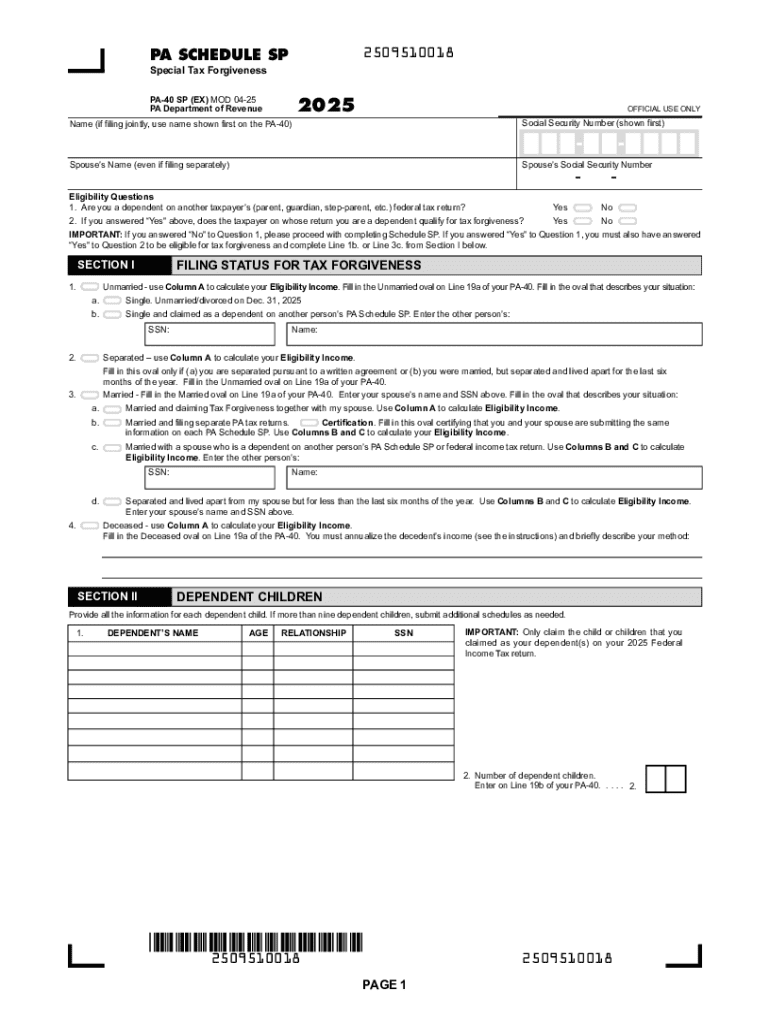
- Personal Information Section: Includes fields for the taxpayer’s name, Social Security number, and address.
- Income Reporting: Details various income streams, including wages, interest, and dividends.
- Deductions and Credits: Offers sections to apply eligible deductions and credits that might reduce taxable income and tax liability.
Examples of Using the Personal Income Tax Form
Employers typically rely on this form to reconcile employee taxes annually. It also serves the self-employed or freelancers who need to report income earned independently. Homeowners might use the form to claim tax credits for energy-efficient home improvements or state-specific education expenses.
Each of these blocks provides detailed insights into the processes and nuances of filing personal income taxes in Pennsylvania, catering to a realm of scenarios and taxpayer needs.