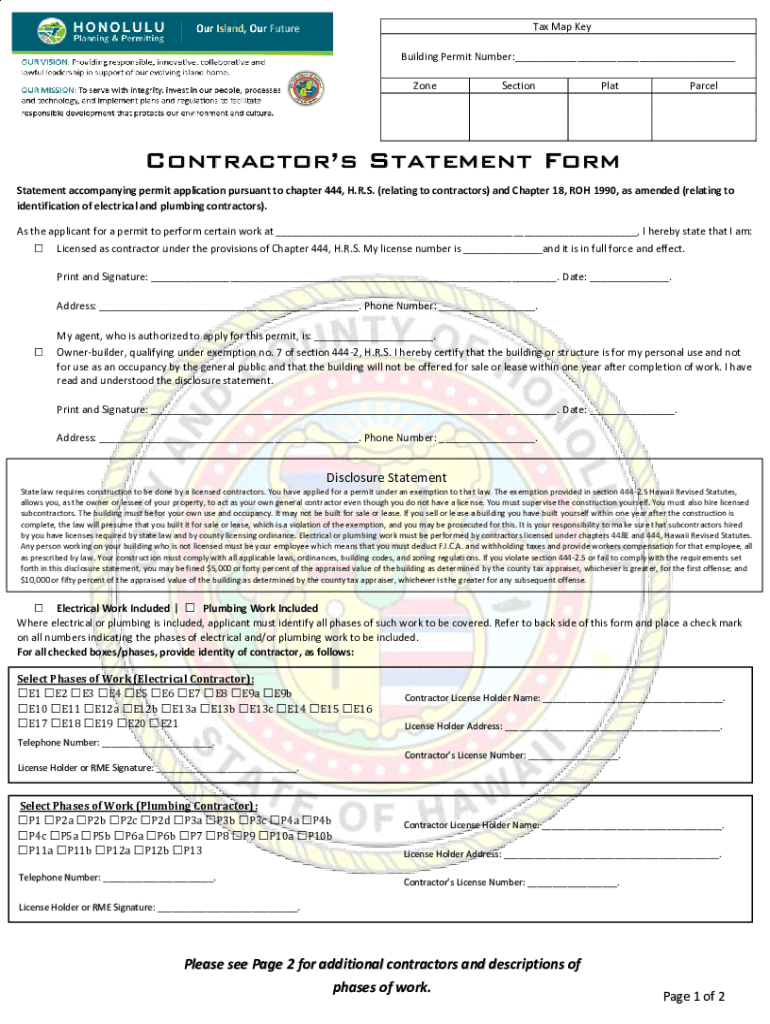







Definition and Meaning of Owner Contractor Authorization
Owner Contractor Authorization is a formal document used to grant permission to a contractor to perform specific tasks on a property owner's behalf. This authorization ensures that the contractor has the legal rights to undertake work on the property, thereby protecting both parties involved. In the construction industry, this document serves as a crucial link between property owners and contractors, establishing clear terms and conditions under which work is to be conducted. In the United States, the form typically aligns with local building codes and regulations.
Obtaining the Owner Contractor Authorization
-
Research Requirements:
- Understand local regulations related to contractor authorizations.
- Determine if additional permits are needed based on the project scope.
-
Prepare Documentation:
- Gather relevant property details, contractor information, and project specifications.
-
Template Selection:
- Use templates available from industry associations or create a custom form ensuring all necessary details are covered.
-
Legal Consultation:
- Consult with an attorney to ensure the form complies with state laws and protects both parties’ interests.
-
Submission Process:
- Identify correct submission procedures, which may vary by jurisdiction, whether online, by mail, or in person.
Steps to Complete the Owner Contractor Authorization
-
Property Information:
- Accurately fill in all details pertinent to the property, including address and parcel number.
-
Owner's Details:
- Include full name, contact information, and signature of the property owner.
-
Contractor's Information:
- Provide comprehensive details about the contractor, including license number and scope of work.
-
Scope of Work:
- Clearly outline the tasks the contractor is authorized to perform.
-
Agreement Terms:
- Specify the duration of authorization, payment terms, and conditions under which the contract can be terminated.
-
Signatures:
- Secure signatures from both the property owner and the contractor to validate the document.
Legal Use of Owner Contractor Authorization
-
Compliance: Ensures adherence to federal, state, and local laws regarding construction and property rights.
-
Dispute Resolution: Serves as legal evidence in case of disputes, providing a clear framework for resolving differences.
-
Insurance: Helps certify insurance coverage requirements are met by the contractor before commencing work.
State-Specific Rules for Owner Contractor Authorization
-
Variation in Regulations: Regulations can differ significantly from one state to another, with some requiring additional documentation.
-
Local Jurisdiction Requirements: Some municipalities may have their own forms or additional approval processes.
-
Building Codes: Ensure the work complies with local building codes and safety regulations, which might have regional variations.
Important Terms Related to Owner Contractor Authorization
-
Permit: An official approval required for modifications to the property, often a prerequisite for contractor authorizations.
-
Liability: Addresses responsibility for damages or failures to complete work as specified.
-
Indemnity: Ensures the contractor holds the property owner harmless from certain liabilities or damages.
Penalties for Non-Compliance
-
Fines and Fees: Financial penalties may be imposed for proceeding without proper authorization.
-
Legal Consequences: Unauthorized work can lead to lawsuits, stop-work orders, or additional legal action.
-
Insurance Issues: Non-compliance may void insurance policies, leaving property owners unprotected from potential damages.
Examples of Using the Owner Contractor Authorization
-
Home Renovations: A homeowner authorizes a contractor to undertake kitchen remodeling, ensuring compliance with safety and zoning laws.
-
Commercial Projects: Businesses obtain authorization to expand office spaces, detailing all aspects of construction and timeframe.
-
Emergency Repairs: Authorization is expedited for quick repairs following a natural disaster, with clear documentation of urgency and scope.