




01. Edit your form online
Type text, add images, blackout confidential details, add comments, highlights and more.

Type text, add images, blackout confidential details, add comments, highlights and more.

Draw your signature, type it, upload its image, or use your mobile device as a signature pad.

Send it via email, link, or fax. You can also download it, export it or print it out.
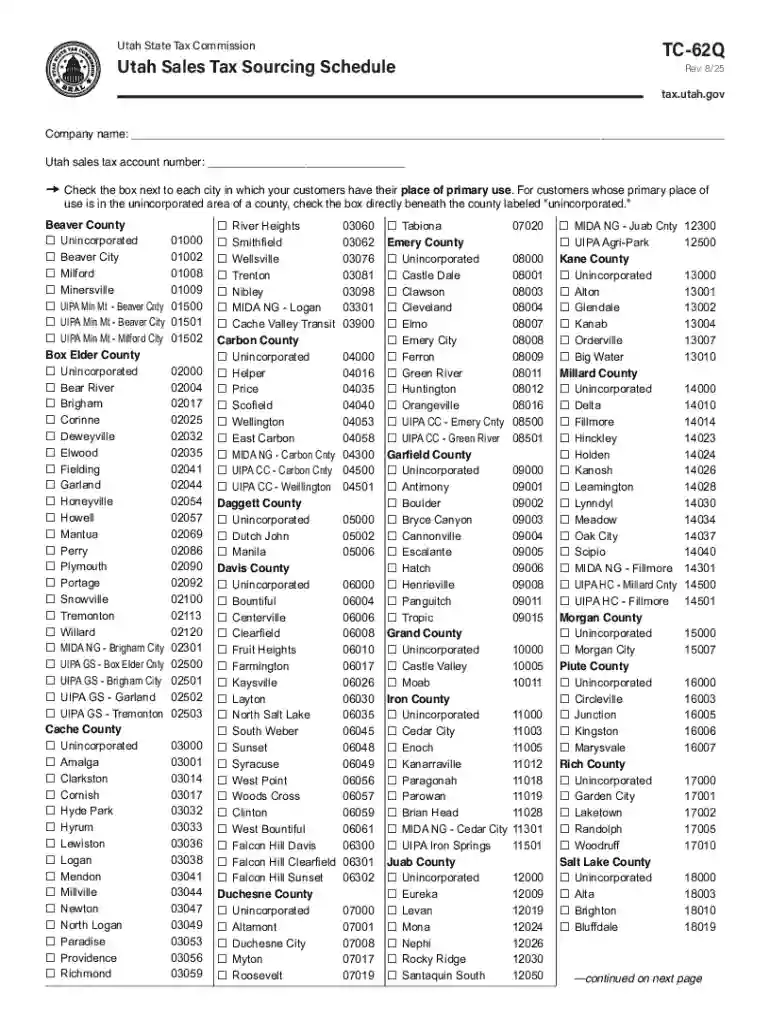
A Utah sales tax account number serves as a unique identifier for businesses operating within the state that are required to collect and remit sales tax. This distinctive number is akin to a sales tax license, providing authorization to legally collect sales tax from customers. The number is pivotal for businesses to comply with state taxation regulations, streamline tax-related transactions, and facilitate clear communication with the Utah State Tax Commission. For instance, this number is used in tax filings and correspondence related to sales tax queries or audits. Legally, every business dealing in taxable goods or services in Utah must acquire this number, ensuring it operates within the state’s legal framework.
The Utah sales tax account number is utilized by businesses in several essential aspects of tax management:
Tax Collection and Remission:
Tax Filings and Returns:
Business Transactions:
Example: A Utah-based retail shop uses its sales tax account number on every invoice issued to customers, ensuring transparency and compliance with state tax laws.
Acquiring a Utah sales tax account number involves a formal registration process:
Eligibility and Preparation:
Application Process:
Approval Timeline:
Example: An e-commerce business selling goods to Utah residents applies online for the account number. After confirmation of their application, they receive the sales tax account number and begin compliant operations.
Registering for a sales tax account number necessitates following specific steps:
Create an Account:
Submit Business Details:
Provide Documents:
Review and Finish:
These steps ensure that your business is authorized to collect sales tax, signal compliance, and facilitate a smooth tax-related operation.
The importance of obtaining a Utah sales tax account number lies in:
This number also serves to protect businesses from potential fines or legal complications arising due to non-compliance with state sales tax laws.
Typically, the following entities require a Utah sales tax account number:
For example, a company providing taxable professional services to Utah clients must register to collect the requisite sales taxes, adhering to state tax regulations.


Understanding key terms is critical for managing a Utah sales tax account:
Comprehending these terms helps ensure compliance with state tax laws and efficient management of business tax obligations.
Adhering to legal guidelines concerning the sales tax account number is crucial:
For example, a Utah-based business that neglects to remit collected sales tax may face significant financial penalties upon audit, emphasizing the need for diligent tax management.
We've got more versions of the Utah sales tax account number: form. Select the right Utah sales tax account number: version from the list and start editing it straight away!
At DocHub, your data security is our priority. We follow HIPAA, SOC2, GDPR, and other standards, so you can work on your documents with confidence.







Website: tax.utah.gov. Sales Tax License and/or Use Tax Certificate of Registration. BRIGHAM YOUNG UNIVERSITY. Account Number: 11691946-002-STC incorporatedRead more
Oct 19, 2017 Use this publication as a guide to figure your taxes and complete your farm tax return. If you need more information on a subject, get theRead more
Create, Manage, or Update a Business Tax Account Apply for a tax account(s) - TC-69 Apply for a Tax License Tax Information for Businesses Purchasing orRead more


