






Definition & Meaning
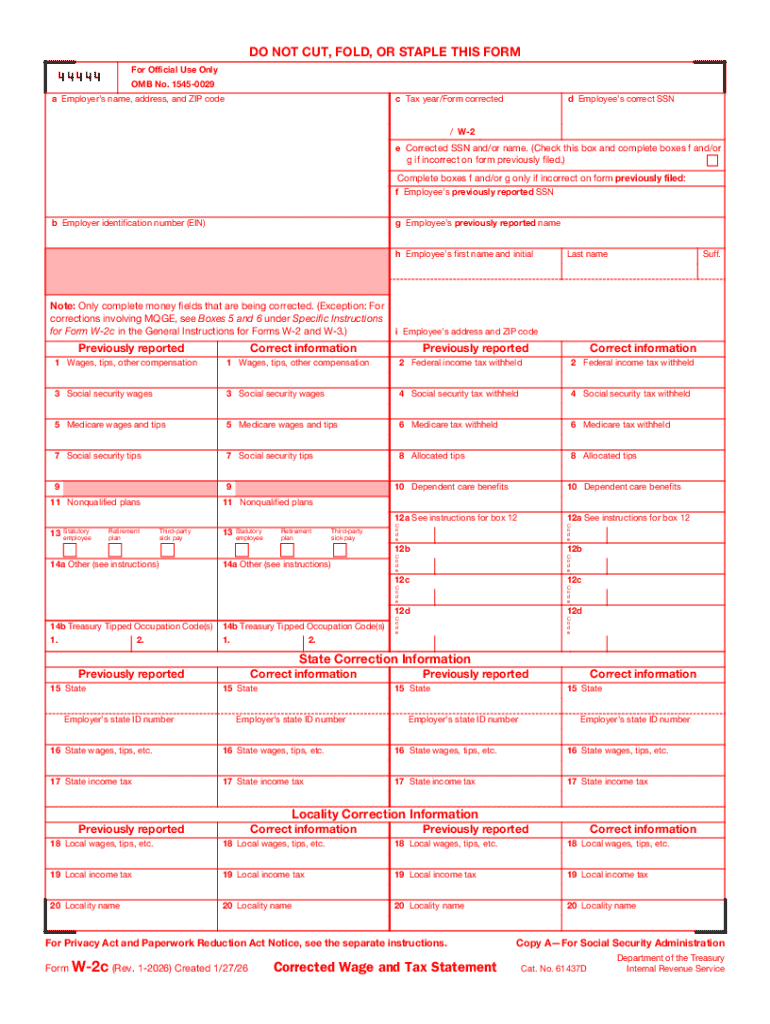
Form W-2c (Rev January 2026) Corrected Wage and Tax Statement is designed to correct errors previously reported on Form W-2. Employers use this form to amend mistakes in employee wage and tax data after the original W-2 has been submitted. Typical corrections include changes in wage amounts, tax withholdings, or other identifying information. The W-2c is crucial for ensuring accuracy in employee tax records and compliance with IRS regulations, as it directly impacts the tax liabilities of both the employee and employer.
How to Use the Form W-2c
Employers use Form W-2c when correction of wage and tax information is necessary after the original W-2 has been issued. The form allows rectification of errors such as incorrect earnings, tax withheld, or social security wages. Once corrected, the employer must provide a copy of the W-2c to the employee and file a copy with the Social Security Administration (SSA). Ensuring these corrections are properly executed helps prevent mismatches between IRS and SSA records, which could lead to penalties or audits.
Steps to Complete the Form W-2c
- Gather Supporting Documents: Ensure you have the original W-2 form, payroll records, and any documentation related to the error.
- Enter Correct Information: Fill in the employee's corrected information, including accurate wages, tax withholdings, and any other relevant amendments.
- Include Both Incorrect and Correct Entries: Clearly indicate both the previously reported incorrect data and the corrected figures to demonstrate the specific adjustments made.
- Review and Validate Entries: Double-check all entries for accuracy before submitting to the SSA and the employee.
- Distribute and File: Deliver the corrected form to the employee and file it with the SSA, following the specified submission methods.
Detailed Example
- Scenario: An employee's state tax withholding was recorded incorrectly on the original W-2. To correct this:
- On the W-2c, list the incorrect state withholding amount in the designated column.
- Enter the correct amount in the adjacent correction column.
- Ensure consistency between payroll records and the W-2c to avoid discrepancies during IRS review.
Why is Form W-2c Important?
The Form W-2c is critical for maintaining accurate employee tax records, which affects both employer and employee tax liabilities. Corrections ensure employees pay the correct amount of tax and avoid potential penalties. It also helps employers rectify and report discrepancies promptly, preventing future audits or financial penalties. Beyond compliance, it supports transparent record-keeping and trust between employees and employers by correcting any misreported earnings or withholdings.
Who Typically Uses the Form W-2c
Form W-2c is primarily used by employers who have identified errors in previously submitted W-2s. Common users include payroll departments of various business types, including corporations, partnerships, and LLCs. Small businesses that manage their taxes in-house may also frequently engage with Form W-2c, along with any entity responsible for issuing wage statements to employees. It is essential in environments where human or systemic errors have affected the accuracy of initially reported wage and tax data.


Important Terms Related to Form W-2c
- Gross Wages: Total earnings before any deductions.
- Withholding Tax: The portion of the employee’s wages withheld by the employer for tax purposes.
- Social Security Wages: Earnings subject to social security tax.
- Medicare Wages: Earnings subject to Medicare tax.
- Box 12 Codes: Codes used on the form to specify certain types of compensation or deferred compensation plans.
IRS Guidelines for Filing Form W-2c
The IRS mandates that Form W-2c be submitted as soon as an error is identified. Adhering to the deadline reduces the risk of penalties. Employers should file a corrected form for each employee affected and ensure that any tax implications are addressed. The IRS provides guidelines for correctly filling out each section, focusing on accuracy and completeness to mitigate reporting errors. Employers should also retain copies of the W-2c for a minimum of four years for their records.
Penalties for Non-Compliance
Failure to file a corrected Form W-2c when required can lead to various penalties. The IRS imposes fines on employers who neglect to make timely corrections or deliver corrected forms to employees. Penalties are typically proportional to the duration of the delay and can become substantial if inaccuracies materially impact the employee's tax filing. Businesses should prioritize early detection and correction of errors to avoid financial repercussions and ensure compliance with federal regulations.