






Definition and Meaning of the N95 and P100 Respirator Qualitative Fit Test
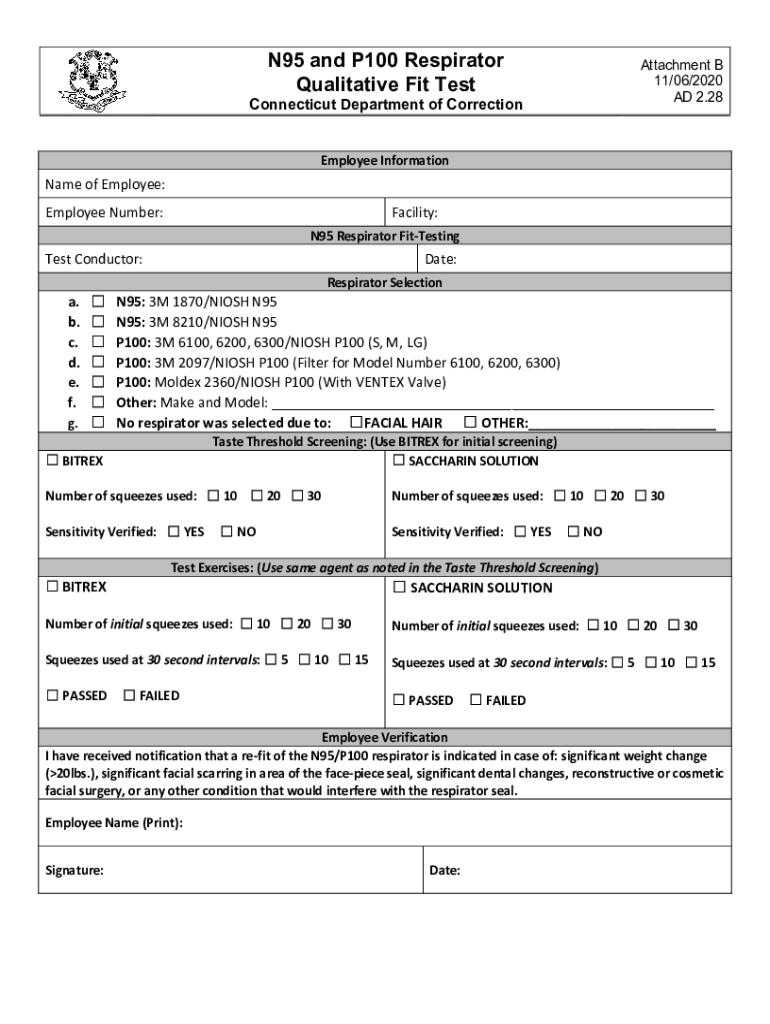
The N95 and P100 Respirator Qualitative Fit Test is a procedure designed to assess the fit of respirators on individuals to ensure effective filtration and protection. It is crucial in occupational settings where airborne contaminants pose health risks. During the test, subjects wear a mask while an aerosolized agent is released into the air. The test determines if the mask fits properly, preventing any detectable leakage that would allow contaminants to enter the breathing zone of the wearer.
Steps to Complete the N95 and P100 Respirator Qualitative Fit Test
-
Pre-Test Preparation:
- Examine the respirator for any damages or defects.
- Ensure the respirator is appropriate for the intended use.
-
Conducting the Sensitivity Test:
- Familiarize the subject with the test solution's taste or smell.
- Ensure the subject can detect the test agent without the respirator.
-
Fit Test Procedure:
- Instruct the subject to don the respirator according to the manufacturer's guidelines.
- Apply a test agent around the face seal area while the subject performs a series of exercises such as talking, turning the head, and bending over.
- Monitor for signs of discomfort or detection of the test agent by the subject.
-
Post-Test Evaluation:
- Address any failures by adjusting the respirator and repeating the test.
- Record the results for compliance and future reference.
Why Conduct a N95 and P100 Respirator Qualitative Fit Test
The qualitative fit test is essential for ensuring that the user is properly protected against airborne particles. It validates the respirator's capability to fit the user's face without leaks, reducing exposure to hazardous substances. This test is pivotal for compliance with occupational safety regulations and is a proactive step in minimizing health risks in workplaces involving dust, fumes, or vapors.
Legal Use of the N95 and P100 Respirator Qualitative Fit Test
Under U.S. safety standards, workers exposed to airborne hazards are mandated to use properly fitting respirators. OSHA (Occupational Safety and Health Administration) enforces these regulations, requiring regular fit testing for workers who rely on respirators as part of their personal protective equipment (PPE). The qualitative fit test ensures compliance with OSHA standards, safeguarding both employees' health and employers' legal responsibilities.
Key Elements of the N95 and P100 Respirator Qualitative Fit Test
-
Test Environment:
- Conducted in a controlled environment to prevent interference with results.
-
Test Agents:
- Commonly used agents include saccharin or Bitrex, which are either sweet-tasting or bitter and detectable by the user.
-
Subject Involvement:
- The user must perform various physical activities to challenge the respirator's fit.
Important Terms Related to the N95 and P100 Respirator Qualitative Fit Test
-
Respirator Fit:
- Refers to the seal formed between the face and the mask, essential for optimal protection.
-
Test Agent:
- A non-toxic, aerosolized solution used to determine if a respirator is leaking.
-
Exposure Limit:
- The maximum amount of a specific contaminant a worker can be exposed to without adverse effects.
Required Documents for the N95 and P100 Respirator Qualitative Fit Test
-
Training Records:
- Documentation of employee training on respirator use.
-
Fit Test Records:
- Results of initial and periodic fit tests, including any corrective actions taken.
-
Medical Clearance:
- Confirmation that the individual is medically fit to wear a respirator.
Examples of Use Cases for the N95 and P100 Respirator Qualitative Fit Test
-
Healthcare Settings:
- Protecting medical staff during procedures with exposure to infectious aerosols.
-
Construction Industry:
- Shielding workers from dust and particle inhalation during demolition or renovation work.
-
Manufacturing Plants:
- Ensuring employee safety during operations that produce fumes or vapors.
State-Specific Rules for the N95 and P100 Respirator Qualitative Fit Test
Certain U.S. states might have additional requirements or modifications to federal standards regarding fit testing frequency and documentation. Employers should verify state-specific regulations to ensure full compliance with local laws. Some states offer additional resources and training programs to support businesses in implementing these tests effectively.