






Definition of the 2025 Form OR-41, Oregon Fiduciary Income Tax Return
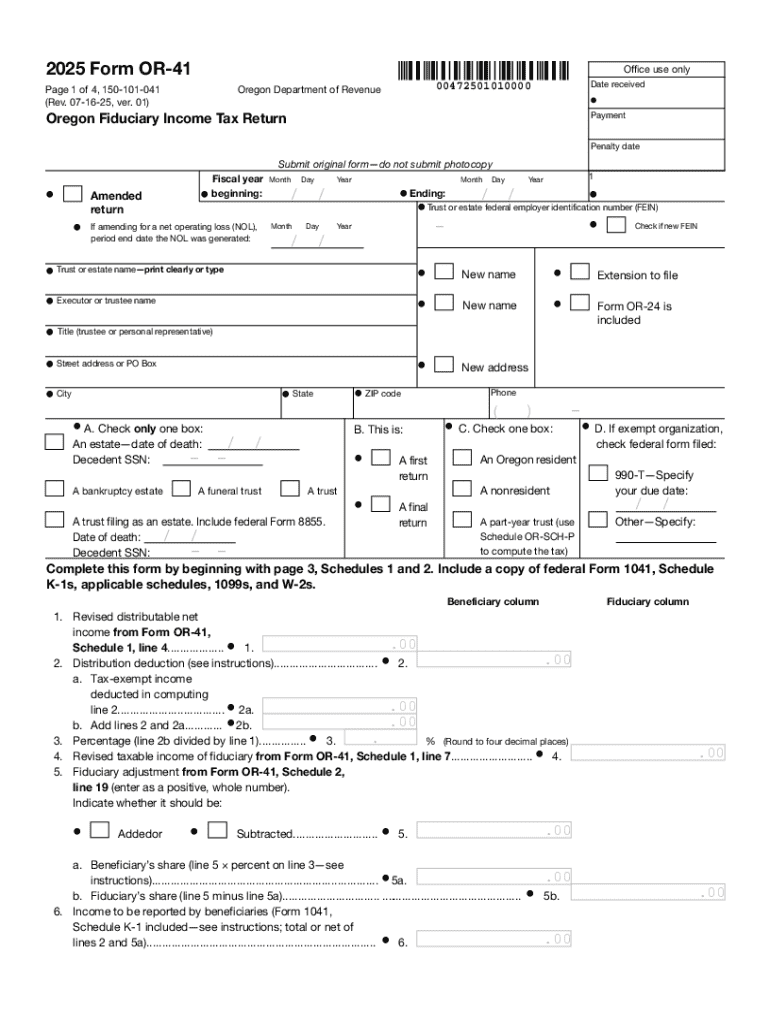
The 2025 Form OR-41, also referred to as the Oregon Fiduciary Income Tax Return, is primarily used by fiduciaries, such as executors or trustees, to report income generated by estates and trusts to the Oregon Department of Revenue. This form helps ensure compliance with state income tax laws specifically governing fiduciary entities. In addition to income reporting, the form facilitates the computation of applicable taxes based on Oregon's tax regulations for fiduciaries.
Steps to Complete the 2025 Form OR-41
-
Gather Required Information: Collect details about the fiduciary entity, such as the federal employer identification number, trust or estate name, and fiduciary contact information.
-
Calculate Income: Determine the total income earned by the fiduciary entity during the tax year, including dividends, interest, capital gains, and other relevant sources.
-
Determine Deductions: Identify eligible deductions, such as administrative expenses, charitable contributions, and distributions to beneficiaries.
-
Compute Taxable Income: Subtract exemptions and deductions from total income to find the taxable income.
-
Apply Tax Rates: Use Oregon's tax schedule to apply the correct tax rates to the taxable income.
-
Report Tax Credits: Include any tax credits that the fiduciary entity is eligible for, which can reduce the amount of tax owed.
-
Finalize the Return: Complete the form by filling out sections specific to the tax computation, signing, and dating it appropriately.
-
Attach Schedules and Statements: Ensure that all required supplementary schedules and statements are attached, such as federal tax return copies if applicable.
-
Submit: Mail or electronically submit the completed form with payments if necessary.
How to Obtain the 2025 Form OR-41
The 2025 Form OR-41 can be obtained through several methods to facilitate ease of access:
- Oregon Department of Revenue Website: Download the form directly from the official website. This ensures you have the most current version.
- Tax Preparation Software: Programs like TurboTax or QuickBooks may provide access to the form within their tax filing services.
- Professional Tax Preparers: If you use a tax professional, they should provide the necessary forms as part of their service.
Important Terms Related to the 2025 Form OR-41
- Fiduciary: An individual or organization managing assets on behalf of others, often described as a trustee or executor.
- Estate: The total value of an individual’s assets at the time of their death.
- Trust: A legal entity established to hold and manage assets for the benefit of designated beneficiaries.
- Tax Year: The 12-month period for which tax calculations are made, often aligning with the calendar year for individuals and fiduciaries.
Key Elements of the 2025 Form OR-41
The Form OR-41 includes several critical sections that fiduciaries must accurately complete to ensure compliance:
- Entity Identification: Includes space for entering the fiduciary’s federal employer identification number and other identifying details.
- Income Section: Requires reporting of various income streams, such as interest, dividends, and capital gains.
- Deductions and Credits: Sections provided to calculate and apply any applicable deductions and credits.
- Signature: The form must be signed by the fiduciary or an authorized representative to validate the submission.
Filing Deadlines and Important Dates for the 2025 Form OR-41
Filing deadlines for Form OR-41 align with standard tax practices to ensure timely submissions and avoid penalties:
- Standard Filing Deadline: Typically April 15th of the following tax year. If April 15th falls on a weekend or holiday, the deadline is the next business day.
- Extension Requests: Extensions may be granted if requested in advance, typically adding six months to the initial due date.
Penalties for Non-Compliance with the 2025 Form OR-41
Non-compliance with filing requirements for the Form OR-41 can result in significant penalties:
- Late Filing Penalties: Levied when the form is submitted past the deadline without an approved extension.
- Underpayment Penalties: Imposed if taxes are underpaid based on the information provided, even when filed on time.
- Interest Charges: Accrue on unpaid tax balances, increasing the overall financial burden.
State-Specific Rules for the 2025 Form OR-41
Oregon has particular rules that fiduciaries should be mindful of when completing the Form OR-41:
- Income Exemptions: Certain types of income may be exempt under Oregon law, impacting the taxable base.
- Allocation and Apportionment: Required for estates or trusts that operate both in Oregon and other states to appropriately divide income and expenses.
Digital vs. Paper Version of the 2025 Form OR-41
Fiduciaries have the option to submit the Form OR-41 either digitally or in paper format:
- Digital Submission: Offers convenience and speed, typically through tax preparation software that e-files directly to the Oregon Department of Revenue.
- Paper Filing: Still available for those preferring traditional methods, requiring physical mailing of completed forms and attachments.
Who Issues the 2025 Form OR-41?
The Form OR-41 is issued by the Oregon Department of Revenue, ensuring that fiduciaries align with state tax policies and reporting standards. This department is responsible for updating the form, instructions, and tax tables, streamlining the compliance process for fiduciaries across Oregon.