






Definition & Meaning
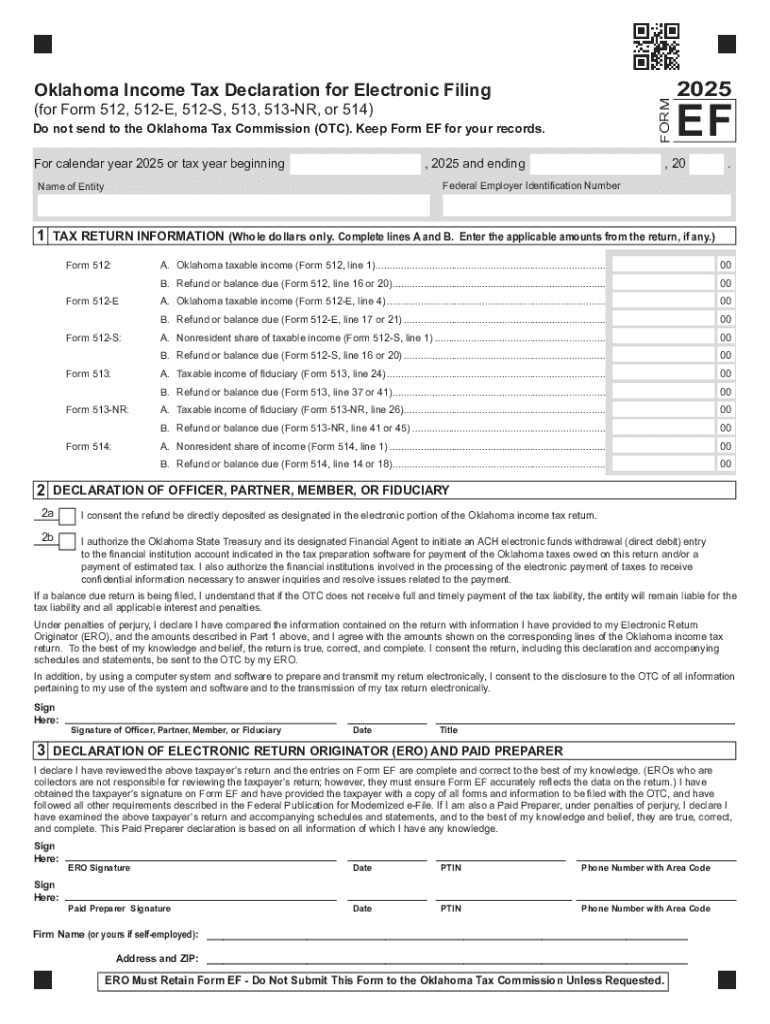
The 2025 Form EF, also known as the "Oklahoma Income Tax Declaration for Electronic Filing," serves as an integral part of the electronic tax filing process for state income taxes in Oklahoma. It acts as a taxpayer's authorization form for electronic submission, ensuring that all provided data aligns with state records. This form allows for efficient tax return filing by bridging the gap between filer information and state tax authorities.
- Purpose: Facilitates electronic filing, confirming taxpayer information and the intent to electronically submit a tax return.
- Structure: Typically requires details such as taxpayer identification, income declarations, and relevant tax credits.
How to Use the 2025 Form EF
Utilizing the 2025 Form EF is straightforward yet pivotal for successful electronic tax filing in Oklahoma. The form functions as a declaration that the taxpayer authorizes their return's submission electronically.
- Review Instructions: Ensure understanding of how this document aids in electronic filing.
- Fill Accurate Information: Enter taxpayer data, including Social Security numbers, income details, and authorized electronic filing agent.
- Authorization: Sign the form to confirm the accuracy of information and consent to e-filing.
Steps to Complete the 2025 Form EF
Correct completion of the 2025 Form EF is crucial. Follow these steps for a seamless filing process:
- Gather Information: Collect necessary documents like W-2s, 1099s, and other financial records.
- Fill in Personal Details: Provide full names, Social Security numbers, and contact information.
- Enter Tax Information: Include all necessary income, tax credits, and deductions.
- Review and Sign: Confirm accuracy and completed sections before signing the form for authorization.
- Submit Electronically: Use an approved e-file provider to transmit the form to Oklahoma tax authorities.
Key Elements of the 2025 Form EF
Understanding the components of the 2025 Form EF ensures effective filing:
- Taxpayer Information: Includes names, Social Security numbers, and address.
- Income Data: Declares total income, deductions, and credits applicable in a tax year.
- Signature Box: Mandatory for confirming information accuracy and filing consent.
State-Specific Rules for the 2025 Form EF
Each state follows distinct regulations for tax filing. Oklahoma's specifics:
- Electronic Mandate: High-income individuals may be required to electronically file as per state directives.
- Form Retention: While not sent to the Oklahoma Tax Commission, filers must keep the completed form for records.
IRS Guidelines
Adherence to IRS protocols is vital when using the 2025 Form EF:
- Accuracy: Ensure federal forms align with state declarations for error-free submissions.
- Filing Deadlines: Tax returns typically coincide with federal deadlines unless Oklahoma specifies otherwise.
Filing Deadlines / Important Dates
Timely filing prevents penalties. Key dates:
- April 15: Standard cut-off for submitting tax returns and related forms.
- Extension Applications: Due by October if additional time is required, provided an extension is filed by the original deadline.
Required Documents
Documentation preparation is essential for Form EF submission:
- Income Statements: W-2s, 1099s for income records.
- Tax Credits Information: Documentation for applicable credits or deductions.
- Identification Proofs: Valid identification for verification.
Form Submission Methods (Online / Mail / In-Person)
Understanding submission options ensures compliance with tax protocols:
- Online: Utilize authorized electronic filing platforms for swift submissions.
- Mail: Though less common, traditional mailing remains an option for other associated forms.
- In-Person: Direct consultation with tax professionals may provide necessary assistance.
Software Compatibility (TurboTax, QuickBooks, etc.)
Leverage technology for a more efficient filing experience:
- TurboTax: Supports Oklahoma filing, offering e-filing options.
- QuickBooks: Integrates with tax professionals for small business compliance.
- H&R Block: Provides comprehensive services for individuals and businesses.
Eligibility Criteria
Clarifying eligibility can optimize form use:
- Residency: Required for Oklahoma residents filing state taxes.
- Income Thresholds: Specific income brackets may mandate electronic filing; verify current year guidelines.


Penalties for Non-Compliance
Avoid rectifiable mistakes through awareness:
- Late Filing: Might result in penalties unless an extension is appropriately filed.
- Inaccurate Information: Can incur fines; diligent review prevents errors.
Taxpayer Scenarios (e.g., Self-Employed, Retired, Students)
Various taxpayer categories may encounter distinct considerations:
- Self-Employed Individuals: Independent income assessments required.
- Retirees: Relevant for those with pension income; specific credits might apply.
- Students: Education deductions may aid in lowering owed taxes.

Important Terms Related to the 2025 Form EF
Familiarity with the terminology ensures precise understanding and compliance:
- E-filing: Electronic submission of tax documents directly to the Oklahoma Tax Commission.
- Declaration: Formal statement affirming truth and accuracy of submitted tax information.
- Electronic Filing Agent: A designated person or software responsible for filing on behalf of the taxpayer.
By thoroughly understanding the 2025 Form EF, taxpayers can ensure accurate and timely filing within Oklahoma's regulatory framework, leveraging electronic advancements for streamlined processing.