Definition and Meaning of the Ohio Sales and Use Tax Contractor's Exemption Certificate
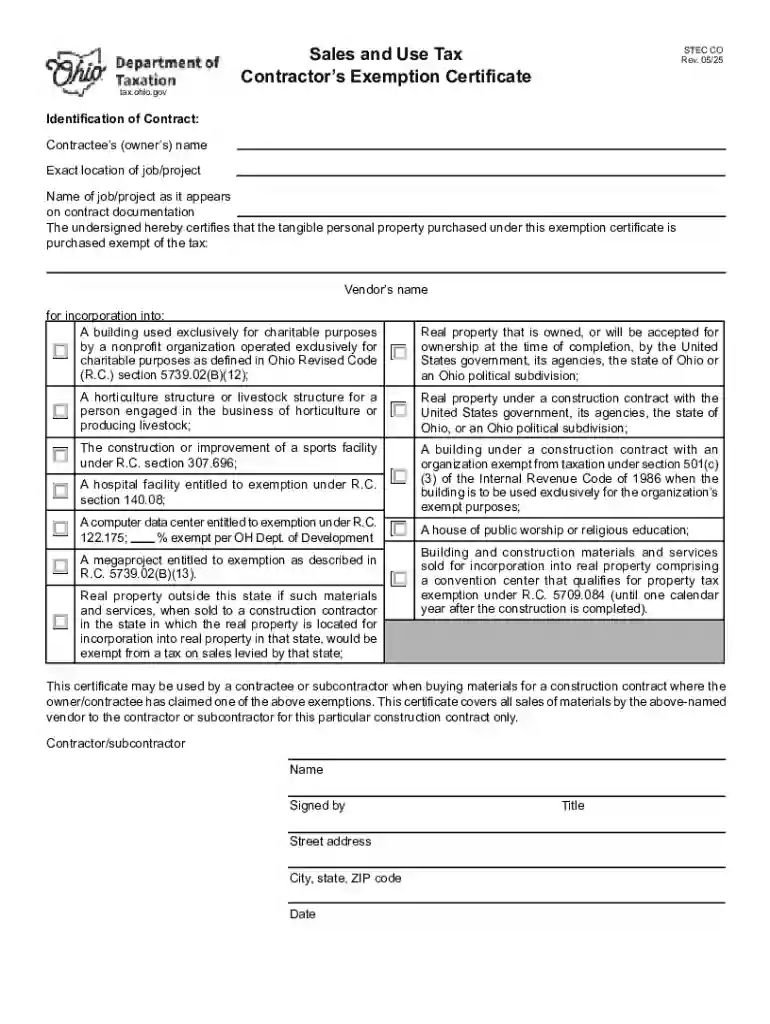
The "Ohio Sales and Use Tax Contractor's Exemption Certificate" is a crucial document that allows contractors to purchase materials and services exempt from the sales tax for use in construction projects. This certificate is specific to the state of Ohio and ensures that tax is not applied on materials that are intended to be incorporated into projects for tax-exempt entities. Understanding the purpose and application of this certificate is essential for contractors operating within Ohio's jurisdiction to ensure compliance and save costs on qualifying purchases.
Purpose and Use
The certificate is used to demonstrate that the purchase of goods or services is for a tax-exempt purpose. This includes materials or supplies that will become a part of a structure or improvement for a governmental agency, nonprofit organization, or other tax-exempt entity. The completion and submission of this form to the vendor at the point of purchase alleviate the vendor's obligation to charge sales tax on the transaction, thereby allowing contractors to buy materials tax-free under legitimate circumstances.
How to Use the Ohio Sales and Use Tax Contractor's Exemption Certificate
Using the Certificate at the Point of Sale
- Present the Certificate: At the time of purchasing qualifying materials, present the completed exemption certificate to the vendor.
- Details Required: Ensure that the exemption certificate includes vital information such as the job location, the contractor’s details, and the project owner’s information.
- Verify Vendor Acceptance: Confirm that the vendor accepts the certificate and applies the exemption appropriately.
Ensuring Compliance
- Maintain Records: Keep accurate records of all transactions for which the exemption certificate was used. This includes keeping copies of the certificate and proof of the tax-exempt status.
- Periodical Reviews: Conduct regular audits of purchases made under this exemption to ensure continued compliance with Ohio tax laws.
How to Obtain the Ohio Sales and Use Tax Contractor's Exemption Certificate
Application Process
- Determine Eligibility: Before applying, ensure your project qualifies for exemptions; typically, the project must benefit a tax-exempt entity.
- Complete Required Forms: Access the STEC CO form through Ohio’s Department of Taxation or other authorized channels.
- Submission: Submit the completed form as part of the application process with any required supporting documentation verifying tax-exempt status.
Approval and Processing Times
- Approval Process: Although obtaining the certificate can be swift, processing times may vary based on submission accuracy and volume.
- Follow-up: Monitor the application status if confirmation of exemption use is required by the vendor or tax authorities.
Steps to Complete the Ohio Sales and Use Tax Contractor's Exemption Certificate
- Fill Out Identification Details: Enter the contractor's name, address, and employer identification number.
- Project Description: Clearly describe the location and nature of the job or project that qualifies for the exemption.
- Client Information: Include details about the tax-exempt entity for which the project is being completed.
- Vendor Details: Specify the vendor’s name and address if available.
- Sign and Date: Ensure the form is signed and dated. An authorized representative of the contractor must complete this portion.
Example Scenarios
- A contractor working on a new wing at a public university would use this certificate to buy construction materials without sales tax.
- A nonprofit hospital expanding its facilities would ensure contractors utilize these certificates for purchases.
Important Terms Related to the Ohio Sales and Use Tax Contractor's Exemption Certificate
Key Terms and Definitions
- Exemption Certificate: A document allowing the purchase of goods without payment of tax.
- Tax-Exempt Entity: An organization that does not pay tax under specific conditions, typically relating to their charitable, governmental, or educational purpose.
- Contractor: An individual or company undertaking a construction project or job.
Variations and Nuances
- Different exemptions may apply based on the type of project or particular tax-exempt status of the client, emphasizing the need for careful assessment.
Key Elements of the Ohio Sales and Use Tax Contractor's Exemption Certificate
Core Components
- Contractor Information: Essential for verifying the party responsible for the purchase and project.
- Exemption Reason: Justification for claiming non-taxable status, requiring precise project detail.
- Certifying Statement: A declaration made by the contractor acknowledging the accuracy and truthfulness of the exemption claim.
Edge Cases and Considerations
- Projects partially benefiting tax-exempt entities may require prorated or partial exemptions, demanding specific documentation.
Legal Use of the Ohio Sales and Use Tax Contractor's Exemption Certificate
Compliance with Ohio State Law
Legal use mandates that these exemption certificates are solely applied to qualifying purchases. Regular misapplication or fraudulent claims can result in penalties. Contractors must also ensure that the certificate’s validity is current for each project undertaken to avoid complications during audits or reviews.
Examples of Using the Ohio Sales and Use Tax Contractor's Exemption Certificate
Common Use Cases
- Educational Institutions: Building student dormitories or auditoriums for universities.
- Municipal Projects: Infrastructure improvements such as roads or public buildings.
- Nonprofit Expansions: Adding facilities to a charitable organization's office.
Practical Considerations
In situations where a project spans multiple fiscal years, maintaining clarity and updates on exemption status is crucial to ongoing compliance and benefit realization.