






Definition and Meaning of Quitclaim Deed Real Estate
A quitclaim deed in real estate is a legal instrument used to transfer interest or rights in a property from one party to another without guaranteeing clear title. Unlike warranty deeds, this type of deed does not assure that the grantor owns the property or that it is free of liens and encumbrances. It merely transfers the interest, if any, the grantor has in the property to the grantee.
In real estate transactions, quitclaim deeds are commonly used among family members in divorce settlements, or to clear up title issues. Because they offer no protection to the buyer, they are generally not the preferred method in standard home sales.
How to Use a Quitclaim Deed in Real Estate
Using a quitclaim deed involves several key steps. Initially, both parties must agree on the transfer terms, including any financial considerations. The grantor then completes the quitclaim deed form, ensuring all necessary fields are filled accurately.
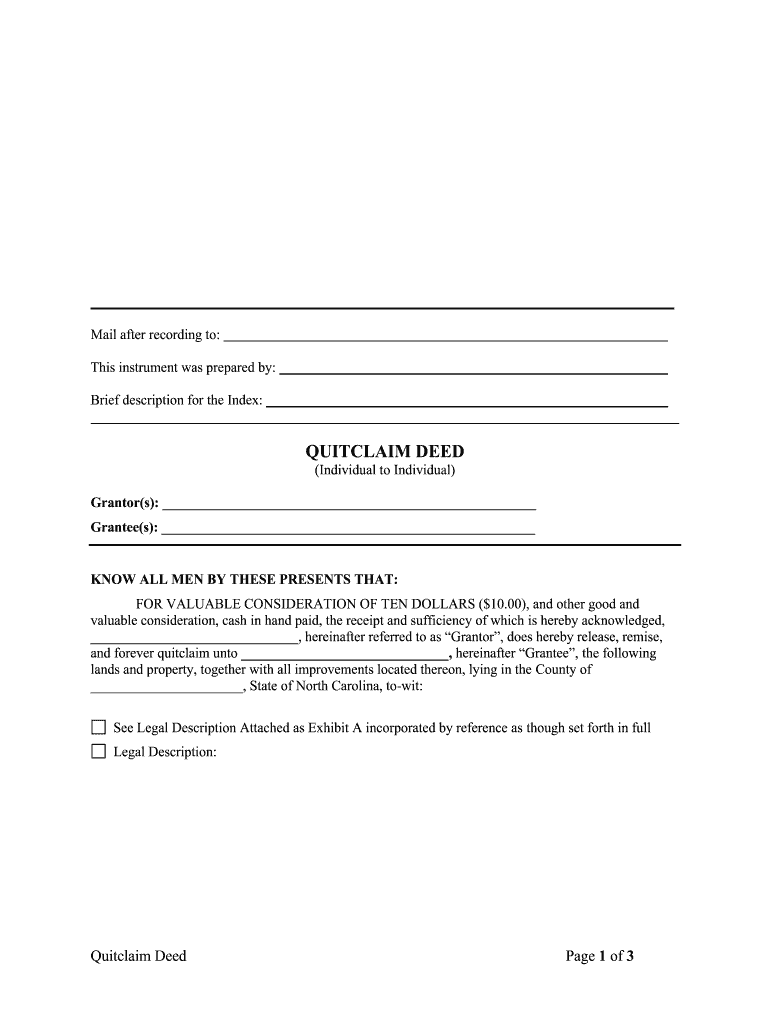
Typically, the form requires detailed information such as the full legal description of the property, the names of the grantor and grantee, and the consideration amount, which is often nominal. Once completed, the deed must be signed by the grantor in the presence of a notary public to be legally binding. Afterward, it should be filed with the local county recorder’s office to be part of the public record and to provide legal notice to third parties.
Steps to Complete a Quitclaim Deed in Real Estate
-
Gather Information: Collect details about the property and the parties involved. This includes the property’s legal description, the names of the current and new owners, and a clear statement of the interest being transferred.
-
Fill Out the Form: Use a standardized quitclaim deed form provided by your local jurisdiction. Input all the required personal and property details correctly to avoid future legal issues.
-
Notarization: Arrange for a notary public to witness the signing of the deed. Notarization is crucial to validate the transfer and to ensure that the signatures are authentic.
-
Record the Deed: Submit the notarized deed to the county recorder’s office where the property is located. Recording the deed completes the transfer process and updates the public land records.
-
Retain Copies: Keep a copy of the recorded deed for personal records and provide copies to relevant parties such as attorneys or real estate agents.
Key Elements of a Quitclaim Deed in Real Estate
- Grantor and Grantee Information: Accurate personal details of the current and prospective property owners.
- Property Description: The full legal description of the property as it appears in official records.
- Consideration: Although nominal, the consideration should be mentioned, often a token amount like one dollar.
- Signatures: The signature of the grantor and, in many cases, the grantee, with notarization to enhance legality.
- Date of Transfer: The exact date when the deed is executed and transferred.
Legal Use of a Quitclaim Deed in Real Estate
Quitclaim deeds are legally valid and used for specific circumstances where trust is inherent, and detailed warranties of ownership are unnecessary. In family transfers, such as adding a spouse to the title or transferring property to a living trust, quitclaim deeds are efficient.
These deeds are also instrumental in correcting defects or inconsistencies in titles, known as title clouds. However, they should not be used as a substitute for thorough property examination and due diligence, especially in arm’s-length transactions.
State-Specific Rules for Quitclaim Deeds
Each U.S. state has specific regulations governing quitclaim deeds, affecting how they should be executed and recorded. For example, some states may require additional documentation, such as a Transfer Tax form or affidavits regarding property value. It is essential to consult local legal resources or a real estate attorney to comply with state-specific rules.
Differences exist in the format of the deed, notarization requirements, and the absence or presence of witnesses. Familiarity with state requirements ensures the deed’s enforceability and prevents potential legal challenges.
Examples of Using a Quitclaim Deed in Real Estate
- Family Transfers: A parent transferring property interest to a child as a gift.
- Divorce Settlements: One spouse quitclaiming their interest in jointly owned property to the other.
- Name Changes: Correcting the title after a name change due to marriage or divorce.
- Establishing Joint Tenancy: Adding a co-owner or spouse to the title to enable right of survivorship.
These scenarios illustrate how quitclaim deeds facilitate straightforward property transfers and resolve minor ownership issues without the complexities associated with warranty deeds.
Important Terms Related to Quitclaim Deed Real Estate
- Grantor: The person transferring their interest in the property.
- Grantee: The person receiving the interest.
- Legal Description: The detailed geographical description of the property.
- Non-Warranty Deed: A characteristic of the quitclaim deed indicating no guarantees against title defects.
Understanding these terms helps clarify the process of using quitclaim deeds and sets expectations for both parties involved in the transfer.