Definition & Meaning
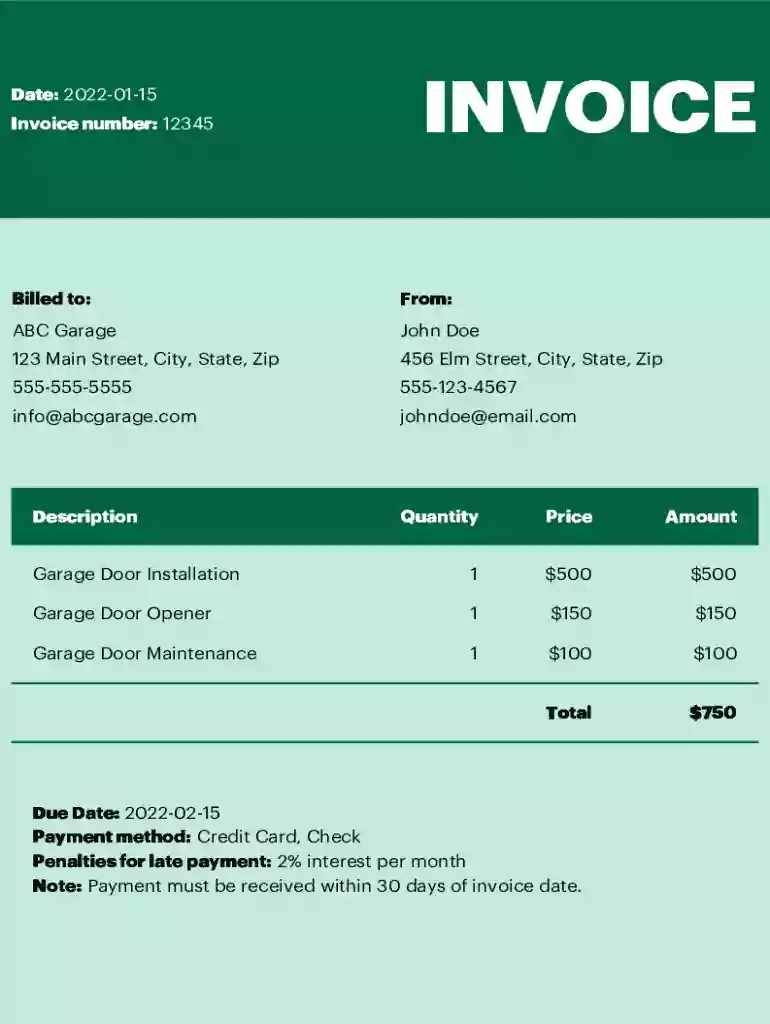
The Garage Door Invoice Template is a structured document designed to facilitate the billing process for garage door services. It serves as a standardized form for detailing services rendered, parts used, and associated costs for clients. This template offers a clear, professional means to request payments for garage door repairs, installations, or maintenance services. It ensures that all essential information about each transaction is captured and presented in a consistent manner, making it easier for both service providers and clients to track payments and maintain financial records.
Key Elements of the Garage Door Invoice Template
A comprehensive Garage Door Invoice Template contains several critical sections to ensure all necessary transaction details are included. Key elements typically include:
- Invoice Header: Includes the title "Invoice," the invoice number, and the date issued.
- Business Details: The service provider's name, address, contact number, and email.
- Client Information: The recipient's name, address, and contact information.
- Service Descriptions: Detailed list of services provided, including labor and parts.
- Quantity and Pricing: Breakdown of the number of units or hours and the rate charged for each service or item.
- Total Amount Due: Includes subtotals, taxes if applicable, and the grand total.
- Payment Terms and Methods: Outlines the accepted payment methods and payment terms such as due dates or late fees.
- Additional Notes: Space for any extra information relevant to the transaction.
How to Use the Garage Door Invoice Template
To effectively use the Garage Door Invoice Template, follow these steps:
- Gather Client Information: Ensure you have accurate details for the client including name, address, and contact information.
- Detail Services and Products: List all services performed, and products supplied with clear descriptions.
- Specify Pricing: Include detailed pricing for labor and materials, ensuring transparency for each line item.
- Calculate Total: Sum up the costs, apply relevant taxes, and detail the final amount due.
- Define Payment Terms: Clearly state when the payment is due and what payment methods are accepted.
- Review and Send: Double-check details for accuracy, and send the invoice to the client via email or mail.
Steps to Complete the Garage Door Invoice Template
Completing a Garage Door Invoice Template involves a systematic approach to ensure accuracy and professionalism:
- Open the Template: Access the template file from your computer or cloud-based service.
- Enter Identification Information: Fill in the invoice number and date of issue.
- Fill Out Company and Client Details: Enter your company’s name, address, and contact information followed by the client's details.
- Document Services and Charges: List each service or product along with corresponding prices and quantities.
- Calculate Costs: Add up all line items and include any applicable sales tax to get the total amount due.
- Include Payment Instructions: Detail how and when payments should be made to avoid delays.
- Provide Usage Instructions: If necessary, include a space for client signature or acknowledgment of receipt.
- Finalize and Dispatch: Save the completed invoice and send it to the client's preferred communication method.
Legal Use of the Garage Door Invoice Template
The Garage Door Invoice Template must conform to legal standards and include all required information to ensure validity:
- Compliance with Tax Regulations: Include necessary tax details to comply with state and federal tax laws.
- Formal Agreement Terms: State terms of service to affirm mutual agreement on provisions such as repair warranties.
- Customer Agreement: Make sure to include a section for client acknowledgment if necessary, especially for large projects.
- Data Privacy: Protect clients' private information by ensuring secure transmission and storage methods.
State-Specific Rules for the Garage Door Invoice Template
While the Garage Door Invoice Template provides a universal framework, certain state regulations may affect its use:
- Sales Tax Variations: Different states may have varied tax rates or exemptions impacting invoice calculations.
- Licensing Requirements: Some states require businesses to hold specific licenses to perform certain garage door work, which should be noted on invoices when applicable.
- Consumer Protection Laws: State laws that provide guidelines for consumer rights in service transactions may dictate the inclusion of specific terms and conditions.
Examples of Using the Garage Door Invoice Template
Here are some practical scenarios showcasing the use of the Garage Door Invoice Template:
- Routine Maintenance Billing: A company performs quarterly garage door maintenance services and issues an invoice for services rendered including parts used for repairs.
- Emergency Repair Charges: An independent contractor is called for sudden garage door malfunctioning, documents the service description, hourly rates, and materials on the invoice.
- Installation Service Fees: A garage door manufacturer completes a new installation and provides a detailed invoice highlighting labor, disposal fees, parts, and any applicable discounts.
Through these examples, it is evident how the template structures and presents billing details, making financial transactions transparent and efficient.