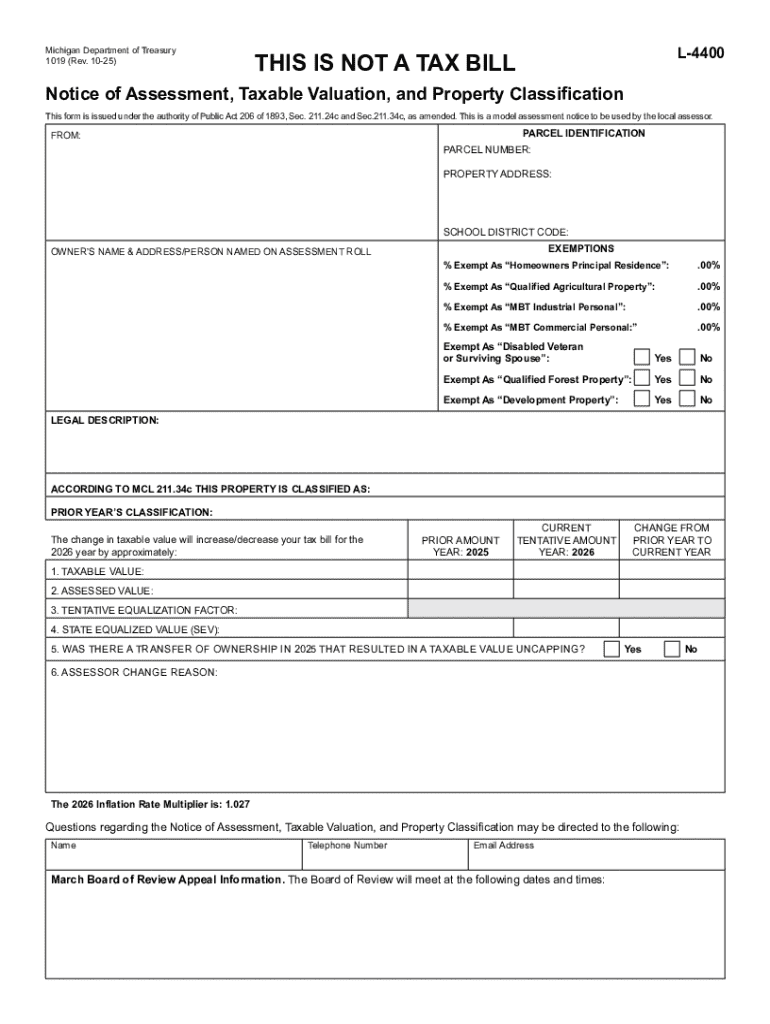







Definition & Meaning
The 1019, Notice of Assessment, Taxable Valuation, and Property is a formal document issued to property owners, providing essential information about their property tax assessment for a given tax year. It details the assessed value of a property, which is used to calculate property taxes. The form includes the property's taxable value, classification, and any adjustments made to its valuation.
Key Aspects
- Assessment Notice: Notifies property owners of their property's assessed value.
- Taxable Valuation: Indicates the value of the property used for tax purposes.
- Property Classification: Identifies the category under which the property falls for taxation.
How to Use the 1019, Notice of Assessment, Taxable Valuation, and Property
Understanding how to interpret and use the information on the 1019 form is crucial for property owners to ensure their property taxes are correctly assessed.
Key Steps
- Review Assessed Value: Examine the listed valuation of your property to verify its accuracy.
- Understand the Classification: Ensure the property is classified correctly, as misclassification can impact tax rates.
- Check for Adjustments: Note any adjustments in valuation, which may be due to market changes or improvements.
Practical Example
A homeowner receives their 1019 form and compares the assessed value to local real estate trends to confirm its accuracy. They also check if their property is incorrectly classified as commercial instead of residential.
Steps to Complete the 1019, Notice of Assessment, Taxable Valuation, and Property
While typically filled out by local tax authorities, understanding the completion process can help property owners detect errors.
Required Steps
- Verify Ownership Details: Ensure owner information is correct.
- Assess Property Details: Confirm property address and legal description.
- Review Valuation: Understand how the valuation figures are calculated.
Detailed Breakdown
- Owner Information: Double-check your name and contact details.
- Property Valuation: Scrutinize the factors determining the value, such as square footage or renovations.
Why You Should Review the 1019, Notice of Assessment, Taxable Valuation, and Property
Reviewing your 1019 form is vital to ensure fair property taxation and avoid overpayment.
Benefits of Review
- Accurate Tax Payments: Prevents overpaying taxes due to incorrect assessments.
- Correction Opportunity: Provides a chance to dispute incorrect valuations.
- Legal Compliance: Ensures tax compliance based on accurate property data.
Case Study
In a scenario where a homeowner finds an inflated property valuation, they can file an appeal to correct the assessment and reduce their tax burden.
Important Terms Related to the 1019
It's crucial to understand the terminology used in the 1019 form to navigate the assessment process effectively.
Key Terms
- Assessed Value: The value assigned to a property for tax purposes.
- Taxable Value: The portion of the assessed value subject to property taxes.
- Property Classification: Categories like residential, commercial, or agricultural.
Examples of Use
Knowing the difference between assessed and taxable value helps homeowners understand which figure affects their tax bills directly.
Filing Deadlines / Important Dates
Being aware of key deadlines associated with the 1019 form ensures timely appeals and payments.
Critical Dates
- Assessment Notification: Typically mailed annually; the date varies by state.
- Appeal Deadlines: Specific periods allowed for disputing assessments.
- Tax Payment Due Dates: Dates when property taxes must be paid.
Variations
Filing deadlines might differ across states; checking local deadlines is essential for compliance.
Penalties for Non-Compliance
Failure to properly address the 1019 form and related tax obligations can result in penalties.
Potential Penalties
- Late Payment Charges: Fees imposed for unpaid taxes by the due date.
- Inaccurate Reporting Fines: Penalties for incorrect information that leads to tax discrepancies.
Scenario
A property owner neglects to pay taxes by the due date and incurs a percentage-based penalty that increases the tax burden.
State-Specific Rules for the 1019
Each state might have distinct regulations concerning the 1019 form, affecting how assessments are conducted and appealed.
Factors to Consider
- Valuation Methodology: Different states may use varied approaches to determine property values.
- Appeals Process: Procedures for challenging assessments are state-specific.
Examples
In some states, a property owner can request an on-site assessment review, while others may allow virtual hearings for appeals.
Digital vs. Paper Version
Understanding the options for accessing and managing your 1019 form can streamline property tax management.
Options Available
- Digital Access: Many regions provide online portals to view and manage the 1019 form.
- Paper Notification: Traditional mail versions are still widely used.
Advantages of Digital Versions
- Accessibility: Immediate access through online accounts.
- Convenience: Easier tracking and submission of appeals electronically.
Who Issues the Form
The entity responsible for issuing the 1019 form typically varies by location but is generally a local government authority.
Issuing Authorities
- Local Tax Assessor's Office: Typically manages valuation and form distribution.
- County Treasurer's Office: Might be involved in form dissemination and tax collection.
Understanding Local Processes
Knowing which office to contact can aid in resolving discrepancies or inquiries related to your property assessment.