






Definition and Meaning of the 2025 MICHIGAN Individual Income Tax Return MI-1040
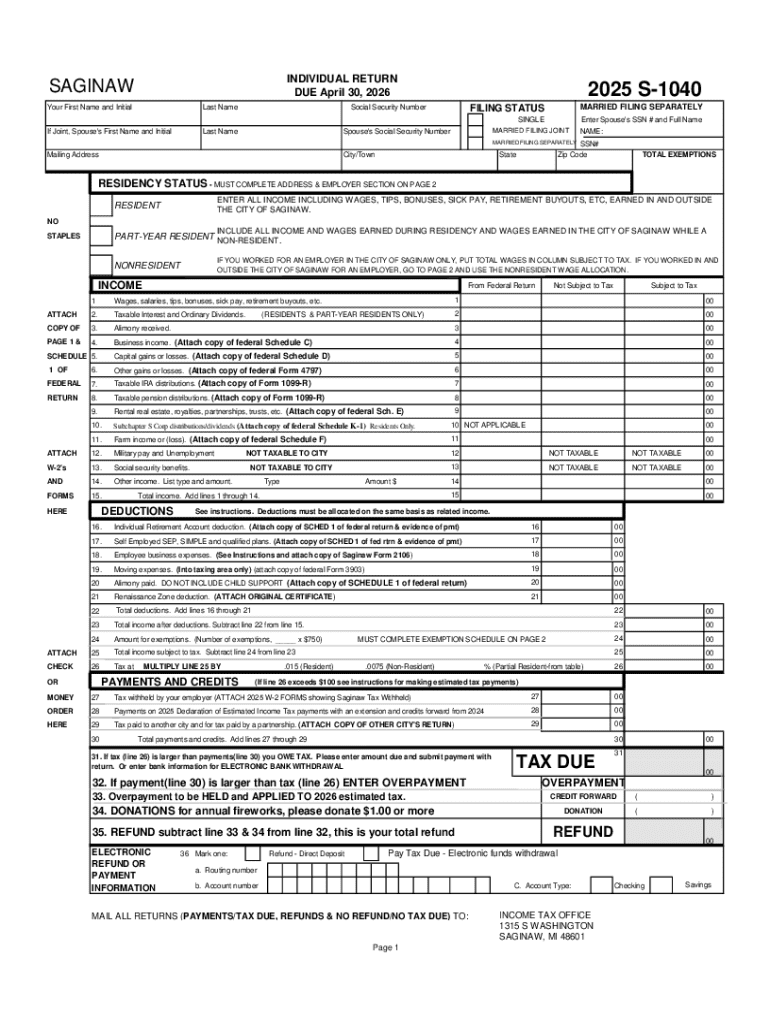
The 2025 MICHIGAN Individual Income Tax Return, known as Form MI-1040, is the state form used by Michigan residents to report their income, calculate their tax liability, and determine any overpayment or amount owed for the year 2025. This form ensures individual taxpayers comply with Michigan's state tax laws and regulations, capturing information pertinent to residents' income, deductions, credits, and exemptions. It functions similarly to the federal tax return but is specific to state income tax requirements and rates.
Key Elements of the MI-1040 Form
- Personal Information: Captures taxpayer's name, address, and social security number.
- Filing Status: Options include single, married filing jointly, married filing separately, and head of household.
- Income Details: Includes earned income, dividends, capital gains, and other income sources subject to state taxes.
- Deductions and Exemptions: Details applicable deductions and credits, which reduce taxable income or tax liability.
- Tax Computation: Explanation of the tax rate applied to taxable income, aligning with state-specific brackets and rates.
- Payment or Refund Details: Calculation of taxes owed or a refund due if the taxpayer has overpaid throughout the year.
How to Use the 2025 MICHIGAN Individual Income Tax Return MI-1040
Filing your state return with the MI-1040 involves several crucial steps, making an organized approach critical for compliance and accuracy. Here is a guide to efficiently using the form:
- Gather Required Documents: Collect W-2s, 1099s, and records of all income received.
- Determine Filing Status: Choose based on your personal situation, such as single or married.
- Enter Income Information: Record all relevant income types, ensuring alignment with accompanying federal documents.
- Apply Deductions and Credits: Include exemptions or credits you're eligible for, reducing your taxable income.
- Calculate Tax Owed or Refund: Use Michigan's tax tables to determine your tax liability or refund amount.
Practical Scenarios and Examples
- Example: If you're self-employed, add income from all clients, subtracting applicable business expenses.
- Scenario: Married couples with separate income must decide whether filing separately benefits them more tax-wise by calculating respective liabilities.
Steps to Complete the 2025 MICHIGAN Individual Income Tax Return MI-1040
To ensure accuracy and adherence to state guidelines, follow these meticulous steps:
- Obtain the MI-1040 Form: Download from Michigan's Department of Treasury website.
- Review Instructions: Carefully read the instructions provided with the MI-1040 to prevent errors.
- Fill Out Personal Information: Ensure accuracy in all identifying details.
- Report All Sources of Income: Consolidate all income data, double-checking for completeness.
- List Deductions and Credits: Precisely list deductions and credits, consulting the guide for eligibility.
- Compute Tax Liability: Calculate the tax using Michigan's tax rate schedule.
- Finish with Payment or Refund Information: Declare an owed amount payable via check or request a refund to a bank account.
- Verify and File: Review the filled form thoroughly before submitting digitally or via mail.
Detailed Steps for Specific Situations
- Retirees: Include pension incomes and any Social Security payments, distinguishing between taxable and non-taxable.
- Businesses: Report business income on the form and address any pass-through taxation issues if applicable.
Filing Deadlines and Important Dates for the 2025 MI-1040
Adhering to filing deadlines is crucial to avoid penalties. Here are significant dates for the MI-1040 in 2026:
- Filing Due Date: April 30, 2026. This deadline aligns with federal tax deadlines, allowing for streamlined preparation.
- Extension Application Deadline: April 30, 2026, to request additional time if needed.
- Estimated Tax Payment Dates: Quarterly due dates for self-employed individuals or those with irregular income streams.
Penalties for Late Filing
Failing to file or pay on time leads to penalties:
- Late Filing Penalty: Calculated based on the amount owed and the delay duration.
- Interest Accumulation: Interests accrue monthly on unpaid taxes.
Required Documents for the 2025 MI-1040
Compile necessary documentation to support accurate and comprehensive filing:
- Income Proof: W-2s, 1099s, and other earnings statements.
- Expense Receipts: Documentation supporting deductions.
- Contribution Records: Evidence of charitable contributions if claiming deductions.
- Previous Year’s Returns: Last year’s tax return for reference and comparative analysis.
Specific Scenarios and Document Requirements
- Students: Use tuition receipts for educational credits.
- Homeowners: Property tax statements may impact deductions or credits.
Form Submission Methods for the MI-1040
Submit the 2025 MI-1040 choosing from various convenient options, ensuring a secure and timely process:
- Online Filing: Through Michigan's e-file provider, offering quick processing and confirmation.
- Mailing Option: Send the completed form to Michigan Department of Treasury via postal services.
- In-Person: Drop-off available at local tax offices for direct submission.
Advantages and Considerations in Submission Choices
- Online Filing: Faster processing and prompt confirmation notifications pose advantages for digital submissions.
- Traditional Mail: While slower, this is preferable for those uncomfortable with digital interfaces, despite processing delays.
Legal Use and Compliance of the MI-1040
Understanding the legal framework governing the MI-1040 is paramount for compliance:
- Legal Compliance: Must be filled as per Michigan’s statutory tax requirements.
- Audit Readiness: Complete accurately to withstand potential audits or reviews by the state tax authority.
Considerations for Legal Compliance
- Accurate Declaration: Ensure all income sources are reported.
- Record-Keeping: Maintain documentation in anticipation of audits, applicable for up to three years post-filing.
Each section provides detailed guidance facilitating users in managing their tax responsibilities efficiently and in compliance with state laws. The content is structured to offer maximum utility and detail, accommodating diverse taxpayer situations.