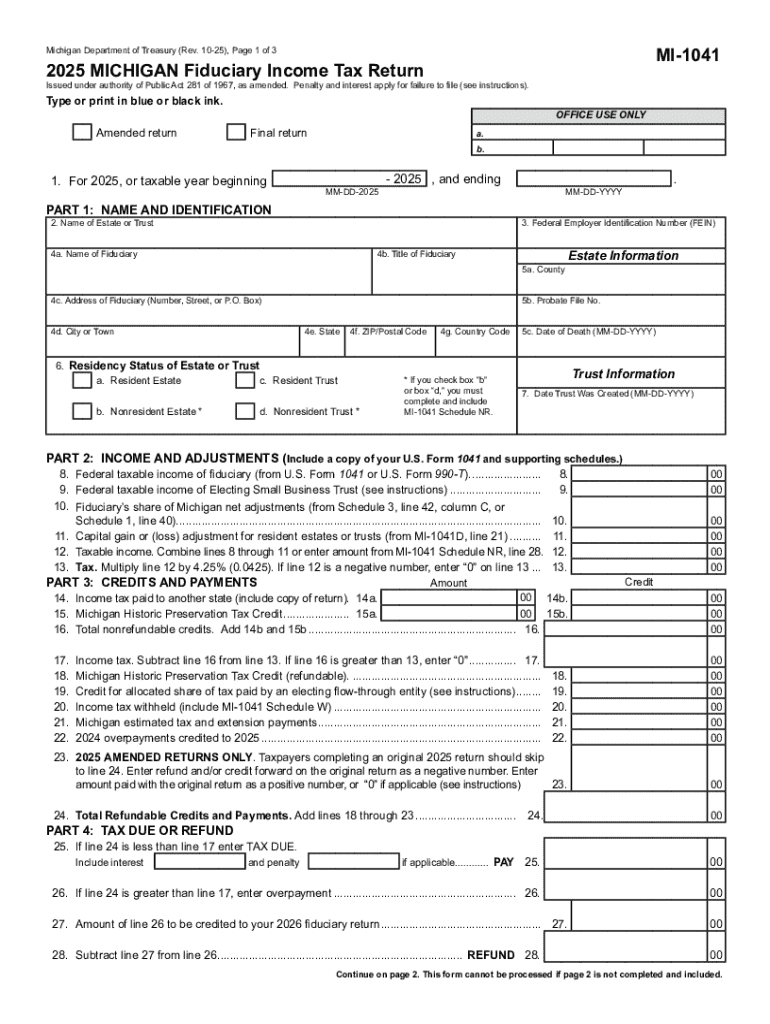







Definition and Purpose of the MI-1041, 2025 Michigan Fiduciary Income Tax Return
The MI-1041, 2025 Michigan Fiduciary Income Tax Return is designed for fiduciaries, such as trustees and executors, managing the income of estates and trusts. The purpose of this form is to report income, deductions, and credits associated with these fiduciary entities in the state of Michigan. It ensures proper tax compliance by detailing the financial activities of the trust or estate over the fiscal year.
Importance of Accurate Filing
- Accurate reporting prevents legal issues and financial penalties.
- Ensures that beneficiaries receive correct benefits.
- Helps maintain the financial integrity of the trust or estate.
Examples of Fiduciary Accounts
- Trusts: Established to manage assets for beneficiaries.
- Estates: Managed after an individual’s death to distribute assets according to their will.
How to Use the MI-1041, 2025 Michigan Fiduciary Income Tax Return
Completing the MI-1041 form requires precision and attention to detail to ensure compliance with tax regulations. Users must gather relevant financial documents and adhere to specific guidelines to accurately report fiduciary income.
Related Requirements
- Income Documentation: Collect income statements associated with the trust or estate.
- Deduction Records: Compile a list of deductions the entity is eligible for.
- Beneficiary Information: Have up-to-date records of beneficiaries’ details.
Utilization in Practical Scenarios
- Estate Executors: Use the form to settle final tax obligations before asset distribution.
- Trustees: Report annual income and expenditures to maintain trust transparency.
Steps to Complete the MI-1041, 2025 Michigan Fiduciary Income Tax Return
The form involves several steps, each crucial for the accurate reporting of financial data. Understanding these processes ensures proper submission and compliance.
Step-by-Step Completion Process
- Gather Required Documents: Assemble income statements, tax deduction documents, and beneficiary information.
- Fill Out Personal and Fiduciary Information: Enter the trust or estate’s name, address, and other identifying details.
- Report Income and Deductions: Accurately input income figures and applicable deductions.
- Calculate Tax Liability: Use provided formulas to establish any tax amounts owed.
- Complete Beneficiary Information Sections: Confirm all details are accurate and up-to-date.
- Review and Sign: Before submission, check for errors, and complete the signature section for valid certification.
Filing Deadlines and Important Dates
Adhering to specific deadlines for the MI-1041 is crucial for timely compliance and avoiding penalties. Understanding these critical dates helps fiduciaries plan their tax activities effectively.
Key Deadlines
- Filing Deadline: Typically due April 15, 2025.
- Extension Requests: Must be submitted before the original due date.
- Estimated Tax Payments: Should be paid quarterly, aligning with federal deadlines.
Examples of Deadline Importance
- Timely filing avoids penalties and interest, safeguarding the fiduciary’s financial interests.
- Understanding and planning for extensions aids in managing complex estates or trusts.
Who Typically Uses the MI-1041, 2025 Michigan Fiduciary Income Tax Return
The form is utilized by individuals and entities acting as fiduciaries within Michigan. Recognizing who should use the MI-1041 is vital for correct tax reporting and compliance.


Typical Users
- Trustees: Managing long-term asset distribution plans.
- Estate Executors: Settling taxes on behalf of deceased individuals.
- Financial Professionals: Assisting clients with fiduciary responsibilities.
Scenarios
- Family Trusts: Filing for a trust set up to fund a child’s education.
- Business Estates: Managing an estate including significant business interests and assets.
Penalties for Non-Compliance
Failing to adhere to MI-1041 filing requirements can result in severe penalties. Understanding these consequences emphasizes the importance of timely and accurate filing.
Types of Penalties
- Late Filing: Faces monetary fines proportional to the delay.
- Inaccurate Information: Incurs additional audits and potential legal action.
- Failure to Pay Tax Liability: Accumulates interest and possible legal fees.
Preventive Measures
- Utilize tax software to reduce errors.
- Seek professional advice for complex fiduciary arrangements.
Required Documents for Filing
The MI-1041 requires various types of documentation to ensure all information is accurate and complete. Identifying these documents simplifies the filing process.
Essential Documents
- Financial Statements: Income and expense reports for the estate or trust.
- Deduction Resources: Itemized lists of applicable deductions.
- Beneficiary Documents: Confirm identities and entitlement distributions.
Collection Tips
- Maintain organized digital or physical records.
- Regularly update records to reflect any changes.
Digital vs. Paper Version: Submission Methods
Fiduciaries have several methods to submit the MI-1041. Each method has its own set of advantages, and understanding them can facilitate a smoother filing process.
Submission Options
- Online Submission: Utilizes platforms like DocHub for secure digital filing.
- Mail-in Option: Allows for traditional paper form submission.
- In-Person Filing: Permits direct submission to a local tax office.
Advantages and Considerations
- Digital Filing: Offers streamlined process and faster response times.
- Paper Versions: Provides familiarity for those accustomed to traditional filings.
- In-Person Filing: Ensures immediate confirmation of receipt.