






Definition and Importance of the State of Michigan Individual Income Tax Filing
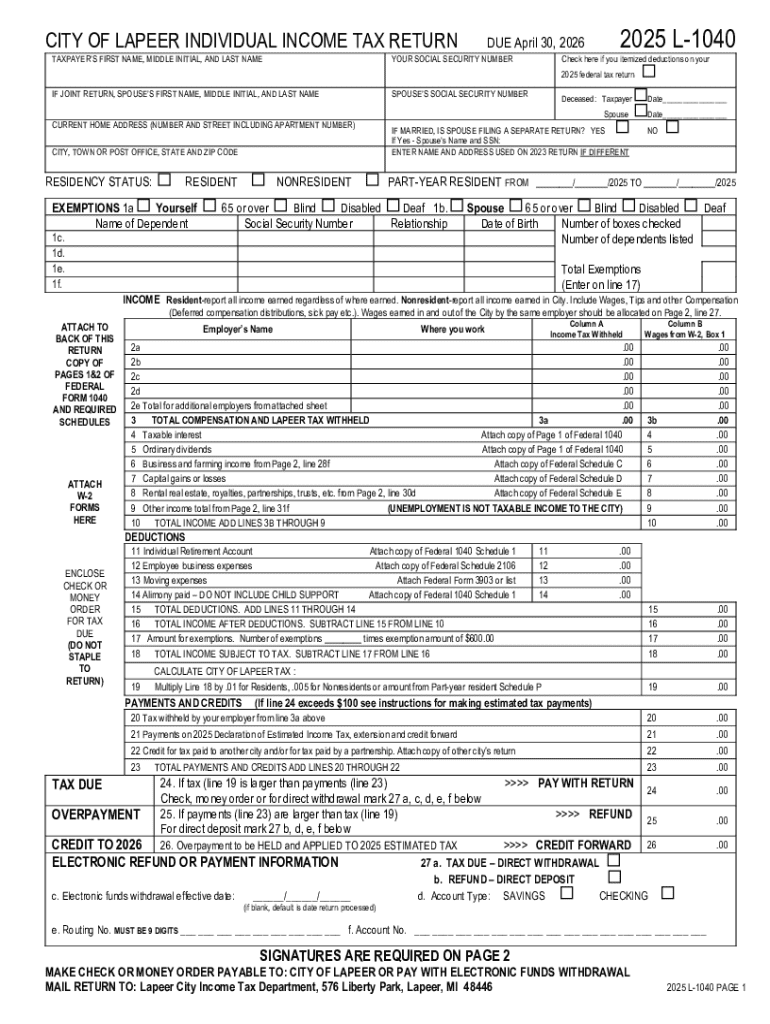
The State of Michigan individual income tax filing is a mandatory process for residents and non-residents earning income within the state. It involves submitting a state tax return to report all earnings, deductions, and credits applicable for that tax year. Michigan has a flat state income tax rate, making the calculation straightforward but requiring attention to detail regarding applicable deductions and credits. Understanding the filing process is crucial for complying with state tax regulations and avoiding penalties.
Key Components of the Filing Process
- State Income Tax Forms: These forms, such as MI-1040, capture income details and apply relevant state tax laws.
- Flat Tax Rate: Michigan applies a flat tax rate, which simplifies the calculation but requires accurate documentation of taxable income.
- Deductions and Credits: Residents can claim specific deductions and credits to reduce their taxable income, enhancing their potential refund.
Steps to Complete the State of Michigan Individual Income Tax Filing
Completing your Michigan tax filing involves several detailed steps to ensure compliance and accuracy.
Step-by-Step Guide
- Gather Required Documents: Collect all necessary documents, including W-2s, 1099s, and receipts for deductions and credits.
- Complete MI-1040 Form: Fill out the MI-1040 form, reporting all earnings and applying for any applicable deductions or credits.
- Calculate Tax Liability: Use Michigan’s flat tax rate to determine your total tax owed or expected refund.
- Review and Finalize: Double-check all entries for accuracy to avoid errors that could trigger audits or delays.
- Submit the Form: File your completed MI-1040 form through online platforms, mail, or in-person submissions as required.
Practical Examples
- Scenario 1: A single filer with no dependents would follow a straightforward process, utilizing standard deductions and plugging in numbers from their W-2 forms.
- Scenario 2: A family with multiple credits and deductions, such as education credits, will have a more complex filing requiring detailed calculations.
Digital vs. Paper Version of the Michigan Tax Filing
Michigan's tax filing can be conducted using both digital and paper forms, each with distinct advantages.
Digital Filing
- Online Platforms: Tax software like TurboTax or QuickBooks simplifies this process, offering automated calculations and frequent updates about tax law changes.
- Seamless Tracking: Digital platforms offer easy tracking of submissions and immediate feedback on errors or required corrections.
Paper Filing
- Traditional Method: Some prefer the paper method for its tangibility, although it's typically slower and requires more manual oversight.
- Manual Submission: Paper forms can be mailed directly to the Michigan Department of Treasury, though tracking status updates may be slower compared to digital submissions.
Filing Deadlines and Important Dates
Understanding the state-specific deadlines for income tax filing in Michigan is essential to avoid penalties.
Key Deadlines
- Regular Filing Deadline: Typically, Michigan aligns with federal deadlines, often due mid-April, like April 15, unless it falls on a weekend or holiday.
- Extension Requests: Taxpayers can request an extension, generally providing up to six additional months to file the return; however, any taxes owed must be paid by the original deadline to avoid penalties.
Importance of Timely Filing
Filing on-time not only helps in avoiding penalties but also ensures that refunds, if due, are processed quickly. Missing the deadline can result in fines and interest on any unpaid taxes, thus highlighting the importance of being well-prepared ahead of the filing season.
Required Documents for State of Michigan Individual Income Tax Filing
Having the necessary documentation is crucial to complete your Michigan tax filing accurately and efficiently.
Essential Documents
- Income Statements: W-2 and 1099 forms from employers and other income sources.
- Deduction Documentation: Receipts and documentation for any deductions you intend to claim, such as medical expenses, mortgage interest, or educational expenses.
- Prior Year Tax Returns: Previous year’s returns can help ensure consistency and accuracy for ongoing deductions or credits.
Tips for Organization
Keeping these documents organized throughout the year, either digitally or in a dedicated folder, can simplify the filing process. Utilizing tax software can also assist in tracking and managing these documents efficiently.
Who Typically Uses the State of Michigan Individual Income Tax Filing
The Michigan tax form is tailored for various groups of taxpayers, each with unique filing needs.


Common User Groups
- Residents: Anyone who resides in Michigan throughout the year must file a return using the MI-1040 form.
- Non-Residents and Part-Year Residents: Those who earned income in Michigan but live elsewhere, or those who moved in or out during the year, must report income attributable to Michigan.
Specialized Scenarios
- Self-Employed Individuals: Must report business income and expenses separately, often requiring additional forms to capture these details accurately.
- Students or Part-Time Workers: Even if not earning significant income, these individuals should evaluate whether a state return is necessary, primarily to recover any withholdings.
IRS Guidelines and Compliance for Michigan Tax Filing
Complying with IRS and Michigan state guidelines is essential for a seamless tax filing experience.
Alignment with Federal Regs
- Consistency: Ensure consistency in reporting between federal (IRS) and state tax forms to avoid discrepancies that could trigger audits.
- Common Forms Used: Forms utilized at the federal level, such as 1040, should be reconciled with Michigan’s MI-1040 where applicable.
Maintaining Compliance
Non-compliance, whether intentional or accidental, can lead to audits, fines, and penalties. It is crucial to ensure all information is accurate and complete, adhering to both federal and state tax laws to avoid complications.
Penalties for Non-Compliance in Michigan Tax Filing
Penalties for failing to comply with Michigan tax filing requirements can be severe, impacting personal and financial status.
Potential Consequences
- Late Filing Penalty: Submissions past the deadline incur penalties, generally a percentage of the taxes owed per month.
- Underpayment Penalty: Failing to pay taxes due by the original filing deadline results in interest and additional charges.
Preventive Measures
To avoid penalties, ensure timely filing and payment of any taxes owed, including making use of estimated payments if necessary. Utilize reminders or professional tax services to keep track of due dates and obligations effectively.
By comprehensively preparing for the State of Michigan individual income tax filing, taxpayers can ensure compliance, maximize refunds, and mitigate risk of penalties.