






Definition & Meaning
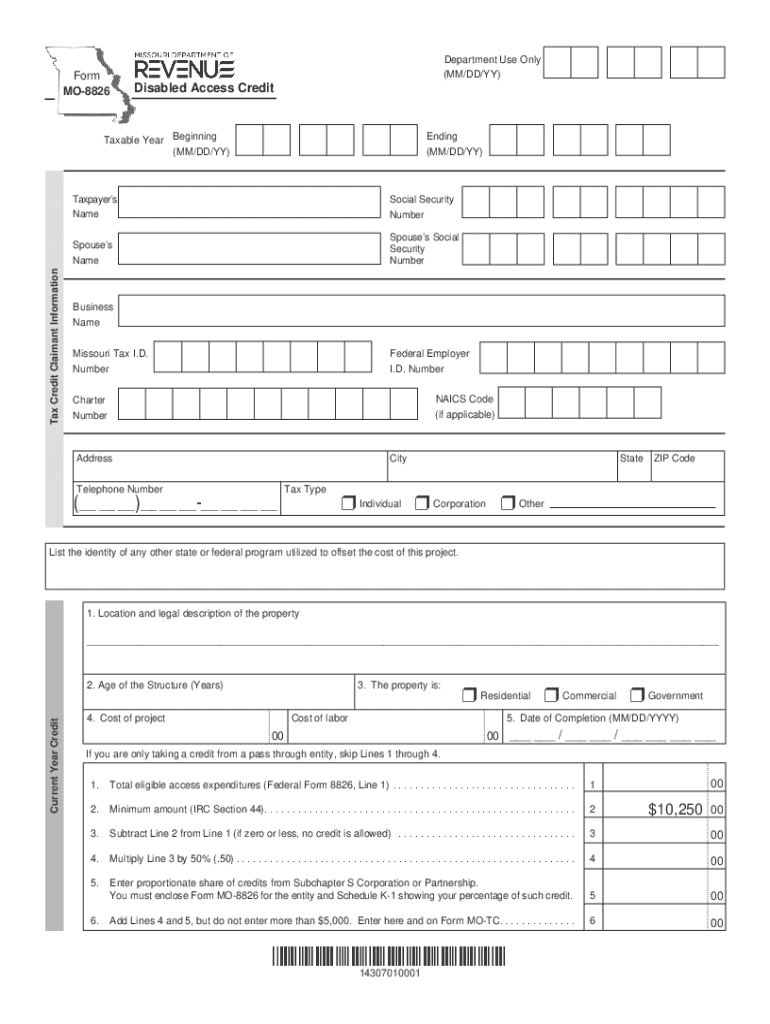
Form 8826, known as the Disabled Access Credit, is a tax form used by small businesses to claim a credit for making their establishments more accessible to individuals with disabilities. This credit provides financial incentives to encourage improvements that comply with the Americans with Disabilities Act (ADA). The primary aim is to ease the financial burden on businesses undertaking structural adaptations, purchasing accessible equipment, or enhancing accessibility to public facilities. The form serves as an encouragement for businesses to contribute to the inclusivity and mobility of individuals with disabilities.
How to Use the Form 8826, Disabled Access Credit
To utilize Form 8826 effectively, businesses must first identify qualifying expenditures, which typically include costs associated with removing barriers, providing interpreters, or acquiring adaptive equipment. The form must be completed for the respective tax year, detailing expenses incurred and ensuring that these align with IRS guidelines for qualifying expenditures. Once completed, Form 8826 is submitted alongside the business's general tax return. The credit is calculated based on the eligible expenditures and is capped at $5,000. Proper documentation of all expenditures is essential to validate the claimed credit.
Eligibility Criteria
Eligibility for claiming the Disabled Access Credit focuses on small businesses that meet specific size constraints. A business qualifies if it had gross receipts of $1 million or less in the previous year or if it employed not more than 30 full-time employees. Eligible expenses are those directly linked to ADA compliance, such as restructuring facilities, modifying transportation vehicles, or acquiring adaptive equipment. Businesses must ensure that all claimed expenses are strictly used to enhance accessibility and that they adhere to IRS definitions of qualifying expenditures.


Steps to Complete the Form 8826, Disabled Access Credit
- Obtain the Form: Access Form 8826 from the IRS website or a financial software tool that integrates tax forms.
- Identify Eligible Expenditures: List all the costs associated with increasing accessibility that meets ADA guidelines.
- Calculate the Credit: The credit is typically 50% of the eligible expenses. Confirm the amount does not exceed the annual limit.
- Complete the Form: Fill in all sections, ensuring accuracy in the data representing your expenditures and calculated credits.
- Attach to Your Tax Return: Include the completed Form 8826 with your annual tax return documentation.
- Maintain Detailed Records: Retain all invoices and documentation as proof of the expenses claimed for the credit.
Important Terms Related to Form 8826, Disabled Access Credit
Understanding the key terminologies related to Form 8826 aids in accurate completion and compliance. Some terms include:
- Qualifying Expenditures: Costs incurred specifically for enhancing accessibility per ADA requirements.
- Gross Receipts: Total income or gross sales from business operations before expenses.
- Full-time Employees: Persons employed on a full-time basis, typically defined as working 40 hours or more per week.
- Capped Credit: The maximum limit set for the credit, which standardly peaks at $5,000.
IRS Guidelines
The IRS provides comprehensive guidelines to assist businesses in completing Form 8826. These guidelines detail the types of expenditures eligible for the credit, how to calculate the credit amount, and provide examples of qualified ADA-related expenses. Following IRS instructions ensures compliance and reduces the risk of errors or misinterpretation, which can lead to penalties or audit issues. Regular updates to these guidelines help businesses stay informed of any changes to eligibility or filing requirements.
Filing Deadlines / Important Dates
Form 8826 should be filed with the business's annual tax return by the standard deadline, typically April 15 of the subsequent year. Extensions are typically available, but the form must still be included with the extended return by the new filing deadline. Businesses must also ensure that they have documented their expenditures throughout the tax year and are prepared to submit all necessary documentation during tax filing season.
Required Documents
Several documents are essential when submitting Form 8826, including:
- Invoice Copies: Detailed receipts for all qualifying expenditures.
- Employee Records: Proof of the number of full-time employees to establish eligibility.
- Financial Statements: Previous year's gross receipts to confirm eligibility under the gross receipts threshold.
- ADA Compliance Certificates: Any documents proving compliance with ADA standards, if applicable.
Maintaining these records ensures that claims are supported, reducing the chance of disputes or denial of the credit. Proper documentation is not only crucial for audit purposes but also essential for effective financial planning and compliance assurance.