






Definition & Meaning
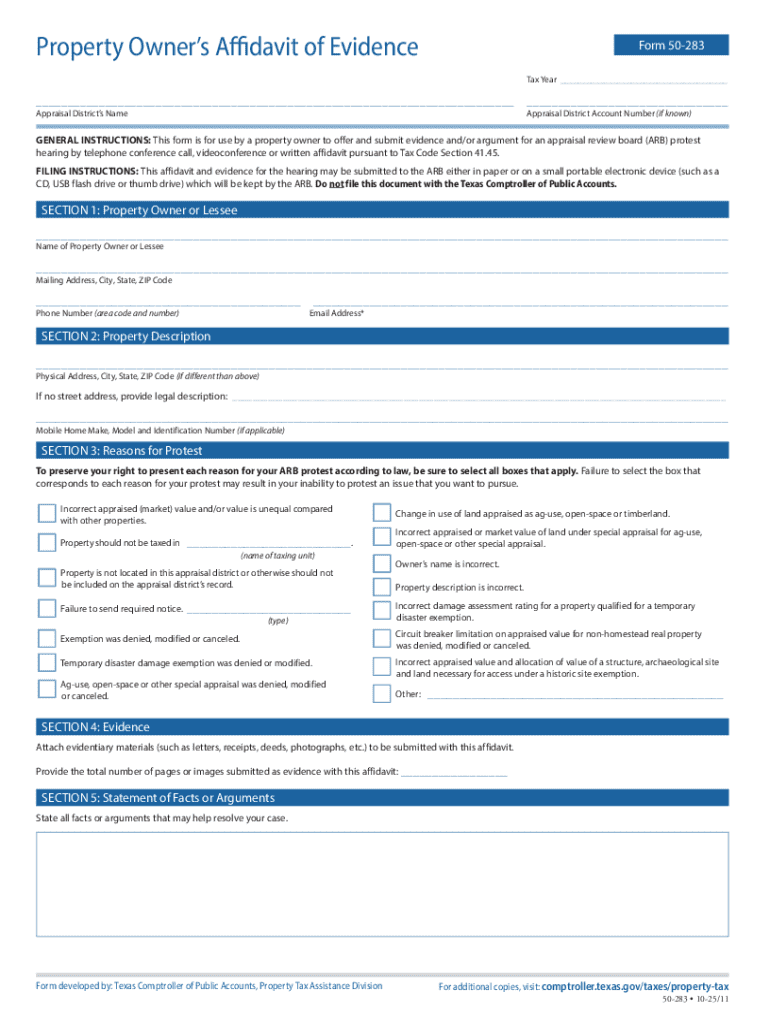
The Property Owners Affidavit of Evidence is a formal legal document used primarily by property owners to provide sworn testimony regarding the details, history, or specifics of a particular property. This affidavit serves as a key piece of evidence in legal disputes or when clarifying ownership issues. It typically includes statements confirming the owner's rights or interests in the property, backed by factual evidence. By submitting this sworn statement, property owners aim to strengthen their claims in judicial or administrative proceedings, ensuring their rights are documented and recognized.
How to Use the Property Owners Affidavit of Evidence
Using the Property Owners Affidavit of Evidence involves several precise steps. First, property owners must accurately identify the property by including details such as the legal description, address, and any relevant parcel numbers. Next, they must assert their ownership rights and provide supporting factual details, such as how the property was acquired. Once these elements are in place, the affidavit must be sworn or affirmed in the presence of a notary public to be legally valid. The document can then be submitted as evidence in relevant legal contexts, such as court cases or tax appeals.
Steps to Complete the Property Owners Affidavit of Evidence
- Download the Form: Access a current version of the affidavit from a reputable source or legal form library.
- Identify Property Details: Include precise information such as the property’s legal description and tax parcel number.
- Provide Ownership Assertions: Clearly state your ownership rights, detailing how and when you acquired the property.
- Add Supporting Evidence: Attach any necessary documentation like deeds or previous affidavits to support your claims.
- Notarize the Document: Arrange for a notary public to witness your signature, ensuring its legal standing.
- Submit the Affidavit: Depending on its purpose, file the document with the appropriate parties or court.
Key Elements of the Property Owners Affidavit of Evidence
- Property Identification: Legal description, address, and other identifiers.
- Ownership Claim: A detailed narration of ownership history and basis of ownership.
- Supportive Documents: Copies of deeds, tax records, or previously filed legal documents.
- Affirmation: A sworn statement declaring the truthfulness of the information provided.
- Notary Section: Space for notarial acknowledgment, mandatory for legal acceptance.
Legal Use of the Property Owners Affidavit of Evidence
This affidavit is predominantly used in legal settings to settle disputes, assist with real estate transactions, or contest property tax assessments. It serves as a powerful document in courts and before other judicial bodies, providing a sworn declaration of facts under oath from the property owner. In disputes over property boundaries, ownership rights, or historical usage claims, this affidavit can decisively influence outcomes by presenting evidence that validates the owner's claims.
Required Documents
To complete the affidavit effectively, property owners need several supporting documents:
- Deed Copies: Current and previous deeds illustrating the chain of title.
- Tax Records: Previous property tax statements to substantiate ownership and use.
- Binding Agreements: Any contracts or agreements related to property transfer or use.
- Court Orders or Judgments: In cases where property rights have been adjudicated previously.
Penalties for Non-Compliance
Failing to submit an accurate and notarized Property Owners Affidavit of Evidence, especially in contexts where it's legally mandated, can result in several penalties. These may include fines, legal disenfranchisement of property rights, or negative judgments in property disputes. Inaccurate or fraudulent submissions can lead to charges of perjury or falsification of documents with potential criminal consequences. It highlights the importance of accuracy and truthfulness when completing legal affidavits.
State-Specific Rules for the Property Owners Affidavit of Evidence
Property affidavit requirements can differ significantly from one state to another. For instance, some states might require additional documentation proving lineage of property ownership over several decades. Others might impose stricter notarial procedures or require local governmental approvals for claim validation. It is crucial for property owners to consult state-specific statutes or legal advisors to ensure compliance with local regulations and practices, thus safeguarding their property interests effectively.