
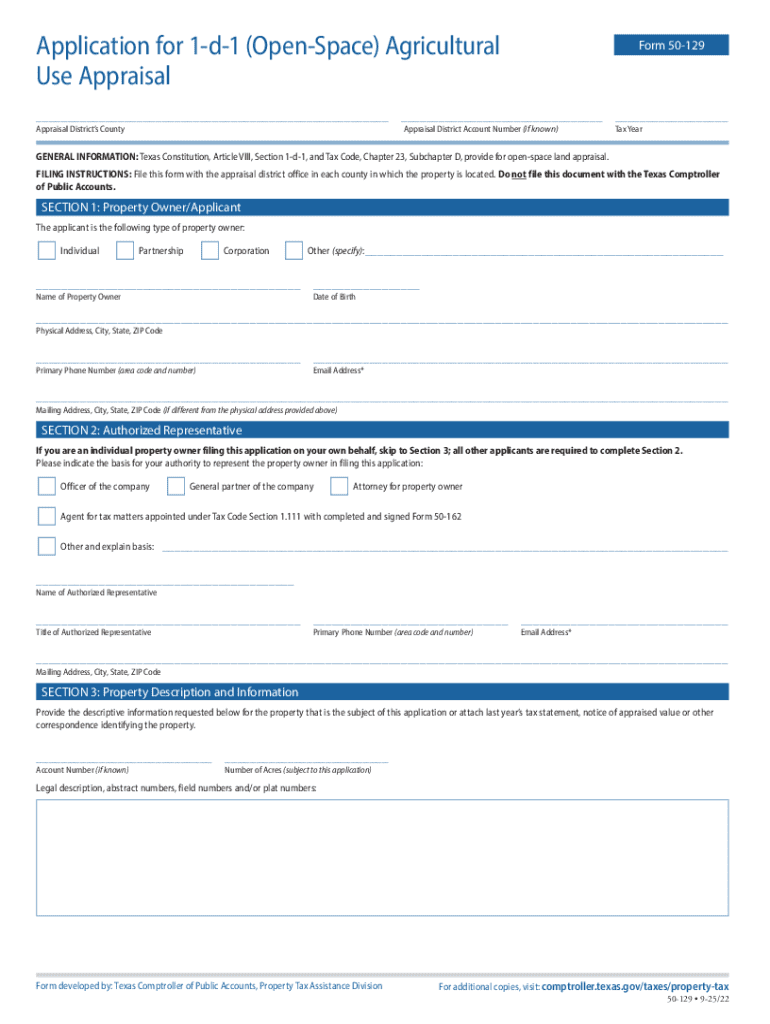







Definition and Purpose of Form 50-129 InstructionsApplication for 1-d-1
Form 50-129, officially known as the Application for 1-d-1 Open Space Agricultural Use Appraisal, is a tax form primarily used in Texas. This form serves agricultural landowners by allowing them to apply for property tax relief based on the productive agricultural use of their land rather than its market value. The designation helps to support agriculture by making it financially feasible for farmers and ranchers to maintain their operations.
How to Obtain Form 50-129 InstructionsApplication for 1-d-1
The form can be acquired directly from the local county appraisal district office in Texas or downloaded from their respective websites. It's important to confirm that you are using the latest version of the form as requirements may change. Applicants can also consult the Texas Comptroller’s website for official guidance and updates regarding the form.
Steps to Complete the Form 50-129 InstructionsApplication for 1-d-1
- Collection of Property Details: Gather all relevant property details, including the exact location, size, and current use category of the land.
- Fill Out Owner Information: Provide information about the landowner(s), including names and contact details.
- Specify Agricultural Use: Clearly describe the agricultural activity conducted on the property, such as farming, livestock, or other qualifying operations.
- Include Historical Use Data: Record the historical use of the land, typically demonstrating that the property has been primarily used for agriculture for at least five out of the past seven years.
- Sign and Date the Form: Ensure that all required signatures are present. The form must be completed accurately to avoid delays.
- Submit the Form: Submit the form and any required documentation to the county appraisal district, adhering to submission deadlines.
Eligibility Criteria for Form 50-129 InstructionsApplication for 1-d-1
Eligibility typically requires that the land is currently devoted principally to agricultural use, which can include farming, ranching, production of crops, or other recognized agricultural activities. Additionally, the land must have been used for agricultural purposes for at least five of the last seven years. The land size should meet minimum acreage requirements set by the county appraisal district.


Required Documents and Information
- Current and past agricultural use documentation: Records or evidence showing the agricultural activities over the past five years.
- Property ownership proof: Deeds or other legal documents confirming ownership.
- If applicable, lease agreements: Documents supporting any leased agricultural activities on the land.
- Photographs or maps: Visual documentation highlighting the use areas of the property.
Filing Deadlines and Submission
The application for 1-d-1 must be submitted to the county appraisal district before April 30th of the year that the agricultural valuation is sought. Late submissions may be subject to penalties or denial of the tax relief.
Key Elements within Form 50-129 InstructionsApplication for 1-d-1
- Property Identification: Clear designation of the property location with identifiers like legal descriptions or parcel numbers.
- Use Type and Capacity: Detailed section on how the property is utilized for agricultural purposes, including types of crops or livestock.
- Supporting Evidence: Spaces for attaching necessary supporting documents or additional explanations.
Legal Use and Compliance for Form 50-129 InstructionsApplication for 1-d-1
The legal foundation for this form is rooted in the Texas Constitution, which allows property owners to seek a valuation based on the land's productivity. Misuse or misrepresentation on the application can lead to penalties, additional taxes, and potential legal actions for tax fraud.
Variations and Older Versions of the Form
While Form 50-129 is the specific application form for the 1-d-1 agricultural appraisal in Texas, there have been predecessor forms and amendments that addressed agricultural use valuation. It is essential to use the most current form version available to ensure compliance with the latest regulatory requirements.




