






Definition and Meaning of Pass Through Entity Tax Return
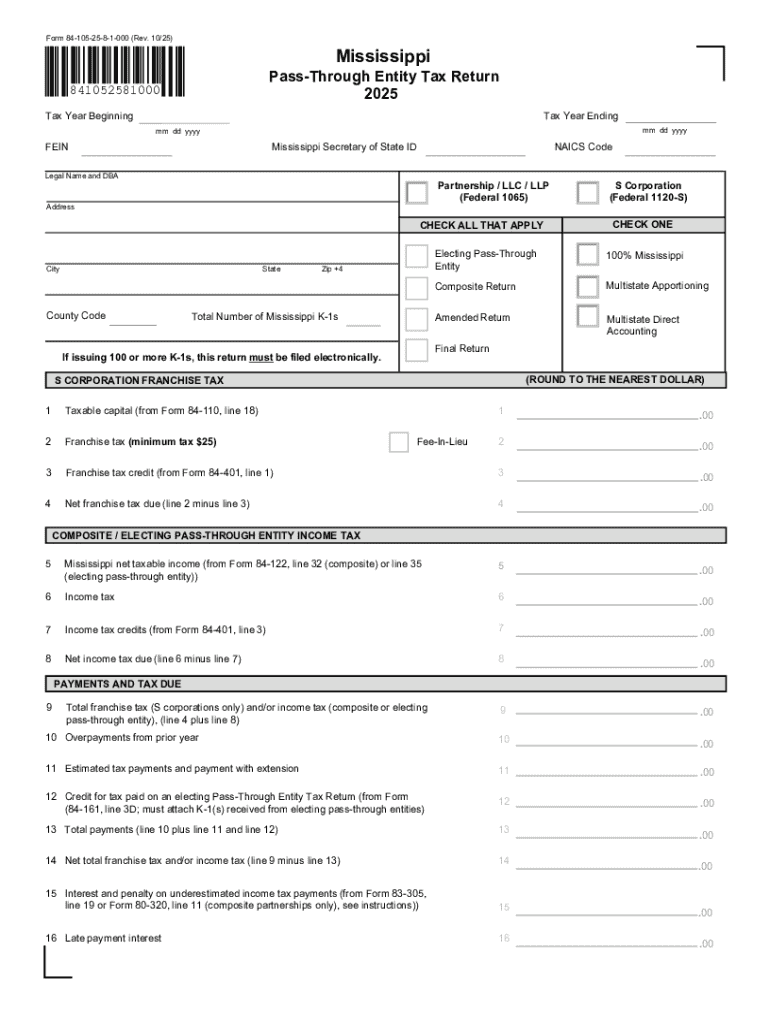
A Pass Through Entity Tax Return is a specific type of tax documentation required by businesses that qualify as pass-through entities, such as partnerships, S corporations, and some LLCs. These entities do not pay income taxes at the corporate level. Instead, their income is passed through to the owners, who then report this income on their personal tax returns. This setup helps avoid the double taxation that corporations face. The tax return provides a detailed account of the entity's financial activities for the year and is crucial for compliance with federal and state tax laws.
Examples of Pass Through Entities
- Partnerships: These include general partnerships, limited partnerships, and limited liability partnerships (LLPs).
- S Corporations: These are corporations that elect to pass corporate income, losses, deductions, and credits through to their shareholders for federal tax purposes.
- Limited Liability Companies (LLCs): Depending on the structure, LLCs can choose to be taxed as partnerships, S corporations, or by default as sole proprietorships.
Steps to Complete the Pass Through Entity Tax Return
Completing the Pass Through Entity Tax Return involves several key steps to ensure accuracy and compliance.
-
Gather Required Information: Collect all necessary financial documents, including income statements, balance sheets, and receipts.
-
Identify Income Sources: Declare all income by sourcing details from sales, services provided, and any other revenue channels.
-
Expense Documentation: Accurately record all business expenses, such as salaries, rent, and utilities.
-
Calculate Net Income: Deduct total expenses from total income to arrive at the net income or loss.
-
Allocate Income to Owners: Assign the calculated net income to the respective owners based on their ownership percentage or agreed shares.
-
Prepare Supporting Forms: Complete additional forms such as K-1, which is used to report income, deductions, and credits to each partner or shareholder.
Forms Typically Required
- Form 1065: U.S. Return of Partnership Income
- Form 1120S: U.S. Income Tax Return for an S Corporation
- Form K-1: Partner's or Shareholder's Share of Income, Deductions, Credits, etc.
Important Terms Related to Pass Through Entity Tax Return
Understanding specific terms is essential for correctly managing and filing a Pass Through Entity Tax Return.
-
K-1 Form: A document used to report each stakeholder's share of the partnership's profits, losses, deductions, and credits, which they must then report on their personal tax returns.
-
Distributive Share: The portion of income, loss, and deductions allocated to each partner or shareholder.
-
Basis: The amount invested in the entity by shareholders, impacting distributive share calculations and allowable losses.
-
Allocation vs. Distribution: Allocation refers to the division of income and expenses per agreement, whereas distribution involves the actual payment of profits to owners.
Nuanced Terms
-
Guaranteed Payments: Payments made to partners for services or capital which are not tied to profits, similar to a salary.
-
Passive Income: Earnings an owner receives from rental activity or from a business in which they do not materially participate.
Eligibility Criteria for Pass Through Entities
Becoming a pass-through entity necessitates meeting specific eligibility criteria. Different types of business structures like partnerships, S corporations, and some LLCs must adhere to guidelines to qualify for this status.


Typical Requirements
-
S Corporations: Must not have more than 100 shareholders, and all shareholders must be U.S. citizens or residents. The corporation can issue only one class of stock.
-
Partnerships: Typically, any partnership can elect to be treated as a pass-through entity.
-
LLCs: Must elect to be treated as a partnership or S corporation for taxation purposes.
Special Considerations
-
Investment Holding Companies: These entities might not qualify unless they actively engage in business operations.
-
Foreign Ownership: Restrictions may apply, particularly for S corporations, which require domestic ownership.
State-Specific Rules for Pass Through Entity Tax Return
Taxation of pass-through entities varies significantly from one state to another. Understanding these differences is critical for ensuring compliance.
Variations by State
-
California: Requires an annual minimum franchise tax and additional fees based on the entity's income.
-
Texas: Pass-through entities pay a margin tax instead of income tax.
-
New York: Provides a specific pass-through entity tax at the state level, allowing for deductions on federal tax returns.
Impact of State Variations
-
Financial Penalties: Failure to comply with state-specific regulations can result in penalties and interest charges.
-
Tax Deductions: Different states offer varying deductions which may impact the taxable income passed to owners.
Consideration of Local Policies
- Local Municipal Taxes: Cities within states may apply additional taxes relevant to pass-through entities, impacting overall tax obligations.
Legal Use and Compliance of Pass Through Entity Tax Return
To legally benefit from being a pass-through entity, compliance with IRS and state regulations is mandatory.
Compliance Requirements
-
Regular Filing: Returns must be filed on time to avoid penalties. Extensions can be filed using forms such as Form 7004.
-
Accuracy: All reported figures must reflect true business activities and finances.
-
Tax Payments: Ensure estimated quarterly taxes are paid if the entity is expected to owe $1,000 or more.
Consequences of Non-Compliance
-
Fines and Penalties: Late filings or inaccuracies may lead to substantial fines.
-
Impact on Owners: Non-compliance affects individual tax returns, potentially leading to audits or additional personal tax liabilities.
Practical Compliance Tips
-
Consult Tax Professionals: Regular consultation with tax advisors helps navigate complex regulations.
-
Use Comprehensive Tax Software: Accurate calculations and documentation can be maintained through reliable tax filing software like QuickBooks or TurboTax.
Examples of Using the Pass Through Entity Tax Return
Several real-world scenarios illustrate the diverse applications of the pass-through entity tax return.
-
Small Business Partnerships: A boutique marketing firm organized as a partnership uses the form to split profits and losses among partners, reporting their share on individual returns.
-
Family-Owned Restaurants: An S corporation managing a family restaurant chain utilizes the form to pass income to family members per their investment in the business.
-
Tech Startups: An LLC offering software solutions opts for pass-through tax status, allowing owners to benefit from potential business losses in early operations on their personal taxes.
Distinct Scenarios
-
Multi-State Businesses: Operations in several states require attention to how each sets its pass-through entity laws.
-
Professional Services Firms: Law and accountancy firms often utilize pass-through taxation to distribute profits relative to each partner's effort and capital contribution.
These sections collectively provide comprehensive insights into the complexities and benefits of managing a Pass Through Entity Tax Return, helping businesses to navigate tax regulations effectively.