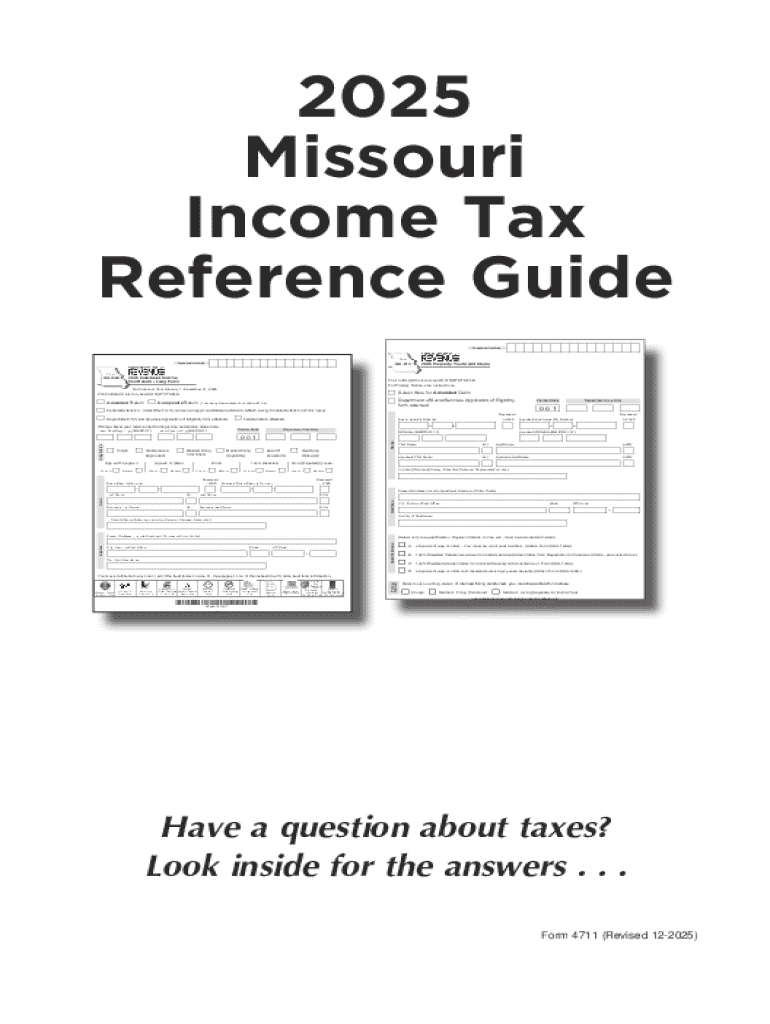







Steps to Complete the Missouri Individual Income Tax Form MO-1040 Instructions
Completing the Missouri Individual Income Tax Form MO-1040 requires careful attention to detail to ensure accuracy. Here is a step-by-step guide to help you understand the process.
-
Gather Required Documents: Before starting, collect all necessary documents, including W-2s, 1099 forms, interest statements, and any documents related to deductions or credits you plan to claim.
-
Personal Information: Begin by entering your personal information, such as your name, Social Security Number, and filing status. Ensure this information matches your legal documents to prevent errors.
-
Income Details: Accurately report all sources of income. This includes income from employment, self-employment, interests, dividends, and other sources. Utilize tables and worksheets provided in the instructions to calculate your total income properly.
-
Deductions and Credits: Review the section on available deductions and credits. Missouri provides various options, such as the standard deduction, itemized deductions, and tax credits for students or energy efficiency improvements.
-
Tax Computation: Follow the instructions to compute your taxable income and calculate the amount of tax owed. Use tax tables provided in the form instructions for the precise determination of your tax liability.
-
Payment and Refund Options: Decide your payment options, whether electronically or by check. If you expect a refund, ensure your bank details are accurate for direct deposit.
-
Signature and Submission: Finally, sign the form and choose a submission method—online, by mail, or in person at a designated location.
Practical Example:
- If you are a self-employed individual, you'll need to include a Schedule C form alongside your MO-1040 to accurately report your business income and related expenses.
Required Documents for MO-1040 Form Instructions
Compiling necessary documents ensures a smooth and error-free filing process. Below is a detailed list of documents you should have on hand.
- W-2 Forms: Documenting wages and tax withheld
- 1099-MISC/1099-NEC Forms: For self-employed income
- Interest and Dividend Statements: Provided by banks and investment firms
- Retirement Income Forms: Such as Social Security benefits statement
- Health Insurance Information: Forms 1095-A, B, or C detailing coverage
- Previous Year’s Tax Return: Useful for reference and carryforward calculations
- Receipts and Proofs of Expense: For claiming itemized deductions like medical expenses, charitable contributions, or mortgage interest
- Education Credits Documentation: Such as Form 1098-T for tuition payments
Filing Deadlines and Important Dates
Understanding when to file and relevant deadlines can help avoid late penalties. Below are crucial dates to track for your Missouri tax obligations.
- April 15: Deadline for filing the previous year's income tax return
- October 15: Extended deadline if you've filed for an extension
- January 15: Quarterly estimated tax payment due for the self-employed
Exceptions such as federal holidays or weekends may adjust these deadlines.
Examples of Managing Deadlines:
- A taxpayer who anticipates needing more time should file for an extension by April 15 to avoid penalties, extending the filing deadline to October 15.
Missouri State-Specific Rules
Missouri tax regulations may differ from federal rules, impacting how you file MO-1040.
- Residency Requirements: Missouri distinguishes between residents, part-year residents, and non-residents, each having unique filing requirements.
- State Tax Credits: Includes those for low-income individuals, renters, or property tax relief.
Case Study:
- A taxpayer residing half the year in Missouri and half in another state must file as a part-year resident, ensuring that income earned while living in Missouri is properly reported.
Electronic vs. Paper Submission
Choosing whether to file electronically or by paper affects processing time and convenience.
-
Electronic Filing (e-Filing): Offers quicker processing and confirmation upon receipt. It is often done via certified software or directly through Missouri's revenue department website.
-
Paper Filing: Suitable for taxpayers without access to digital resources or those preferring physical documentation. It involves mailing the form to the correct Missouri Department of Revenue address.
Pros and Cons:
-
E-Filing:
- Pros: Faster processing, reduced errors, immediate confirmation
- Cons: Requires internet access, potentially challenging for less tech-savvy individuals
-
Paper Filing:
- Pros: Tangible documentation, no need for digital access
- Cons: Longer processing times, risk of postal delays
Legal Use of Missouri Individual Income Tax Form MO-1040
Compliance with legal requirements when filling out the MO-1040 is crucial.
- Accuracy of Information: All financial details must be accurate to avoid penalties and interest.
- Documentation Requirements: Retain a copy of the filed return and all supporting documents for at least seven years after filing.
- Signature Verification: Ensure the return is signed either by the filer or, if filed jointly, both spouses.
Legal Consequences:
- Failing to provide accurate information or omitting crucial details can result in penalties or audits by the Missouri Department of Revenue.
Variations and Older Versions of MO-1040
Understanding past and alternative versions of the MO-1040 form can assist those managing back-dated taxes or reviewing previous submissions.
- Previous Tax Forms: Versions from prior years may differ in rate schedules, credits available, or deductions. Ensure you use the correct version for the respective tax year.
- Common Variants: Dependent on individual circumstances, variants like the short form MO-1040A might be more appropriate for certain taxpayers.
Example of Historical Use:
- Businesses and individuals who've filed taxes over several years may exhibit changes in qualifying deductions or credits in older MO-1040 forms compared to more current versions.
Penalties for Non-Compliance
Avoiding penalties involves timely and accurate filing.
- Late Filing or Payment: Interest accumulates on taxes owed if not paid by the due date. Missouri imposes a penalty of 5% per month on any unpaid balance.
- Underpayment of Estimated Tax: For self-employed or those with significant non-tax-withheld income, failing to estimate and pay taxes quarterly can incur penalties.
Example Scenario:
- An independent contractor failing to pay estimated quarterly taxes may face a penalty in addition to the balance owed.
Taxpayer Scenarios: Self-Employed and Students
Different taxpayer groups experience unique filing circumstances.
- Self-Employed: Include income from all sources, accounting for business expenses like home office deductions.
- Students: May qualify for education credits and should report scholarships and grants accurately.


Practical Example:
- A student working a part-time job and receiving a scholarship should consult the MO-1040 guidelines to determine the taxable nature of their financial aid.