






Definition & Meaning
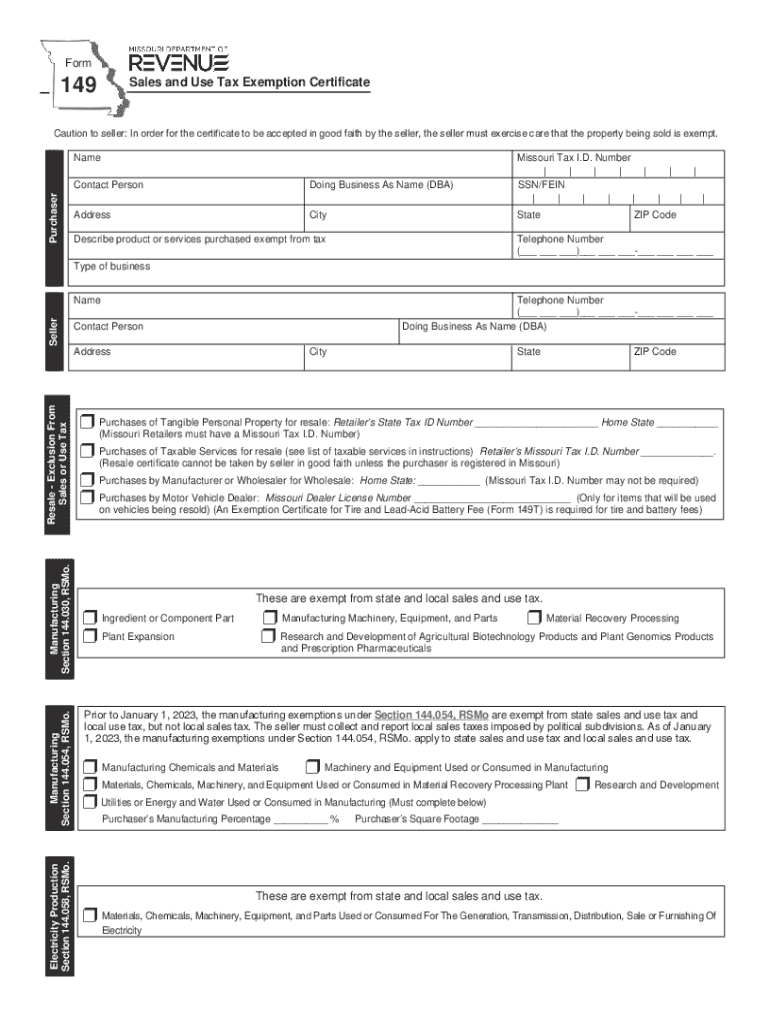
The MO DoR 149DSA form, issued by the Missouri Department of Revenue, is a sales and use tax exemption certificate. This form streamlines the process businesses use to validate a buyer's exempt status, ensuring they do not charge sales tax on qualifying transactions. By using this certificate, businesses and sellers can convey to the vendors that the purchase made is exempt from sales tax according to Missouri state tax laws.
How to Use the MO DoR 149DSA - Fill and Sign Printable Template Online
Using the MO DoR 149DSA template online involves several key steps to ensure accuracy and compliance with state guidelines. The form can be accessed and completed digitally:
- Access the Form: Obtain the form from reputable platforms such as DocHub, which allows users to fill, sign, and save the template online.
- Filling Out the Form: Enter the required information, including the buyer's name, the nature of the business, and the seller’s information. Ensure all fields are complete and correct.
- Signing the Document: Use the digital signature feature to electronically sign the form. This signature is legally binding and saves time compared to traditional printing and manual signing.
- Submit the Form: Once completed and signed, the form can be submitted directly to the vendor. For records, keep a copy of the completed certificate.
Key Elements of the MO DoR 149DSA
The MO DoR 149DSA form comprises several critical components, each vital for correct completion:
- Buyer Information: Includes business name, address, and tax ID number. This ensures accurate identification of the entity claiming the exemption.
- Seller Information: Contains details of the seller to whom the exemption certificate is being presented.
- Type of Exemption: Specifies the type of purchase that qualifies for sales tax exemption, such as resale, manufacturing, or certain equipment.
- Signature and Date: Requires the signature of an authorized representative of the buyer along with the date of signing.
Legal Use of the MO DoR 149DSA
The MO DoR 149DSA is governed by Missouri state sales tax law, providing legal grounds for exempt transactions. Businesses must use the certificate solely for qualifying purchases; improper use can result in penalties:
- Compliance with Tax Laws: The form ensures transactions comply with Missouri's state sales tax exemptions.
- Verification by Sellers: Sellers should verify the validity and completeness of the certificate to avoid liability for uncollected taxes.
Steps to Complete the MO DoR 149DSA - Fill and Sign Printable Template Online
Completing the MO DoR 149DSA form involves the following detailed steps:
- Download the Form: Access the form through DocHub or similar platforms.
- Review Instructions: Read the accompanying instructions carefully to understand all requirements.
- Fill Buyer and Seller Details: Ensure correct and complete entries of all buyer and seller information.
- Select Exemption Type: Indicate the appropriate exemption type that applies to your transaction.
- Digitally Sign and Date: Use digital tools to sign and date the form before submission.
State-Specific Rules for the MO DoR 149DSA
Missouri state tax laws have specific guidelines for the MO DoR 149DSA:
- Exemptions Criteria: Missouri defines specific criteria for exemptions that must be met by the buyer.
- Penalties for Misuse: Using the form incorrectly or providing false information can result in fines or other legal consequences.
Software Compatibility
Using the MO DoR 149DSA online template is supported by various software tools, enhancing usability:
- DocHub Integration: The platform supports importing, editing, and signing PDFs, facilitating the entire form submission process.
- Compatibility with Cloud Services: Direct integration with cloud storage solutions like Google Drive and Dropbox streamlines form access and storage.
Important Terms Related to MO DoR 149DSA
Understanding specific terms related to the MO DoR 149DSA form is critical:
- Exempt Status: An official designation that allows entities to purchase goods or services without paying sales tax, under state law.
- Sales and Use Tax: A tax on the sale or use of tangible personal property, which the form addresses.
- Tax ID Number: A unique identifier for businesses that request exemption, crucial for processing the form.
Penalties for Non-Compliance
Failure to comply with MO DoR 149DSA requirements can lead to severe repercussions:
- Financial Penalties: Businesses may face fines for incorrect or fraudulent exemption claims.
- Interest on Unpaid Taxes: Back taxes may incur interest, increasing the financial burden on entities.
Compliance ensures legal protection and helps avoid unnecessary legal and financial issues.