






Definition & Meaning
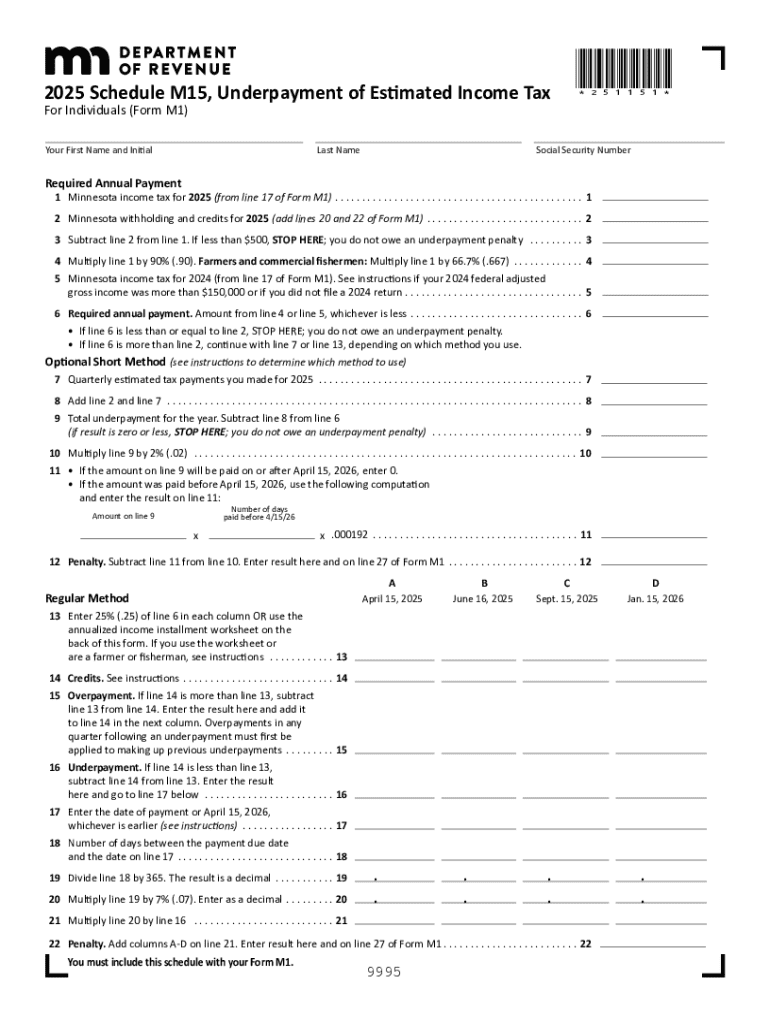
The 2025 Schedule M15, Underpayment of Estimated Income Tax for Individuals, is a tax form used in Minnesota for individuals who anticipate owing a significant amount of income tax by the end of the fiscal year. The form is designed to help calculate any potential underpayment penalties for not paying enough tax throughout the year. It requires taxpayers to estimate and prepay tax amounts relevant to their expected total tax liability to avoid such penalties. Key elements include calculating the amount due, potential penalties, and instructions on how to rectify any shortfall in payments.
Purpose of the Form
- Ensure compliance with state income tax requirements by prepaying expected taxes.
- Avoid penalties associated with underpayment by estimating and remitting tax liabilities quarterly.
- Serve as a planning tool for taxpayers to balance tax payments over the year.
Who Uses This Form
- Individuals residing in Minnesota who have income-generating activities subject to state taxes.
- Taxpayers engaged in self-employment, as they often have fluctuating incomes requiring careful tax estimation.
- Those with significant income outside of employment wage withholding, such as dividends, rental income, or capital gains.
How to Use the 2025 Schedule M15
Using the 2025 Schedule M15 involves understanding your income sources and estimating your tax liability based on these. If your estimated tax payments or withholdings fall short of your actual tax obligation, this form assists in calculating any penalties due to underpayment.
Steps to Use
- Estimate Annual Income: Project total income, including wages, self-employment profit, investment returns, etc.
- Calculate Estimated Taxes: Use the projected income to estimate state tax liability.
- Quarterly Payments: Divide the estimated tax into quarterly payments to avoid a large tax bill at year-end.
- Adjustment: Recalculate if your income changes significantly during the year.
Examples
- A freelancer in Minnesota earning irregular income would periodically estimate income and ensure taxes are prepaid using the form.
- Retirees with substantial retirement account withdrawals might use the form to avoid lump-sum tax payments.
Steps to Complete the 2025 Schedule M15
Completing the 2025 Schedule M15 requires precision to avoid errors that could lead to further penalties. Here are rigorous steps to follow:
- Gather Income Documents: Collect W-2s, 1099s, and any documentation of additional income.
- Complete the Form: Fill in each section, starting with your personal information and social security number.
- Calculate Estimated Payments: Use prior data to accurately predict quarterly payments.
- Revisit Regularly: Evaluate the estimates periodically and adjust for any income changes.
- Submit Timely: Ensure each installment is paid by the due dates to avoid interest and penalties.
Key Considerations
- Overestimating protects against penalties, ensuring overpaid taxes are refunded.
- Updating estimates helps incorporate unexpected income increases or decreases.
IRS Guidelines & Legal Use
Although the 2025 M15 pertains specifically to Minnesota, federal tax principles influence its computation. The IRS provides guidelines on estimated tax payments at the federal level, which are harmonized with state requirements via this form.
Legal Compliance
- Legally mandates the prepayment of taxes to avoid an end-of-year deficit.
- Aligns with federal regulations encouraging timely tax payments.
- Individuals are legally bound to correct underpayment errors, adhering to specified schedules.
Penalties
- Failure to accurately report or make adequate payments may result in financial penalties.
- Significant underpayment might trigger audits or further investigations by tax authorities.
Filing Deadlines and Important Dates
Adhering to scheduled deadlines is crucial to avoid penalties. The Minnesota Department of Revenue sets typical quarterly dates for estimated payments.
Key Dates
- April 15: First quarterly installment due.
- June 15: Second quarterly installment due.
- September 15: Third installment deadline.
- January 15: Final payment for any remaining dues.
Consequences of Missing Deadlines
- Interest accrual on unpaid taxes.
- Potential penalties increasing with time until taxes are paid in full.
Required Documents for Filing
To accurately prepare and submit the 2025 M15 form, having the right documents is vital.
Necessary Documents
- All income statements, like W-2s and 1099s.
- Tax returns from previous years for reference.
- Records of any tax withholdings or prepayments made.
Record Keeping
- Maintain all records for at least three years in case of audits or disputes.
- Ensure documentation is up-to-date, especially if there are significant income changes.
Who Issues the Form
The Minnesota Department of Revenue is responsible for issuing the Schedule M15 form. This state-specific document is available for Minnesota residents needing to manage their state income tax prepayments effectively.
Obtaining the Form
- Available on the Minnesota Department of Revenue's website.
- Can be obtained through tax preparation software or tax professionals.
Form Submission Methods
Submitting the Schedule M15 can be done through multiple channels to accommodate different taxpayer needs.
Submission Options
- Online: Through the Minnesota Department of Revenue website for quick processing.
- Mail: Traditional mailing remains an option for those who prefer physical submissions.
- In-Person: Some choose direct submission, particularly when complex tax scenarios necessitate additional explanation.
Advantages & Disadvantages
- Online: Fast and provides confirmation of receipt.
- Mail: Tangible record but susceptible to postal delays.
- In-Person: Immediate and personal interactions, ensuring completeness.