Deed real estate 2026

Get Form
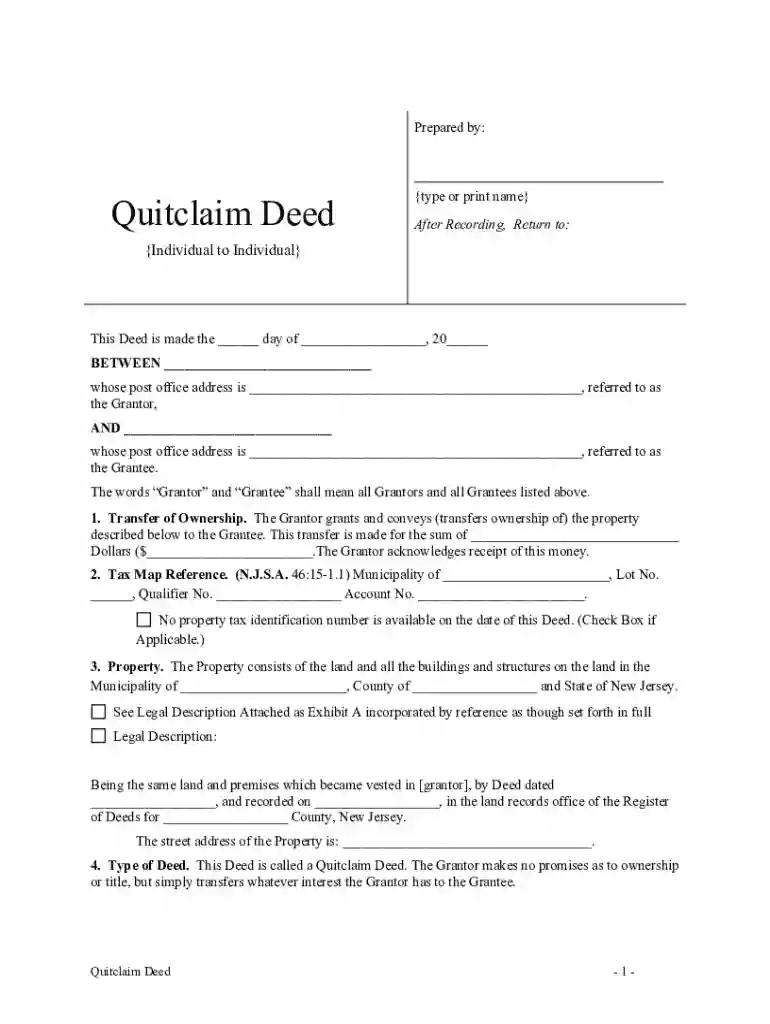
nj deed form Preview on Page 1

Here's how it works

01. Edit your nj deed form online
Type text, add images, blackout confidential details, add comments, highlights and more.

02. Sign it in a few clicks
Draw your signature, type it, upload its image, or use your mobile device as a signature pad.

03. Share your form with others
Send quitclaim deed form for nj via email, link, or fax. You can also download it, export it or print it out.

Definition & Meaning

A "deed real estate" is a legal document that serves as evidence of ownership for a property or real estate. It is essential in transferring the title from one party to another, often used during the buying or selling of property. The document typically outlines the details of the property, the names of the parties involved, the agreed-upon terms, and any existing encumbrances. It is a critical tool in real estate transactions, providing legal proof of ownership and facilitating the transfer of property rights while ensuring all parties' interests are protected.

Types of Deeds

  • Warranty Deed: Offers the grantee the highest level of protection, guaranteeing a clear title and compensation for any defects.
  • Quitclaim Deed: Transfers only the grantor's interest in the property, with no guarantees regarding the title's status.
  • Special Warranty Deed: Offers warranties only for the period during which the grantor owned the property.
  • Bargain and Sale Deed: Implies the grantor holds title to the property but provides no warranty against encumbrances.

How to Use the Deed Real Estate

Utilizing a deed in real estate transactions involves several steps to ensure it is both legally binding and effective. From drafting to delivery, careful attention to detail is necessary.

Drafting the Deed

  1. Include Essential Information: Names of grantor and grantee, legal description of the property, and the date.
  2. Specify Type of Deed: Choose the appropriate deed type based on the level of protection required.
  3. Outline Consideration: Detail the compensation or value exchanged for the property.

Executing the Deed

  • Signatures: All parties must sign the deed for validity.
  • Notarization: A notary public must witness and sign the deed, confirming authenticity.

How to Obtain the Deed Real Estate

Obtaining a real estate deed can vary based on the situation but generally involves similar steps across transactions.

Purchase Transactions

  1. Negotiate Terms: Agree on all terms related to the property and transaction.
  2. Title Search: Conduct a title search to ensure the property is free of encumbrances.
  3. Draft and Execute: Create and execute the deed following legal standards.

Inherited Property

  • Probate Process: When dealing with inherited property, the probate court often supervises the transfer.
  • Executor’s Deed: The court may issue an executor’s deed to transfer property to heirs.

Steps to Complete the Deed Real Estate

Completing a real estate deed requires precision and adherence to legal protocols to ensure a smooth transfer.

Step-by-Step Process

  1. Prepare the Deed Form: Accurately complete all sections of the deed form, including details about the property and parties.
  2. Ensure Legal Description: Verify that the legal description matches physical and title records.
  3. Notarization and Witnesses: Secure a notary public and witnesses to finalize the document.
  4. File the Deed: Record the executed deed with the local county recorder's office to establish the public record.

Why Should You Deed Real Estate

Transferring real estate through a deed is essential for formalizing ownership, protecting interests, and ensuring legal compliance.

Benefits of Using a Deed

  • Legal Protection: Establishes rightful ownership and protects against future disputes.
  • Clarity: Clearly defines rights and responsibilities between parties.
  • Marketability: Ensures the property can be sold or transferred again in the future without legal issues.

Key Elements of the Deed Real Estate

Understanding the critical components of a deed enhances the transaction's integrity and legal standing.

Essential Components

  • Parties Involved: Names and addresses of the grantor and grantee.
  • Property Description: Legal and thorough description of the property.
  • Granting Clause: Specifies the grantor's intent to transfer the property.
  • Consideration: Details of what is exchanged for the property.
  • Signatures and Notarization: Execution requires all parties’ signatures and a notary's seal.

Legal Use of the Deed Real Estate

Deeds must comply with local and federal laws to be legally binding. In the United States, each state may have unique requirements that can impact deed validity.

Compliance Considerations

  • State Laws: Ensure all elements meet state-specific legal requirements, such as recording statutes and execution formalities.
  • Disclosure Laws: Comply with any mandatory disclosures to prevent future liability.

State-Specific Rules for the Deed Real Estate

Each U.S. state may have varied regulations affecting the preparation and recording of deeds for real estate.

Example Variations

  • Community Property States: Different rules apply to how property deeds reflect marital status.
  • Recording Requirements: Varying procedures and fee structures for recording deeds at county offices.

Understanding state-specific regulations is crucial for executing a valid and enforceable real estate deed, preventing potential legal disputes. Always consult a legal professional or a real estate expert familiar with local laws and procedures.

be ready to get more

Complete this form in 5 minutes or less

Get form

Security and compliance

At DocHub, your data security is our priority. We follow HIPAA, SOC2, GDPR, and other standards, so you can work on your documents with confidence.
Learn more
ccpa2
pci-dss
gdpr-compliance
hipaa
soc-compliance
be ready to get more

Complete this form in 5 minutes or less

Get form