






Definition & Meaning
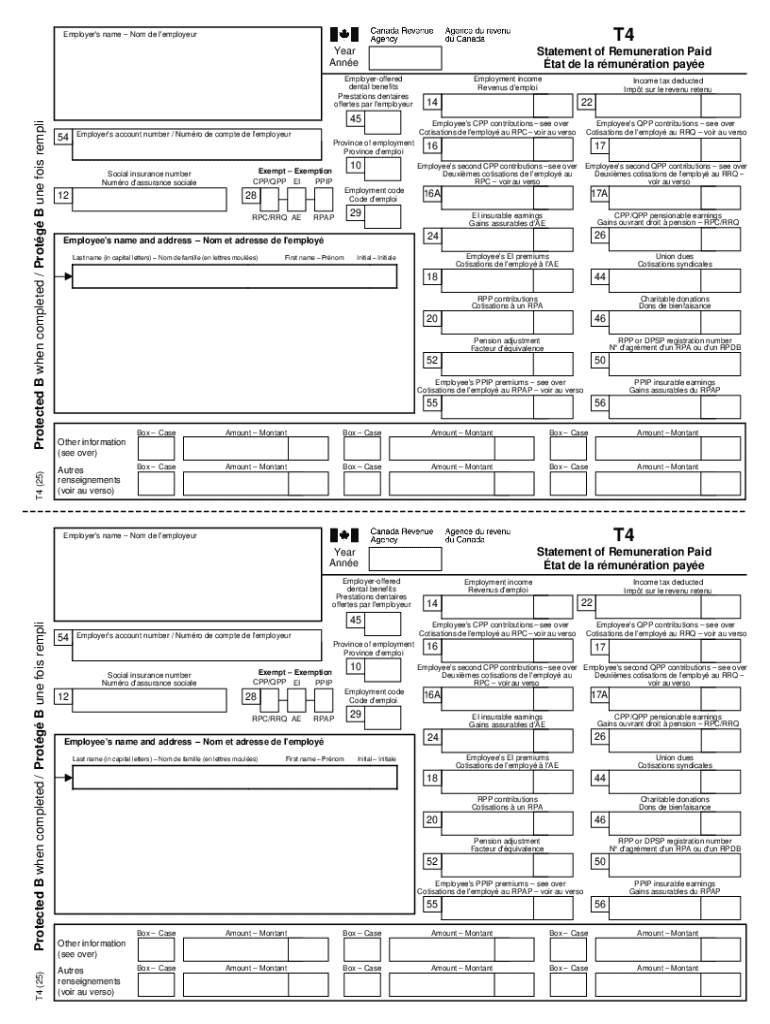
The "Statement of Remuneration Paid" (T4 in Canada, equivalent forms in the U.S. may be the W-2 or 1099) is a document that details the total compensation paid by an employer to an employee within a given tax year. This includes wages, salaries, bonuses, and any other forms of remuneration. It plays a crucial role in tax filing by ensuring individuals accurately report income to the IRS, thereby aligning with tax compliance standards dictated by federal and state regulations.
Significance in Tax Filing
- Essential for income tax return preparation.
- Serves as an official record of income earned from employment.
- Provides detailed breakdowns, which support individual tax calculations.
Key Elements of the Statement of Remuneration Paid
Each Statement of Remuneration Paid form includes several core elements that capture all relevant income details:
- Employee Identification: Includes name, Social Security Number (SSN), and address.
- Employer Information: The employer's name, Employer Identification Number (EIN), and contact details.
- Year of Payment: Specifies the tax year for which the remuneration was paid.
- Total Remuneration: Includes all forms of compensation, such as wages, salaries, bonuses, and taxable benefits.
- Deductions and Contributions: Lists federal and state tax withholdings, social security, Medicare, and any other relevant withholdings.
Additional Information
- Any specific benefits, bonuses, or additional compensation that may not typically appear on a standard payroll statement.
- Employer's contributions towards retirement plans or healthcare benefits that might be taxable.
How to Obtain the Statement of Remuneration Paid
Obtaining this form can vary depending on the employer’s procedures and whether they issue forms digitally or manually.
Methods to Obtain
- From Your Employer: Typically provided by the employer at the end of the tax year, often by January 31st.
- Online Access: Employers may offer digital copies through their payroll service platforms.
- Request: If not received, employees should request it from the payroll or HR department to avoid issues with tax reporting.
Who Typically Uses the Statement of Remuneration Paid
This form is predominantly used by employees and employers.
- Employees: Use the form for personal tax filing to report income ensuring compliance with IRS regulations.
- Employers: Issue this form to document payment details for tax reporting and compliance purposes.


Special Use Cases
- Contract Employees: May receive a different type of statement depending on the specific contractual arrangements.
- Self-Employed Individuals: Generally use other forms, but may require this if they have received wages as an employee from an employer.
Steps to Complete the Statement of Remuneration Paid
Completing or reviewing this statement involves several key steps to ensure accuracy:
- Verification of Personal Information: Confirm the accuracy of employee and employer details.
- Review Payment Details: Ensure all salary, wages, and any additional remuneration is reported accurately.
- Check Deductions: Verify federal, state, and other deductions to avoid discrepancies.
- Consult with Tax Professionals: If uncertainties arise regarding taxable income or deductions.
Important Terms Related to Statement of Remuneration Paid
Understanding the terminology specific to this form is crucial for accurate completion and submission.
- Gross Income: Total compensation before any deductions.
- Withholding: Taxes and other deductions taken from the gross income.
- Taxable Benefits: Non-cash benefits that must be reported as income.
- Remuneration: Includes all payments made to an employee for services rendered.
Examples of Using the Statement of Remuneration Paid
Practical scenarios provide insight into how this form is utilized:
- Annual Tax Filing: Ensures all income is reported in line with IRS standards.
- Loan Applications: Used for verification of income when applying for credit or loans.
- Financial Planning: Helps individuals understand their income and deductions facilitating effective financial management.
Case Study: Self-Employed vs. Employee
A self-employed individual transitioning to regular employment would use this form to compare different income scenarios for their annual tax planning.
Filing Deadlines / Important Dates
Adhering to deadlines is critical to avoid penalties and complications:
- Issuance Deadline: Typically January 31st.
- Submission Deadline (for electronic submissions): Typically aligns with IRS deadlines in April.
- Corrections: Provide ample time by submitting requests for amendments as discrepancies are identified.