






Definition & Meaning
The "Book Colorado Individual Income Tax Filing Guide" is a comprehensive document designed to assist individuals in the state of Colorado with filing their individual income tax returns for the year 2025. This guide is crucial for taxpayers in understanding state-specific tax laws, forms, and submission processes. It serves as a resource that clarifies the taxation requirements unique to Colorado residents and provides step-by-step instructions for compliance.
How to Use the Guide
Taxpayers utilizing the Book should approach the guide step-by-step, beginning with understanding the full scope of what the tax filing entails. Individuals can refer to different sections of the booklet depending on their specific needs, whether it's understanding particular instructions, filling out Form DR 0104, or addressing more complex tax scenarios. By systematically following the guide's instructions, users can avoid common errors and ensure their tax filing is accurate.
Accessibility for Screen Readers
For taxpayers using screen readers, the guide is structured to be navigable with assistive technology. This ensures that important instructions and nuances are conveyed effectively. Features such as headings, bullet points, and ordered lists aid in the seamless flow of information.
How to Obtain the Guide
The Book can be acquired through various channels to suit different preferences. Taxpayers may download the guide directly from the Colorado Department of Revenue's website. Alternatively, physical copies could be requested from state tax offices or participating libraries and community centers.
Steps to Complete the Filing Guide
- Gather Necessary Information: Collect all relevant personal and financial details required for tax filing.
- Review the Instructions: Go through each section of the guide thoroughly to understand any specific instructions and clarifications.
- Fill Out Form DR 0104: Use the guide to complete the Colorado Individual Income Tax Form DR 0104 accurately.
- Submit Supporting Documentation: Ensure all supporting documents are organized and attached as needed.
- Choose Submission Method: Determine whether to file online or via mail, utilizing options explained in the guide.
Importance of Using the Guide
Utilizing the Book guides taxpayers through correctly filing their taxes, ensuring compliance with Colorado's tax regulations. It helps to minimize errors that could lead to penalties or the need for corrections post-submission. The guide also educates taxpayers on state-specific tax credits and deductions they may be eligible for, potentially reducing their taxable income.
Who Typically Uses the Guide
The primary users of the Book are:
- Residents of Colorado filing state tax returns.
- Nonresidents earning an income in Colorado.
- Individuals transitioning to full-year resident status.
- Tax preparers and accountants assisting Colorado clients.
These users rely on the guide for authoritative instruction on tax filing obligations specific to Colorado.


Key Elements of the Guide
- Intensive Instruction on DR 0104: Detailed guidelines on filling out the primary tax form.
- Tax Law Updates: Information on legislative changes affecting tax filings for 2025.
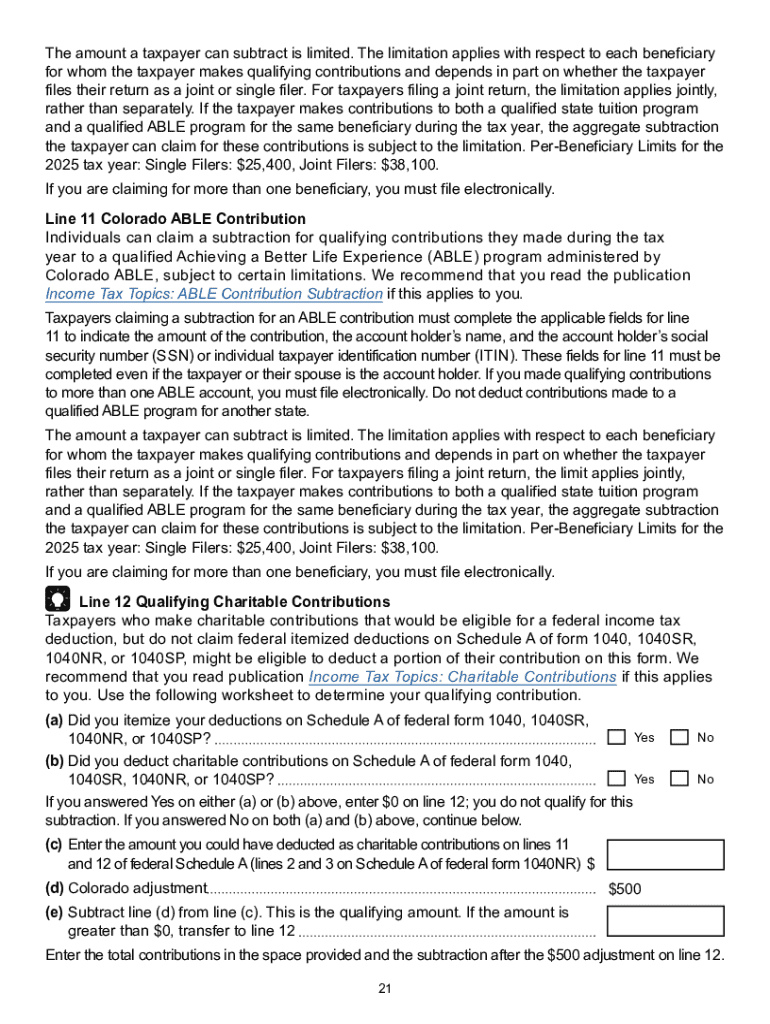
- Common Deductions and Credits: Explains available deductions, such as those for charitable donations or education.
- Filing Procedures: Step-by-step processes, including e-filing and mailing methods.
- Troubleshooting Guidance: Common issues faced with tax filings and their solutions.
State-Specific Rules
Colorado has specific tax regulations that differ from federal requirements. For instance, the guide outlines the state's approach to income sourcing, taxation of religious benefits, and special deductions like the enterprise zone credits specific to Colorado residents. Adhering to these state-specific rules is crucial for accurate tax submission.
Examples of Using the Guide
Consider a self-employed individual residing in Denver, Colorado. They would use the Book to:
- Understand how to report income from multiple sources.
- Calculate potential deductions for home office and business expenses specific to Colorado.
- Follow state guidelines for quarterly estimated tax payments.
By referencing practical scenarios throughout the guide, taxpayers can better understand how to apply the instructions to their personal tax circumstances.
Filing Deadlines / Important Dates
The Book highlights essential filing dates, ensuring taxpayers submit their documents on time. The cutoff for filing individual income tax returns in Colorado mirrors the federal date, typically April 15. Extensions and late payment penalties are also discussed, emphasizing the importance of adhering to these deadlines for timely compliance.
Required Documents
Taxpayers must have certain documents ready when filing, which include:
- W-2 forms from employers.
- 1099 forms for miscellaneous income.
- Documentation for paid state taxes and estimated tax payments.
- Receipts or proofs for deductions and credits claimed.
The guide provides a detailed checklist ensuring taxpayers have all necessary documentation ready before submission.
Penalties for Non-Compliance
Failure to accurately complete and submit the Colorado Individual Income Tax return can result in various penalties, ranging from missed deadlines to incorrect tax payments. The Book elaborates on the types of penalties imposed, including fines and interest on overdue taxes. Knowledge of these penalties encourages timely and precise tax filings.