






Definition and Purpose of the 1040-SR and Michigan State Tax Return
The 1040-SR, commonly known as the "U.S. Tax Return for Seniors," is a form specifically designed for individuals aged 65 and older. It aims to simplify the tax filing process by providing a larger font size and standard deduction chart directly on the form. This form accommodates retirees with straightforward income statements, such as Social Security benefits, pensions, and limited interest or dividends.
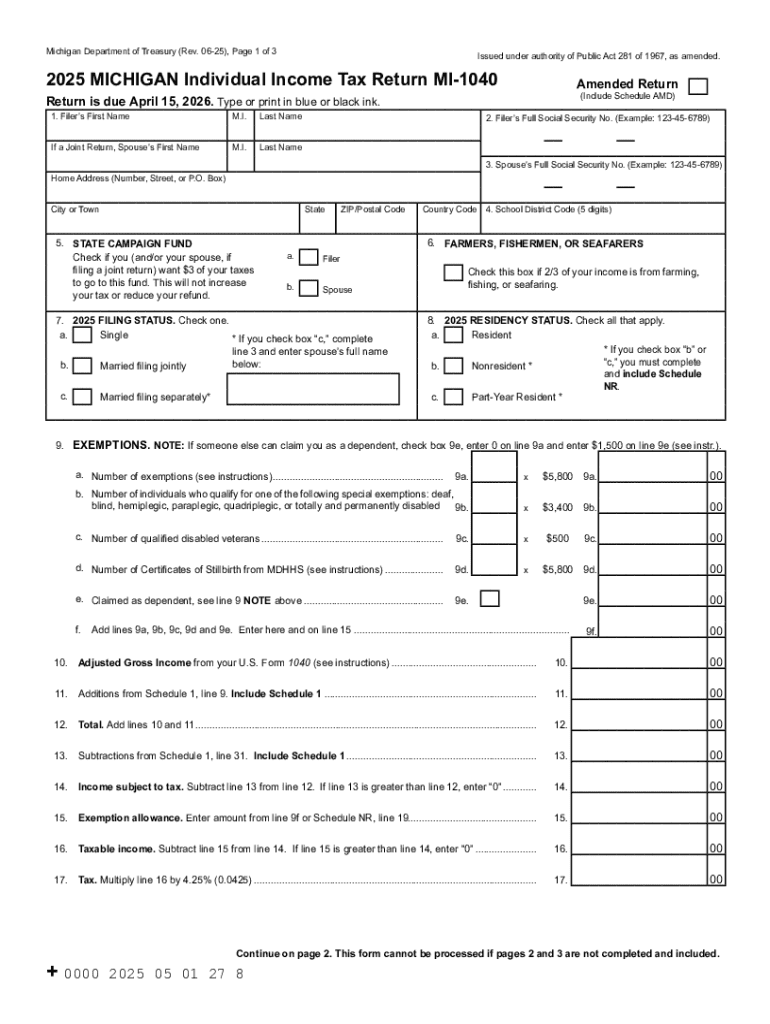
The Michigan State Tax Return, or MI State Tax Return, filed using the MI-1040 form, is essential for residents and part-year residents to declare state-level income. It ensures compliance with Michigan's tax laws and enables individuals to claim state-specific deductions and credits. Both forms streamline the tax reporting process while allowing eligible taxpayers to accurately assess their tax liabilities and entitlements.
Steps to Complete the Fixing 1040-SR and MI State Tax Return Guide
-
Collect Necessary Documents:
- Gather all relevant tax documentation, including W-2s, 1099s, and Social Security statements.
- Have a copy of the previous year's federal and state tax returns for reference.
- Ensure access to identification documents, such as a driver's license or ID number.
-
Verify Personal Information:
- Check that all personal details, including name, address, and Social Security number, are correct.
- Confirm information for dependents, if applicable.
-
Report Income Accurately:
- Use Form 1040-SR to report federal income and Form MI-1040 for Michigan state income.
- Include wages, pensions, annuities, and Social Security benefits.
- Validate numbers by cross-referencing with received documents.
-
Calculate Deductions and Credits:
- Review standard and itemized deductions to determine the most beneficial.
- Apply any eligible tax credits, such as the Michigan Homestead Property Tax Credit.
- Complete Schedule 1 for additional income and adjustments to deductions.
-
Compute Tax Liability:
- Follow instructions on Form 1040-SR and MI-1040 for calculating taxable income.
- Assess the total tax due by subtracting credits from the calculated tax.
-
Finalize and Review:
- Double-check calculations and ensure that all required fields are completed.
- Use tax software like TurboTax for error checks and guidance.
- Review any notes or modifications made to quantities.
-
Submit the Forms:
- File electronically using IRS-approved software or Michigan Department of Treasury resources.
- Alternatively, print and mail the completed forms to the relevant tax departments.
- Confirm receipt by checking the filing status through online portals.
Eligibility Criteria for the 1040-SR and MI State Tax Return
To file Form 1040-SR, taxpayers must be age 65 or older at the end of the tax year. There are no income limits, which allows retirees with varied financial portfolios to use this form.
For the MI State Tax Return, individuals must be Michigan residents, part-year residents, or non-residents with income sourced from Michigan. Residency status influences deduction eligibility and tax rates, hence the importance of accurately declaring it on the form. Part-year residents must adjust their taxable income based on the portion of the year spent in Michigan.


IRS Guidelines for Filing the 1040-SR
- Filing Requirements: Taxpayers must meet the age requirement and may choose either the standard or itemized deduction based on their qualifying expenses.
- Filing Methods: Utilize IRS Free File for forms and instructions, or engage professional tax services for comprehensive guidance, especially when dealing with complex income scenarios.
- Record Keeping: Maintain copies of filed returns and all related documents for at least three years, as per IRS advice, to support future amendments or audits.
Required Documents for the Fixing 1040-SR and MI State Tax Return
- Income Statements: W-2, 1099-R, SSA-1099 for Social Security, any other 1099 forms for dividends, interest, and miscellaneous income.
- Deductions Claims: Documentation supporting medical expenses, charitable contributions, mortgage interest paid, and property taxes.
- Tax Credits: Forms related to education credits, dependents, and homeownership benefits should be available for reference.
State-Specific Considerations for Michigan Tax Filers
Michigan residents may qualify for unique state credits and refunds based on specific eligibility criteria, such as the Michigan Earned Income Tax Credit or the Farmland and Open Space Preservation Credit. Residents should be aware of any updates from the Michigan Department of Treasury affecting these claims.
Non-residents earning income in Michigan must evaluate their state obligation. Filing Form MI-NR alongside the MI-1040 ensures non-residents are taxed appropriately for income derived from Michigan sources.
Filing Deadlines and Important Dates
- Federal Filing Deadline: Typically due by April 15, unless extended due to holidays or emergencies.
- Michigan State Deadline: Aligns with the federal deadline, demanding timely submissions to avoid penalties.
- Extensions: File IRS Form 4868 for federal extensions and MI-4868 for state extensions, granting extra time without incurring late filing penalties.
Understanding these components and carefully adhering to instructions are critical steps in ensuring the accurate completion and submission of both the federal Form 1040-SR and the Michigan State Tax Return. Following these guidelines minimizes errors and the potential for penalties, ensuring taxpayers fulfill their financial obligations efficiently.