






Definition and Purpose of Form 140
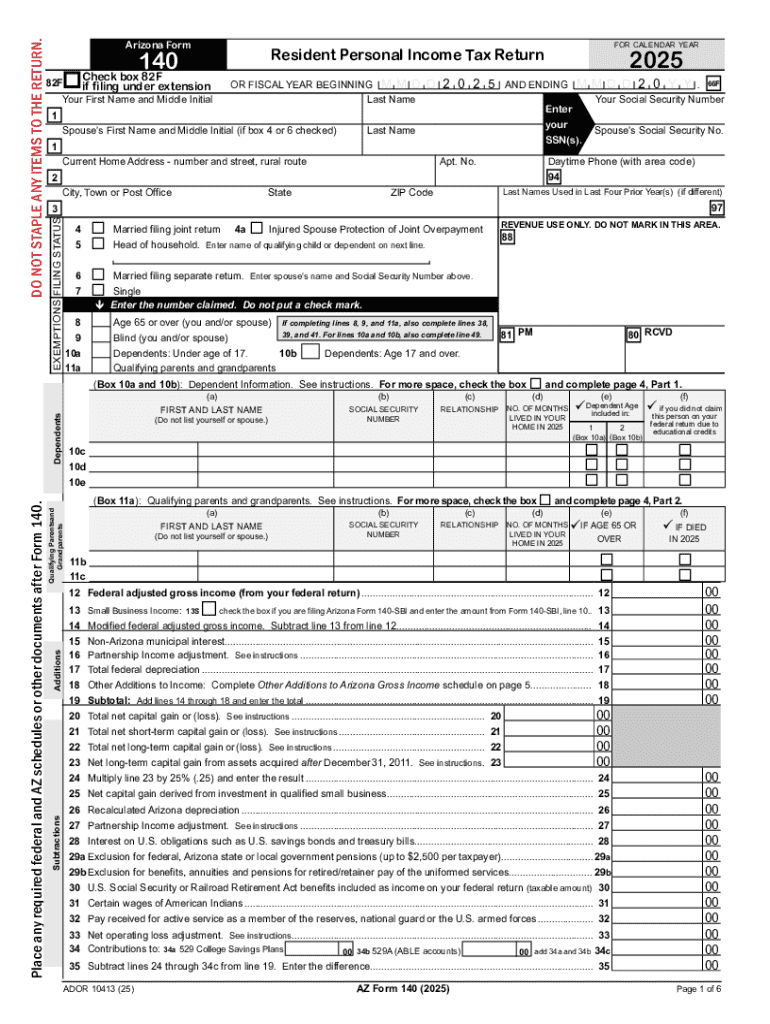
Form 140, Resident Personal Income Tax Form, is a crucial document used by Arizona residents to report and manage their state income taxes. It is designed specifically for individuals who meet the residency requirements of Arizona. This form enables taxpayers to declare their annual income, claim deductions, calculate tax liabilities, and report various tax credits applicable to their situation. Its fillable format facilitates accurate data entry and easy modifications, increasing convenience for taxpayers.
How to Use Form 140 - Resident Personal Income Tax Form
To effectively use Form 140, taxpayers should start by gathering all relevant financial documents, including W-2s, 1099s, and other records that reflect their income for the tax year. After collecting these documents, they can enter personal information, including name, address, and Social Security number, on the form. The next step involves detailing income sources, deductions, and credits applicable, ensuring that every figure aligns with supporting documents. The form's design simplifies calculations, helping taxpayers to accurately compute their tax obligations.
Obtaining Form 140
Taxpayers can obtain the Form 140 from several sources:
- Arizona Department of Revenue website: The primary source for downloading the fillable version of the form.
- Tax preparation software: Offers integrated access to the form, allowing direct entry and submission.
- Local tax offices: Provides physical copies for those who prefer paper submissions.
- Libraries: Some libraries offer tax forms during the filing season.
Steps to Complete Form 140
- Gather Documentation: Collect all relevant financial statements and previous tax documents.
- Personal Information: Fill out personal details including your legal name, address, and Social Security number.
- Income Reporting: Enter all sources of income by category, ensuring accuracy in reporting.
- Deductions and Adjustments: Identify and record applicable deductions to reduce taxable income.
- Calculate Tax Liability: Use the form's calculations to determine state tax obligations.
- Attach Schedules and Forms: Include additional schedules and forms as required.
- Review: Thoroughly check for accuracy before submission.
- Submit: File the form electronically or via mail to the Arizona Department of Revenue.
Who Typically Uses Form 140
Form 140 is primarily used by:
- Residents of Arizona: Individuals who have lived in Arizona for over six months of the tax year.
- Individuals with only Arizona income: For those with income solely generated within the state.
- First-time filers and retirees: Residents new to Arizona or retirees settling in the state may need to use this form.
- Arizona-source income earners: Even non-residents earning income in Arizona might need to file.
Required Documents for Filing
To accompany Form 140 filing, gather:
- W-2 Forms: Reflect employment income.
- 1099 Forms: For self-employment and contractor income.
- Receipts for deductions: Supporting documents for items like medical expenses and charitable contributions.
- Previous year’s tax return: Useful for comparison and ensuring continuity of information.
Filing Deadlines and Important Dates
Taxpayers must keep the following deadlines in mind:
- April 15: Generally, the deadline for submitting Arizona state income tax returns.
- Extensions: Available on request, but they do not extend the payment deadline. Taxpayers may still owe interest or penalties on any unpaid tax.
- Estimated Tax Payments: Due quarterly for those with expected state tax liability over a certain threshold.
Penalties for Non-Compliance
Failure to comply with filing requirements may result in:
- Late filing penalties: Charged based on the amount owed and duration of delay.
- Interest on unpaid taxes: Accrues from the due date until payment is made.
- Failure to file penalties: Can be significant over time, especially if substantial taxes are owed.
- Legal consequences: Severe non-compliance might prompt further legal actions by tax authorities.
Software Compatibility and Electronic Filing
Modern taxpayers utilizing software solutions can benefit from:
- Compatibility with popular tax software: TurboTax, QuickBooks, and others offer features for completing and submitting Form 140.
- Online filing: Enables quick and efficient processing, usually accompanied by faster refund processing.
- Integrated form checks: Reduce errors through software-guided entry processes.
State-Specific Rules for Form 140
Arizona residents should be aware of:
- State-specific deductions: Certain deductions are exclusive to Arizona residents, such as specific education credits.
- State tax credits: Available for qualifying contributions and other situations unique to Arizona, such as solar energy credits.
- Apportionment methods: Applied for those with partial residency or mixed income sources within the state.