



01. Edit your form online
Type text, add images, blackout confidential details, add comments, highlights and more.

Type text, add images, blackout confidential details, add comments, highlights and more.

Draw your signature, type it, upload its image, or use your mobile device as a signature pad.

Send it via email, link, or fax. You can also download it, export it or print it out.
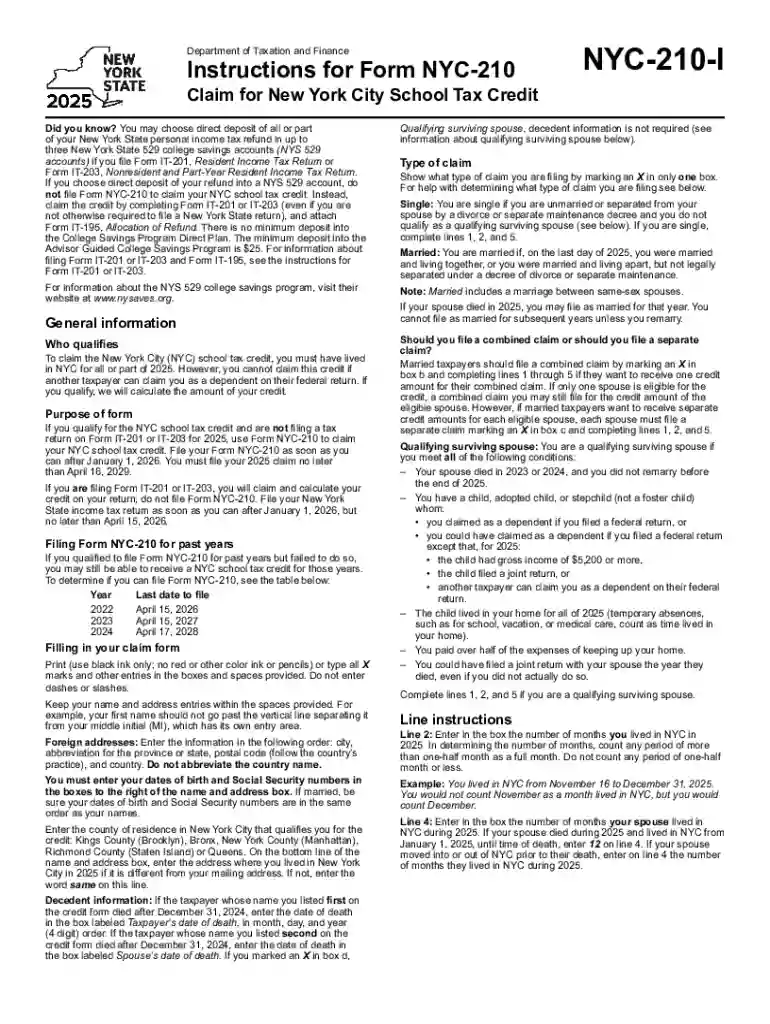
Form NYC-210, also known as the Claim for New York City School Tax Credit, is designed to provide financial relief for eligible individuals who do not receive the benefit automatically through payroll withholding. This form specifically targets individuals within the New York City limits, offering a refundable credit intended to alleviate some of the tax burdens associated with funding public schools. The amount of credit can vary based on individual circumstances, but it’s primarily aimed at reducing personal tax liability for New York City residents.
To qualify for the NYC-210 tax credit, claimants must meet specific eligibility criteria. Primarily, applicants should reside in New York City for the entire tax year. Additionally, neither the claimant nor their spouse, if filing jointly, should be claimed as dependents on someone else's federal tax return. Understanding these requirements ensures applicants do not inadvertently submit ineligible claims. Moreover, inclusion of additional considerations, like marital status and income limits, further refines the field of eligible applicants, contributing to a more accurate submission.


Comprehending and utilizing the instructions for Form NYC-210 effectively involves following a systematic approach. The instructions elucidate each section, providing detailed guidance on filling the form accurately. By understanding specific lines in the form, such as where to input personal and financial information, claimants can avoid errors that often result in processing delays.
The instructions for completing Form NYC-210 include several key elements, emphasizing clarity and precision. Each section delineates which fields require completion, especially highlighting areas prone to errors. Critical areas focus on residency confirmation, accurate tax credit calculation, and adherence to filing deadlines.
Understanding terminology within the instructions is imperative for accurate form completion. Terms such as "non-dependent," "resident," and "tax credit" have specific definitions influencing a claimant's eligibility and submission strategy. A glossary within the instructions provides these definitions to avoid misinterpretation.
Aligning with state and federal tax deadlines is crucial to avoid penalties. Typically, the NYC-210 must be filed in conjunction with your New York State personal income tax return, no later than April 15 of each year. Extensions are possible but should be requested prior to this deadline to ensure continued eligibility for the credit.
Failing to file on time or submitting inaccurate forms can result in penalties, including fines and interest on unpaid tax liabilities. Therefore, adherence to provided instructions and timely submission is essential to maintain compliance.
When preparing Form NYC-210, several documents are integral to substantiating claims. This includes past tax returns, residency documentation, and evidence of income. Organizing these documents before initiating the form's completion ensures a smoother filing process and decreases the likelihood of requests for additional information from tax authorities.
New York State tax returns, including the NYC-210, can be submitted electronically via the state’s online tax portal, by mail, or through approved e-filing software such as TurboTax. Each submission method has specific guidelines and varies in processing time, which can influence the filing strategy based on the filer's comfort with digital platforms.
The IRS, in conjunction with New York State, provides guidelines ensuring that the Form NYC-210 complies with broader federal and state tax laws. Adhering to these guidelines is crucial for the integrity of the submission. Compliance ensures eligibility for the tax credit, providing an assurance that submissions are both accurate and lawful.
Form NYC-210 is relevant across a variety of taxpayer scenarios. Self-employed individuals, retirees, and students all stand to benefit if they meet the residency and income criteria. Each group may encounter unique situations—such as fluctuating income—that influence eligibility and filing strategy. Detailed scenarios within the instructions illustrate different taxpayer profiles, aiding users in identifying their category and understanding their specific filing requirements.

We've got more versions of the Instructions for Form NYC-210 Claim for New York City School Tax Credit Tax Year 2025 form. Select the right Instructions for Form NYC-210 Claim for New York City School Tax Credit Tax Year 2025 version from the list and start editing it straight away!
| Versions | Form popularity | Fillable & printable |
|---|---|---|
| 2025 | 4.1 Satisfied (28 Votes) | |
| 2024 | 4.2 Satisfied (32 Votes) | |
| 2023 | 4.5 Satisfied (49 Votes) | |
| 2022 | 4.1 Satisfied (42 Votes) | |
| 2021 | 4.8 Satisfied (127 Votes) | |
| 2020 | 4.3 Satisfied (60 Votes) | |
| 2019 | 4.2 Satisfied (56 Votes) | |
| 2018 | 4.3 Satisfied (142 Votes) | |
| 2017 | 4.3 Satisfied (35 Votes) | |
| 2015 | 4.4 Satisfied (181 Votes) | |
| 2014 | 4.3 Satisfied (71 Votes) | |
| 2013 | 4.3 Satisfied (32 Votes) | |
| 2012 | 4.2 Satisfied (37 Votes) | |
| 2007 | 4.3 Satisfied (39 Votes) |
At DocHub, your data security is our priority. We follow HIPAA, SOC2, GDPR, and other standards, so you can work on your documents with confidence.
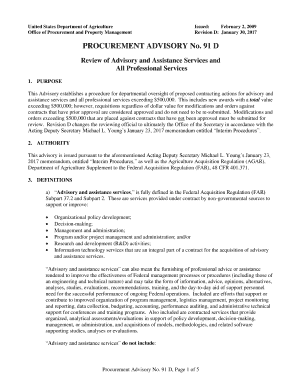





To claim the New York City (NYC) school tax credit, you must have lived in NYC for all or part of 2025. However, you cannot claim this credit if anotherRead more
This certificate will expire on April 30, 2027. To claim exemption from withholding for New York State personal income tax (and New York City and YonkersRead more
Dec 30, 2021 ☑ Yes □ No. Indicate by check mark whether the registrant is a large accelerated filer, an accelerated filer, a non-accelerated filer, a smallerRead more


