






Definition and Purpose of Form 6627
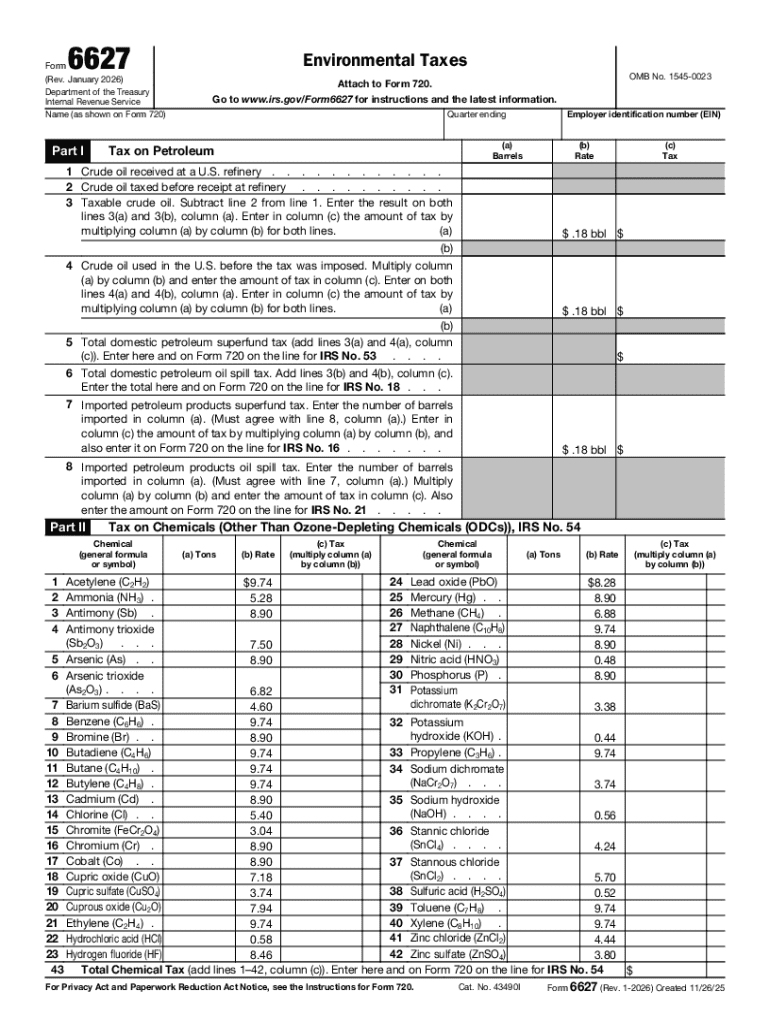
Form 6627, titled "Federal Environmental Taxes," is an essential document used in conjunction with Form 720 to report environmental taxes. This form captures the financial requirements tied to the use and production of certain environmental hazards, including chemicals and ozone-depleting substances. The U.S. Internal Revenue Service (IRS) mandates this form for accountability and compliance with environmental tax laws. It's crucial for businesses involved in manufacturing, importing, or using substances that may affect the environment, as it ensures they contribute appropriately to mitigating environmental impact.
Steps to Complete Form 6627
-
Identify the Required Information:
- Gather your company’s name, as shown on Form 720.
- Determine the specific environmental taxes applicable to your business based on IRS guidelines.
-
Complete Part I - Environmental Taxes:
- Accurately report the use of chemicals and ozone-depleting substances.
- Utilize the tax rates provided by the IRS for each substance.
-
Supplemental Data Entry:
- Include any necessary calculations that substantiate the reported tax amounts.
-
Review and Attach:
- Ensure that all information is complete, accurate, and legible.
- Attach Form 6627 to your primary Form 720 submission.
Required Documents for Filing
- Form 720: This serves as the primary tax return document for excise taxes alongside Form 6627.
- Detailed Accounting Records: Include information on quantities, types, and the application of covered substances.
- IRS-Approved Tax Rate Tables: Reference for calculating specific environmental taxes.
Having these documents organized and well-maintained is essential for a seamless filing process and for avoiding errors that could lead to penalties.
IRS Guidelines and Compliance
The IRS provides comprehensive guidelines to ensure compliance when filing Form 6627. Businesses must adhere to the specified tax rates for each substance and submit all supporting documentation that substantiates their reported taxes. Additionally, the IRS stipulates meticulous record-keeping practices that help validate correct tax payments and protect against audits. Understanding these guidelines can mitigate legal risks associated with misreporting or noncompliance.
Key Elements of Form 6627
- Tax Liability Computation: Detail calculations using IRS tax rate tables for substances like Chemicals and Ozone-Depleting Chemicals.
- Certification Statement: Serve as a declaration that the information provided is accurate to the best of the filer’s knowledge.
- Submission Acknowledgment: Provide confirmation that Form 6627 is attached to Form 720 as required.
A comprehensive understanding of each element ensures that filers abide by federal regulations and comply with statutory requirements.
Why File Form 6627
Filing Form 6627 is not only a legal requirement but also a responsible business practice that contributes to environmental sustainability. By accurately reporting and paying the taxes associated with environmentally sensitive substances, businesses participate in efforts to reduce environmental harm. Furthermore, timely and accurate filing protects organizations from potential penalties and enhances their credibility as environmentally conscious entities.
Filing Deadlines and Important Dates
Form 6627, accompanying Form 720, is generally due quarterly. Businesses must submit their filings at the end of the month following each fiscal quarter: April 30, July 31, October 31, and January 31. Adhering to these deadlines is crucial to avoid late fees and other penalties from the IRS. Furthermore, these regular intervals ensure that environmental tax liabilities are settled in a timely fashion, aligning with fiscal policy objectives.
Form Submission Methods
- Online Submission: Utilize e-filing services through the IRS’s system, ensuring faster processing and confirmation.
- Mail: Send completed forms physically to the designated IRS address for Form 720 submissions.
- In-Person Delivery: Engage with IRS-approved offices for direct submission, often used for complex or large documentation batches.
Each submission method has its advantages, depending on the urgency and complexity of the tax return. E-filing tends to offer the most efficient and automated experience.
Penalties for Non-Compliance
Non-compliance with Form 6627 filing requirements results in substantial financial penalties. The IRS may levy fines based on the severity and duration of the non-compliance. Additionally, failure to file or incorrect information disclosure could trigger audits and further financial scrutiny. Businesses are encouraged to review their compliance frameworks and seek professional advice to mitigate these risks effectively.
By understanding these various aspects of completing and submitting Form 6627, businesses can navigate their environmental tax obligations accurately and efficiently.