






Understanding the Bacteriological Sample Siting Plan (BSSP)
The Bacteriological Sample Siting Plan (BSSP) is an essential tool designed for water systems to ensure safe and clean water supply. It helps in mapping out locations where water samples should be taken regularly to test for bacteriological contamination. The plan identifies specific points within a water distribution system, forming the basis for ongoing monitoring processes that protect public health.
Core Purpose of the BSSP
-
Detection of Contaminants: The primary aim of the BSSP is to identify potential areas of bacterial contamination in drinking water systems promptly.
-
Regulatory Compliance: Implementing a BSSP assists water systems in meeting state and federal guidelines for drinking water safety.
-
Public Health Assurance: Regular siting and testing of water samples ensure the safety of the water supply, directly impacting community health and well-being.
Implementing the BSSP Effectively
Steps to Establish a BSSP
-
Identify Key Locations: Water systems must identify and document specific sampling points throughout the distribution network.
-
Determine Sampling Frequency: The BSSP outlines how frequently samples need to be collected from each location.
-
Document Procedures: Detailed documentation of the sampling and testing procedures is required to maintain consistency and reliability of the results.
-
Review and Update: Regular review and updating of the plan to reflect changes in the water system or regulatory requirements are necessary.
Example Scenarios
-
Community Water Systems: These systems use the BSSP to target high-risk areas such as schools and hospitals with more frequent sampling.
-
Transient Non-Community Water Systems: Establishments such as hotels implement the BSSP to focus on areas with high visitor turnover to manage potential contamination risks.
Legal Implications and Compliance
Importance of Legal Compliance
Adhering to a BSSP is not just best practice but a legal requirement for many water systems. This compliance ensures accountability and transparency in maintaining water quality standards.
-
State Regulations: Each state may have specific guidelines and requirements pertaining to BSSP implementation.
-
Federal Oversight: The Environmental Protection Agency (EPA) provides overarching guidelines to which all water systems must adhere.
Penalties for Non-Compliance
Failure to establish or execute a BSSP can result in substantial penalties, including fines and mandatory corrective actions imposed by regulatory bodies.
Key Components of a BSSP
Essential Elements
-
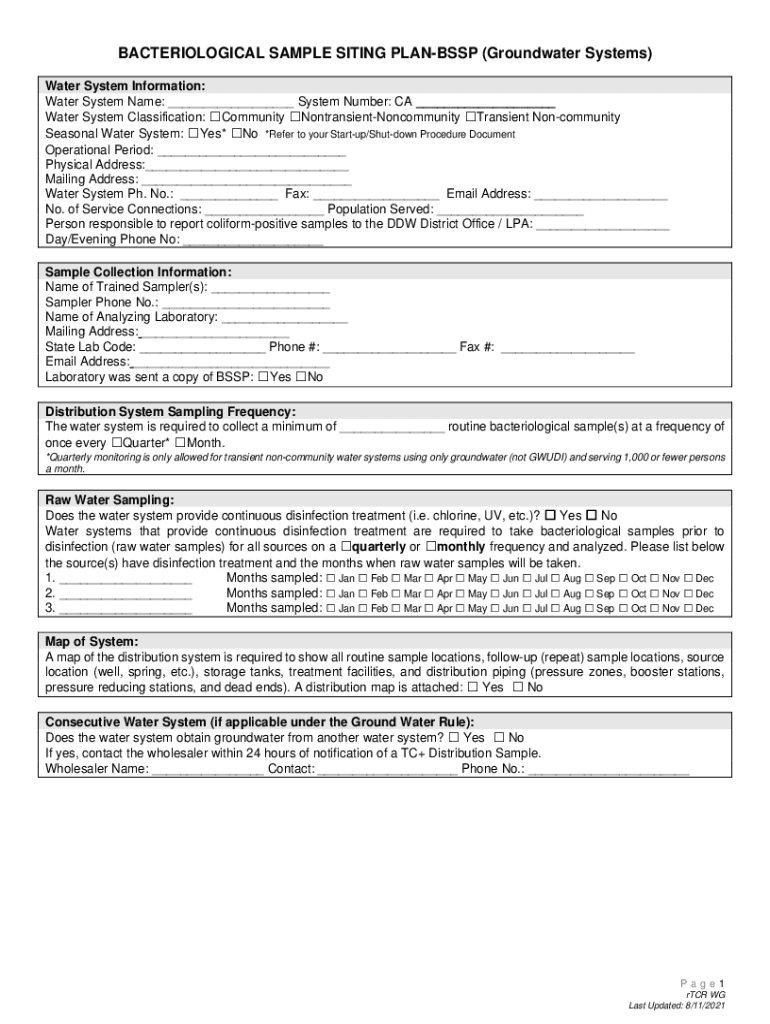
Water System Information: Includes the name, system number, and classification details.
-
Sampling Sites: A list of all designated sampling sites with specific location details.
-
Contact Person: Designation of a responsible contact for the management and execution of the BSSP.
-
Emergency Procedures: Defined steps for addressing contamination events discovered during routine sampling.
State-Specific Variations in BSSP Implementation
Understanding Local Differences
Each state in the U.S. may impose variations in their requirements for BSSP, reflecting local water system structures and public health concerns.
-
California Example: California's stringent environmental standards demand more frequent and detailed sampling plans.
-
New York Example: New York may focus on urban systems with extensive networks, requiring tailored sampling strategies.
Terms and Definitions Related to BSSP
Understanding key terminology is crucial in the implementation of a BSSP:
-
Nontransient Noncommunity (NTNC): Describes water systems regularly serving 25 or more of the same people, such as schools or offices.
-
Transient Noncommunity: Water systems like gas stations, providing water to different people but not the same group regularly.
-
System Classification: Defines whether the water system is community, nontransient, or transient, impacting the siting plan's requirements.
Digital Tools and Integration
Software and Compatibility
While traditionally managed on paper, many water systems now utilize digital tools to manage their BSSP. Popular software solutions include:
-
GIS Mapping Software: Used to dynamically manage sampling sites across the distribution system.
-
Digital Document Management: Storing and sharing BSSP documents via platforms like DocHub can enhance access and collaboration.
Leveraging these tools can streamline the creation and maintenance of an effective BSSP, providing clarity and efficiency to meet regulatory standards and ensure public health.