






Definition & Meaning
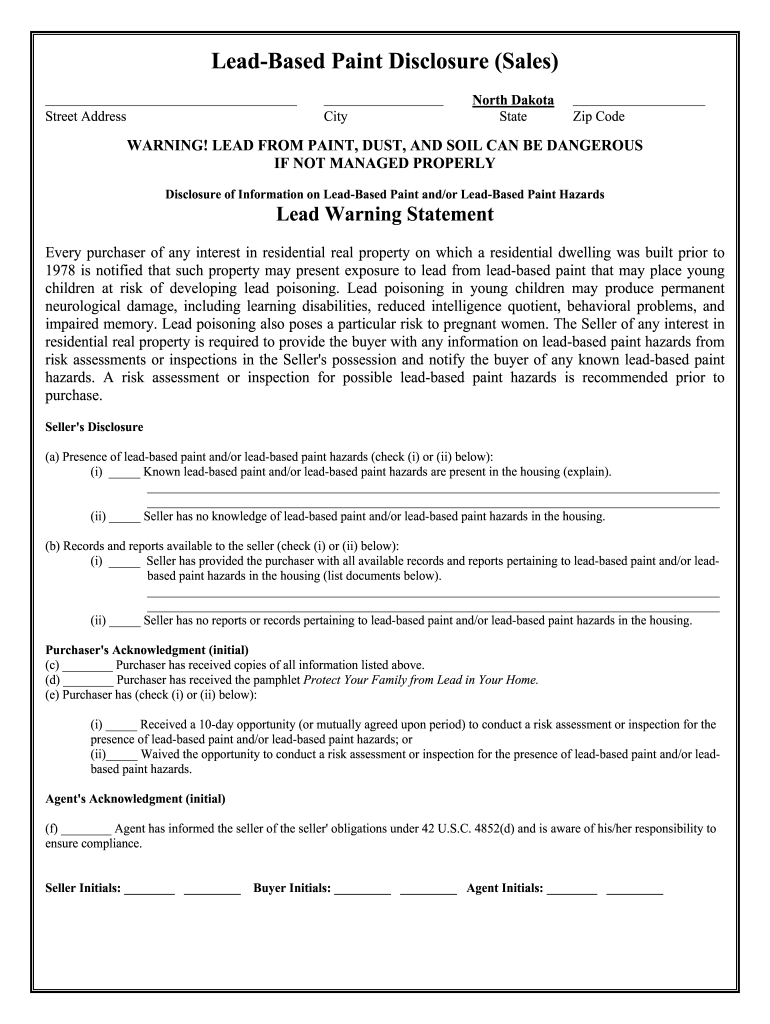
The lead based paint disclosure is a legal document mandated by the U.S. federal government to inform potential buyers or renters about the presence of lead-based paint in properties built before 1978. The disclosure aims to provide transparency regarding possible health risks due to lead exposure, which can pose serious health hazards, particularly to children and pregnant women. Typically, the form includes details about the known presence of lead paint and copies of any available reports regarding lead hazards.
How to Use the Lead Based Paint Disclosure
When engaging in the sale or lease of a residential property constructed prior to 1978, the seller or landlord is required to present the lead based paint disclosure to the buyer or tenant. This document should be included as part of the information package with other required disclosures. The seller or landlord needs to fill out sections that specify any known presence of lead paint or related hazards. Additionally, they should provide the buyer or tenant with an Environmental Protection Agency (EPA)-approved information pamphlet on identifying and managing lead-based paint hazards.
How to Obtain the Lead Based Paint Disclosure
The lead based paint disclosure form can be obtained from various sources. Real estate agents typically have the necessary documents readily available due to their routine involvement in property transactions. Additionally, the form can be downloaded from official government websites, such as the EPA or the Department of Housing and Urban Development (HUD). Providing the latest version of the form ensures compliance with all legal requirements and prevents any transaction delays.
Steps to Complete the Lead Based Paint Disclosure
- Identify the Property: Start by listing the property's address and any other identifying information.
- Disclosure of Knowledge: Indicate whether you are aware of any lead-based paint or hazards within the property. If applicable, provide detailed records.
- Provide Reports: Include any reports or documentation of a lead assessment or abatement that have been conducted.
- Seller’s Acknowledgment: The seller or landlord must sign and date the form, attesting to the truthfulness of the information provided.
- Agent Acknowledgment: If applicable, a real estate agent involved in the transaction must also acknowledge and sign the document, confirming they have informed the seller or landlord of their obligations.
- Potential Buyer/Tenant Receipt: The prospective buyer or tenant should sign the form, acknowledging receipt and understanding of the information and pamphlet.
Why Should You Use the Lead Based Paint Disclosure
Using the lead based paint disclosure is a crucial legal requirement to protect public health, particularly for young children and pregnant women who face severe risks from lead poisoning. It also shields sellers and landlords from legal liabilities by ensuring they have met federal requirements to disclose any known lead hazards. Furthermore, it builds trust with potential buyers or tenants by demonstrating transparency in property transactions.
Who Typically Uses the Lead Based Paint Disclosure
The primary users of the lead based paint disclosure are sellers, landlords, and real estate professionals involved in the sale or rental of residential properties built before 1978 in the United States. Potential buyers and renters also engage with this form as they need to understand the lead-related risks associated with the property. Additionally, property management companies and legal professionals may use the form to ensure compliance during property transactions.


Key Elements of the Lead Based Paint Disclosure
- Property Information: Includes the address and specific details about the property.
- Disclosure of Knowledge: Sections for sellers or landlords to disclose knowledge of lead-based paint.
- Reports and Records: Provision to include past lead hazard evaluations or assessments.
- Acknowledgments: Signature areas for sellers, landlords, real estate agents, and buyers/tenants.
- EPA Pamphlet: Confirmation that an EPA pamphlet on lead hazards has been provided.
Legal Use of the Lead Based Paint Disclosure
The legal use of the lead based paint disclosure form is backed by the Residential Lead-Based Paint Hazard Reduction Act of 1992. The law requires sellers, landlords, and real estate agents to provide this disclosure and an EPA-approved pamphlet to inform buyers and renters of potential lead dangers. Failure to comply can result in legal repercussions, significant fines, and potential lawsuits. Thus, proper usage of the form not only ensures compliance but also fosters transparency in property transactions.