






Definition and Meaning
The Mortgage Interest Deduction FAQs - TurboTax Tax Tips and Videos is a resource designed to help U.S. taxpayers understand the intricacies of the mortgage interest deduction, a significant tax benefit for homeowners. This deduction allows a taxpayer to reduce their taxable income by the amount of interest paid on a mortgage loan during the tax year. The TurboTax resource provides clarification on when and how this deduction can be claimed, listing specific criteria that must be met. It aims to simplify complex tax regulations and assist taxpayers in maximizing their deductions.
Steps to Complete the Mortgage Interest Deduction Form
To accurately complete the Mortgage Interest Deduction form, follow these steps:
-
Gather Necessary Documentation:
- Obtain the 1098 form from your mortgage lender, which details the interest paid over the year.
- Collect any records of payments for additional mortgages or refinanced loans.
-
Determine Eligibility:
- Verify that the mortgage is secured by your primary or a secondary home.
- Ensure that the total mortgage value doesn't exceed tax law limitations.
-
Calculate Deductible Interest:
- Use data from your 1098 form to calculate the amount of interest paid.
- Consider any points paid that might qualify for deduction, often found in loan documents.
-
Complete the Tax Form:
- Fill out the Schedule A of Form 1040 to itemize deductions.
- Enter the mortgage interest deduction amount on the specific line dedicated to home mortgage interest.
-
Review and Submit:
- Double-check all entries for accuracy and completeness.
- Submit your tax return either electronically or by mail before the deadline.
Key Elements of the Form
Several critical components should be considered when utilizing the Mortgage Interest Deduction FAQs - TurboTax Tax Tips and Videos:
- Home Ownership Status: Must own the home to claim the deduction.
- Type of Loan: Apply to first and second mortgages, as well as home equity loans.
- Limits and Thresholds: Be aware of the deduction limits, particularly if mortgage balances exceed $750,000.
- Points and Other Costs: Points paid can qualify if they meet specific conditions, such as being paid in cash at closing.
Eligibility Criteria
To claim the mortgage interest deduction, certain eligibility criteria apply:
- Filers Must Itemize: The standard deduction may be more beneficial for some, but itemization is necessary for this benefit.
- Loan Must Be Secured: The mortgage must be a secured debt on a qualified home.
- Purchase or Improvement Usage: Debt should be used for acquiring or significantly improving the home.


State-Specific Rules
Different states may have additional rules or benefits regarding the mortgage interest deduction:
- Local Tax Laws: Some states provide additional tax incentives or have different approaches to deductions.
- Regional Limitations: Check for state-specific limits to avoid compliance issues.
IRS Guidelines
The IRS provides clear guidelines to help taxpayers accurately claim mortgage interest deductions:
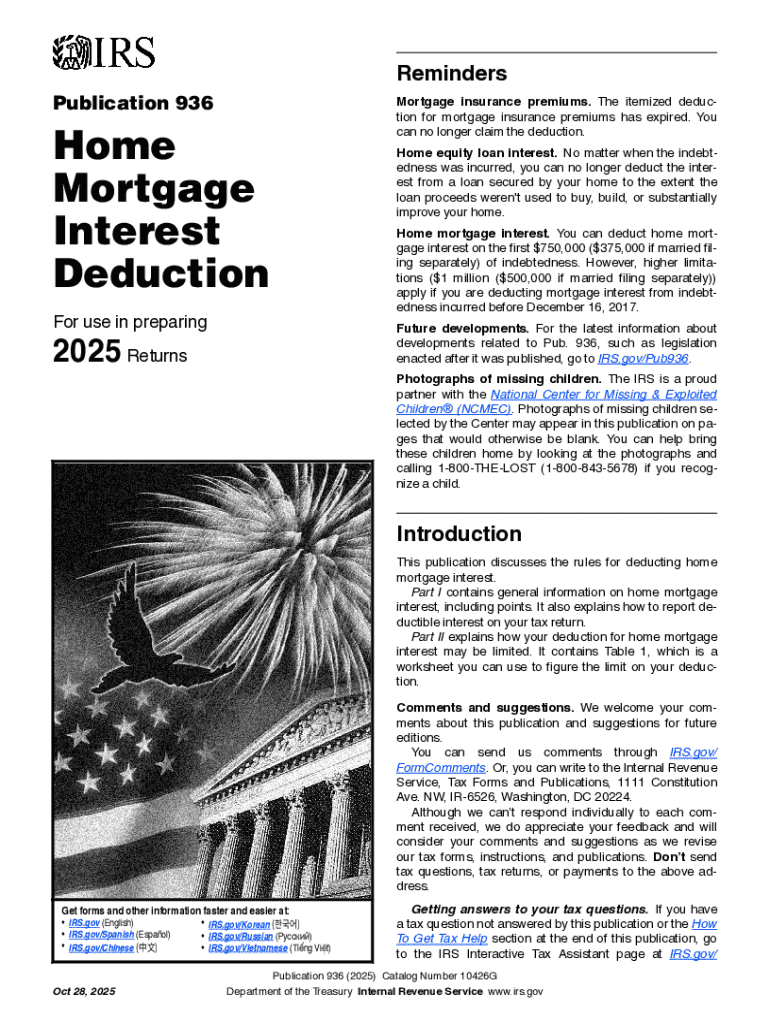
- Publication 936: A comprehensive guide by the IRS covering home mortgage interest.
- Annual Adjustments: IRS may update deduction limits and income thresholds based on inflation and legislative changes.
Important Terms Related to the Deduction
Understanding related terminology is crucial:
- Amortization: The gradual repayment of a mortgage over time, impacting interest calculations.
- Points: Fees paid for loan issuance, directly affecting the deductible amount when certain conditions are met.
- Home Acquisition Debt: Includes mortgages taken out to buy, build, or substantially improve a home; distinct from home equity loans.
Examples of Using the Deduction
Real-world scenarios can clarify how the deduction works:
- First-Time Homebuyers: May see significant tax savings by deducting mortgage interest.
- Homeowners with Multiple Properties: Those with second homes need to distinguish eligible interest payments clearly.
- Refinanced Loans: Often misunderstood, refinancing may still qualify for interest deductions if the new loan stays at or below the original balance.
Filing Deadlines and Important Dates
Keeping track of key dates ensures compliance:
- April 15: Typical deadline for federal tax filing, unless extensions are granted.
- Form 1098 Availability: Usually mailed by lenders by January 31, critical for filing accurately.
Required Documents
Completing the deduction process requires several documents:
- Form 1098: Provides mortgage interest details from the lender.
- Settlement Statements: Might show points paid, essential for calculating deductions.
- Mortgage Statements: Monthly or annual statements confirming interest amounts paid.
These sections provide comprehensive information to ensure readers have a clear, detailed understanding of the Mortgage Interest Deduction FAQs - TurboTax Tax Tips and Videos. This structured approach aids taxpayers in efficiently navigating the deduction process while remaining compliant with both federal and state regulations.