






Definition & Meaning
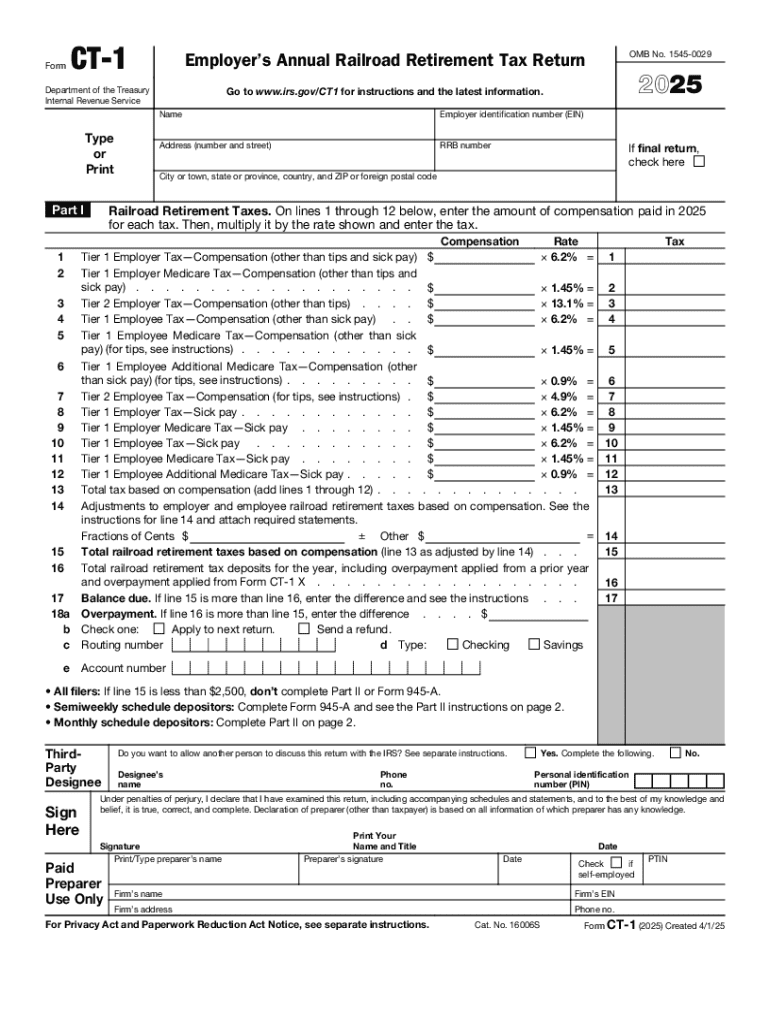
The IRS Form CT-1, known as the Employer's Annual Railroad Retirement Tax Return, is used by employers whose workers are covered under the Railroad Retirement Tax Act (RRTA). This form facilitates the reporting and pay submission of taxes related to railroad retirement benefits, which are akin to social security taxes but specific to the railroad industry. The form serves to ensure compliance with federal tax obligations specific to railroad employment, which includes Tier 1 and Tier 2 taxes. Tier 1 is similar to Social Security and Medicare tax, whereas Tier 2 is unique to the railroad industry and funds railroad retirement pensions.
How to Use the IRS Form CT-1: Employer's Annual Railroad Retirement Tax
Employers in the railroad industry must use IRS Form CT-1 to report and pay the RRTA taxes annually. The process involves calculating the amount due based on employee earnings, keeping in mind the specific tax rates for Tier 1 and Tier 2. Employers can use this form to adjust for overpayments or underpayments of tax liabilities from previous periods. It is crucial to complete each section accurately to avoid penalties and maintain compliance with federal regulations.
Steps to Complete the IRS Form CT-1: Employer's Annual Railroad Retirement Tax
- Gather Required Information: Collect all employee earnings records for the tax year, including details of compensation, tips, and other taxable wages.
- Calculate Railroad Retirement Taxes: Determine the amount of Tier 1 and Tier 2 taxes owed using the current year’s tax rate schedules. These computations should be accurate to reflect the total compensation subject to railroad retirement taxes.
- Complete Part I of the Form: This section captures employer details, including name, address, and employer identification number (EIN), along with basic tax calculations.
- Fill Out Tax Computation Sections: Enter detailed breakdowns of taxable earnings and the tax calculation for both Tier 1 and Tier 2.
- Provide Adjustments if Necessary: If there are any adjustments from prior years, reflect them in the appropriate sections of the form.
- Sign and Date the Form: Ensure accuracy of all data entered, then sign and date the form as the employer or authorized representative.
Filing Deadlines / Important Dates
The IRS Form CT-1 is due by the last day of February following the tax year being reported. For example, for the tax year ending in December 2023, the form must be filed by February 28, 2024. Failure to file by this deadline results in potential penalties and interest charges. Employers are advised to review their internal processes to ensure that the form is completed and submitted well before the deadline to account for possible corrections or adjustments needed after initial completion.
Important Terms Related to IRS Form CT-1: Employer's Annual Railroad Retirement Tax
- Railroad Retirement Tax Act (RRTA): A specific set of federal regulations governing the taxation of railway employees, separate from regular social security.
- Tier 1 Tax: This is similar to Social Security and Medicare taxes and applies to compensation up to a certain threshold determined annually.
- Tier 2 Tax: A pension-related tax that is unique to railroad employees and has a separate compensation limit and tax rate.
- Employer Identification Number (EIN): A nine-digit number assigned by the IRS to identify the employer filing the tax return.
Required Documents
To complete IRS Form CT-1 accurately, employers will need access to payroll records, employee compensation details, previous year’s tax filings, and any relevant correspondence regarding tax adjustments. Accurate record keeping is essential to ensure all taxable wages are reported and the correct tax amounts are paid.
Penalties for Non-Compliance
Employers who fail to file Form CT-1 or pay the required taxes on time may face penalties. These penalties can include fines for late payment, underpayment, or failure to file, and interest on any unpaid taxes. The IRS imposes additional charges for fraudulent activity or significant underestimation of tax liabilities. It is imperative for employers to review the tax computations and submission timelines carefully to avoid these financial penalties.
Software Compatibility (TurboTax, QuickBooks, etc.)
Tools like QuickBooks may offer features to track railroad-specific compensation and tax calculations, facilitating the preparation of IRS Form CT-1. However, not all general tax preparation software like TurboTax includes support for railroad retirement taxes, so specialized processing may be necessary. It's important for employers to verify software capabilities or consult with a tax professional to ensure compliance and ease of filing.
Digital vs. Paper Version
IRS Form CT-1 can be filed both digitally and via paper submissions. Digital filing may offer benefits such as quicker processing times, reduced likelihood of errors, and immediate acknowledgment of receipt. The IRS encourages the use of electronic filing systems, as filing electronically can streamline the processing of returns and ensure compliance more effectively than paper filings. Employers opting for paper submissions must ensure all documents are completed legibly and sent with sufficient time to meet the filing deadline through postal services.