







Definition & Meaning
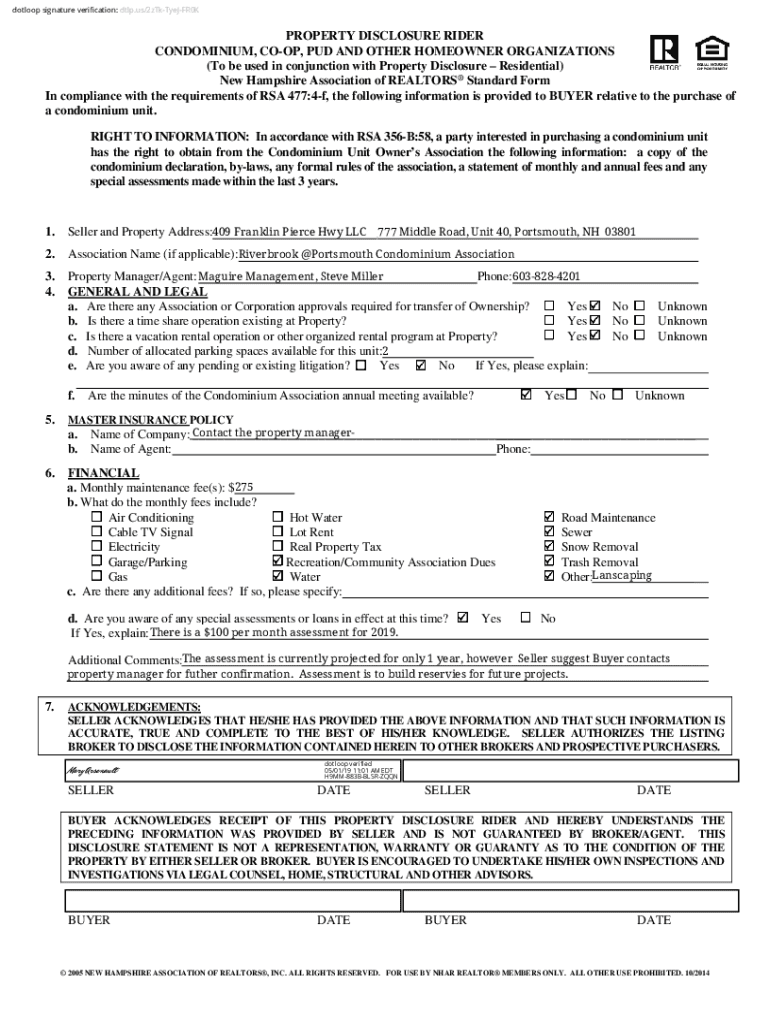
The "Property Disclosure Rider Condominium, Co-op" is a legally binding document often used in real estate transactions to disclose specific information about a condominium or cooperative property to potential buyers. The document serves as an attachment to the primary sales contract, ensuring all parties are aware of pertinent details concerning the property and any potential issues within the homeowners' association or cooperative structure.
Purpose and Scope
- Real Estate Transactions: Used predominantly in property sales to clarify obligations and conditions.
- Legal Protection: Provides legal protection for both sellers and buyers by ensuring full disclosure.
Typical Inclusions
- Association Fees: Details on any monthly or annual fees associated with the property.
- Rules and Regulations: Outline of rules governing resident behavior or property usage.
- Pending Litigation: Information on any ongoing legal proceedings involving the property or association.
How to Use the PROPERTY DISCLOSURE RIDER CONDOMINIUM, CO-OP
Understanding the application's proper use is crucial for both parties in a real estate transaction.
Steps for Sellers
- Complete the Form: Provide comprehensive and honest information regarding the property and association.
- Gather Supporting Documents: Include any reports, assessments, or meeting minutes that support your disclosures.
- Review with Legal Counsel: Ensure all information is accurate and complete with professional legal advice.
Steps for Buyers
- Thorough Review: Examine all disclosed items carefully.
- Request Clarifications: Ask the seller for additional information or explanations where necessary.
- Consult Professionals: Engage with a real estate lawyer to interpret any complex legal language.
Key Elements of the PROPERTY DISCLOSURE RIDER CONDOMINIUM, CO-OP
Essential Sections to Include
- Property Details: Include precise information such as size, boundaries, and tax specifications.
- Structural Information: Report on the condition of major systems—plumbing, electrical, and HVAC.
- Financial Overview: Detailed list of pending or expected assessments against the property.
Considerations for Accurate Completion
- Updates and Renovations: Note recent significant changes to the property.
- Commendments and Bylaws: Provide the latest association bylaws as part of the disclosure.
Legal Use of the PROPERTY DISCLOSURE RIDER CONDOMINIUM, CO-OP
Recording accurate and truthful information in this document is not just ethical but legally binding.
Legal Implications
- Binding Agreement: Once signed, these details form part of the purchase agreement.
- Fraudulent Disclosure Risks: Misrepresentation or omission can lead to legal action against sellers.
Steps to Complete the PROPERTY DISCLOSURE RIDER CONDOMINIUM, CO-OP
Guided Process
- Collect Property Information: Start with gathering all relevant documents and data.
- Fill Out Detailed Sections: Ensure every item on the disclosure form is addressed accurately.
- Verify Accuracy: Double-check all details for factual correctness before submission.
- Seek Professional Help: It's advisable to get legal guidance if new issues or complications arise in your disclosures.
Who Typically Uses the PROPERTY DISCLOSURE RIDER CONDOMINIUM, CO-OP


Key User Groups
- Real Estate Agents: Facilitators of real estate transactions using this disclosure for due diligence.
- Property Sellers: Obliged to provide buyers with detailed property insights using this form.
- Potential Buyers: Rely on the form to make an informed purchasing decision.
Impact on Different Stakeholders
- Buyers’ Assurance: Offers peace of mind when making a purchase, with knowledge of existing conditions.
- Sellers’ Compliance: Assures compliance with legal disclosure obligations to avoid future litigation.
State-Specific Rules for the PROPERTY DISCLOSURE RIDER CONDOMINIUM, CO-OP
Regional Variations
- Disclosure Laws: Vary from state to state, impacting the specifics of what must be included.
- Regulatory Differences: States may have different requirements regarding property lien disclosures or environmental hazards.
Importance of Compliance
- Avoiding Legal Disputes: Abide by state rules to prevent potential lawsuits from buyers.
- Ensuring Marketability: Proper adherence can increase property appeal and sales success.
Examples of Using the PROPERTY DISCLOSURE RIDER CONDOMINIUM, CO-OP
Real-world Applications
- Urban Condo Sale: Example of comprehensive disclosure uncovering needed HVAC system repair.
- Co-op Transaction: Illustrating how information about shared facility maintenance influenced buyer’s decision.
Lessons Learned
- Transparency Benefits: Clear and honest disclosure leads to smoother transactions and satisfied buyers.
- Information Gaps: Highlight the need to address al potential oversights in subsequent revisions.
Important Terms Related to PROPERTY DISCLOSURE RIDER CONDOMINIUM, CO-OP
Terminology to Know
- Assessment Fees: Charges for maintenance or improvements to common areas.
- Bylaws: Rules governing how the condo or co-op operates.
- Common Elements: Parts of the property used by all owners, like pools or gyms.
Detailed Glossary
- HOA (Homeowners' Association): Entity managing shared property aspects.
- Special Assessment: Additional fees due to unexpected expenses or improvements.
Each of these blocks is designed to provide comprehensive coverage and valuable insight into the Property Disclosure Rider Condominium, Co-op form, supporting both buyers and sellers in navigating this essential component of property transactions in the U.S.




